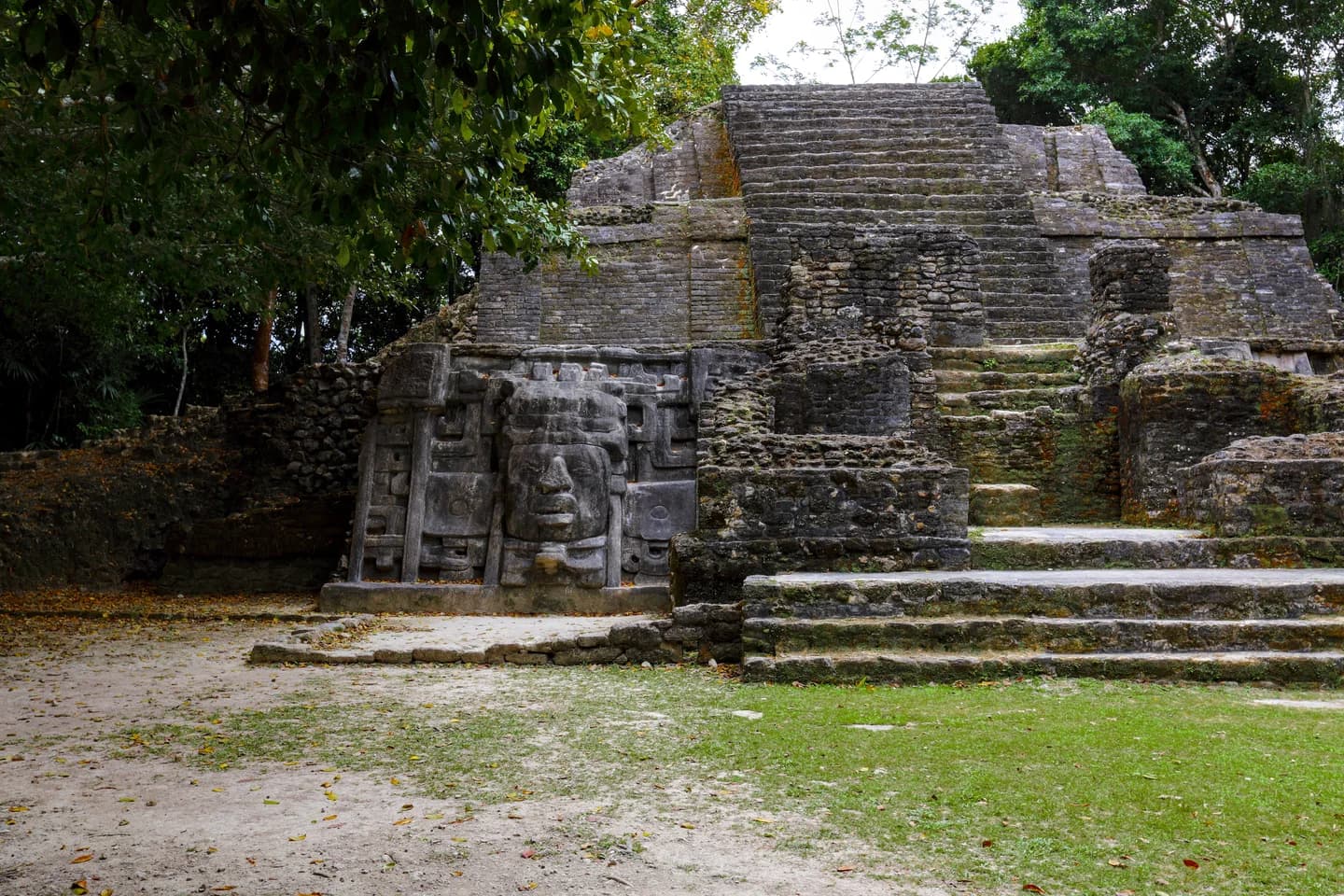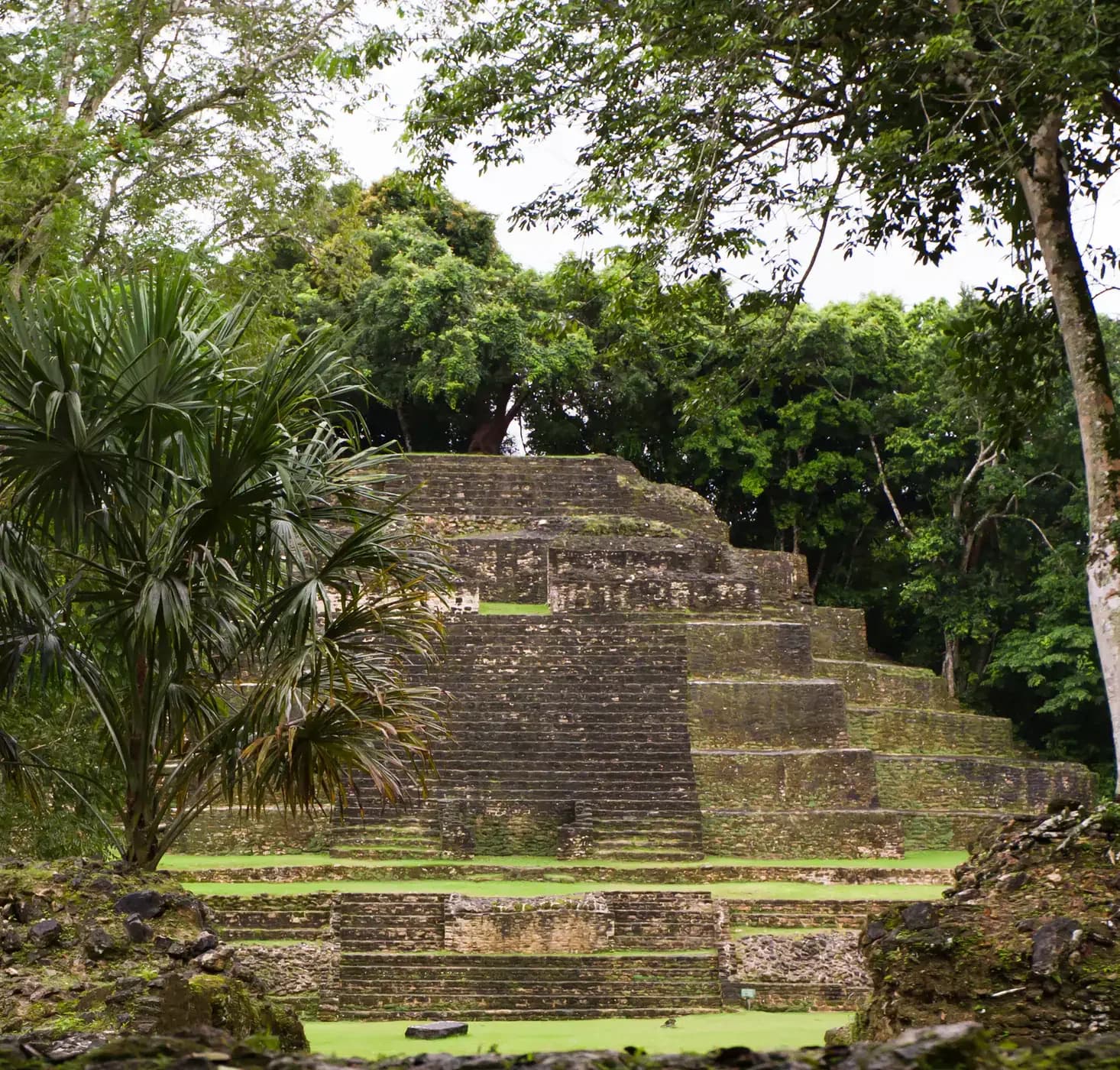
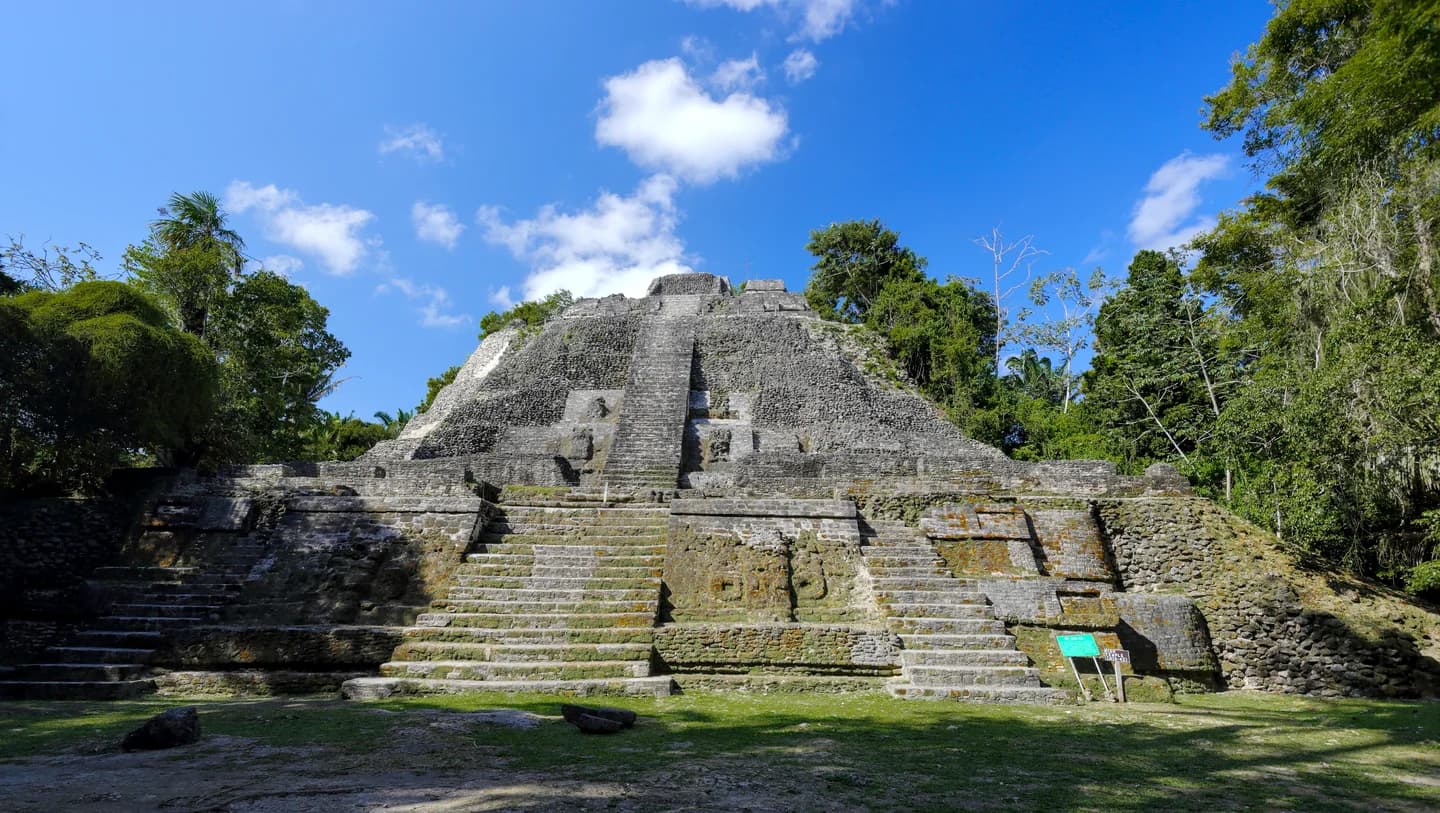
What I like about Lamanai is that the day feels bigger than arriving at another archaeological site. If you come by boat up the New River, the journey becomes part of the experience: forest lining the banks, and a real chance of spotting birds, iguanas, and crocodiles before you reach the ruins. Once inside, the jungle feels like part of Lamanai rather than a backdrop. Huge trees shade the paths, howler monkeys call from the canopy, and between the excavated structures are mounds slowly disappearing under vegetation. Lamanai also feels different because of its relationship with the lagoon. Rather than one compact ceremonial plaza, the settlement stretched for several kilometres along the water, and David Pendergast's mapping documented hundreds of structures: homes, plazas, temples, and public spaces. People had established a community here by around 1500 BC, and it stayed occupied through the Classic and Postclassic periods and into the Spanish colonial era, one of the longest occupation histories of any major Maya center in Belize. This was not a city that peaked and vanished. Generations kept rebuilding and adapting while the Maya world around them changed. The High Temple, rising about 33 metres with a core already in place in the Preclassic, makes that long history tangible. The Mask Temple, with its enormous carved faces beside the staircase, was rebuilt repeatedly and held important Early Classic burials. Around the Jaguar Temple and the elite residential groups, you start to see the political and everyday side of the city. Even the name fits the landscape: Lamanai is generally interpreted as "submerged crocodile," and crocodiles still live in the lagoon today. The journey is part of the experience. Arriving up the New River combines a Maya site with northern Belize's river, jungle, and wildlife. Its history spans thousands of years. Occupied from the Preclassic long past the decline of most other major centers. The major structures all feel different. High Temple, Mask Temple, Jaguar Temple, ball court, and residential complexes each reveal another part of the city. Planning your visit: New River Lagoon, Orange Walk District. Allow 2–3 hours on site; most of the day if you go by river. Bring drinking water, sun protection, insect repellent, and shoes with grip for uneven stone paths. Transport and guiding are separate from site admission.
Liquid Mercury Ballcourt Cache
A ceremonial sealed offering vessel containing liquid elemental mercury discovered beneath the circular ballcourt marker, representing one of only two confirmed examples found in the Maya world (along with Caracol).