Preparing maps, wildlife highlights, and top places to explore.
Building destination context so you can compare locations quickly.
Stay in the know
Belize before everyone else.
Events, hidden gems, seasonal highlights, and local stories, delivered straight to your inbox before they go viral.
No spam. Just Belize.
Loading page content.
Loading Destination
Fetching destination details and highlights.
Preparing destination details and local recommendations.
Places to Explore
Maya Ruins in Belize
Seven sites compared by region, drive time and what each one does best
Choose the Maya ruins in Belize that fit your route
Reviewed by Rowan·Editorial Team·Last reviewed September 2026
Belize has hundreds of recorded Maya sites. Seven cover almost every trip: Xunantunich, Cahal Pech and Caracol near San Ignacio, Lamanai and Altun Ha in the north, and Lubaantun and Nim Li Punit in Toledo. Most travelers see two or three. Pick by where you are staying. Caracol is the biggest and needs a full day. Xunantunich is the easiest first visit.
Where they are
Map of Mayan ruins in Belize
The sites fall into three groups. Xunantunich, Cahal Pech and Caracol are around San Ignacio in Cayo. Lamanai and Altun Ha are in the north, between Orange Walk and Belize City. Lubaantun and Nim Li Punit are down in Toledo. Tap a pin for the site and how to reach it.
We have a visitor guide
Site on the map
Loading the interactive map…
Compare at a glance
Seven Maya ruins in Belize, compared
Travel time decides most of these. Tap a site name for its full visitor guide.
Near Indian Creek, on the southern highway through Toledo
1 to 1.5 hours
Cayo District
Maya ruins near San Ignacio
This is where most travelers see their first Maya site, and for good reason. Xunantunich and Cahal Pech are both within twenty minutes of town, and Caracol is the big full-day trip into the Chiquibul. If you only have one inland base, make it San Ignacio.
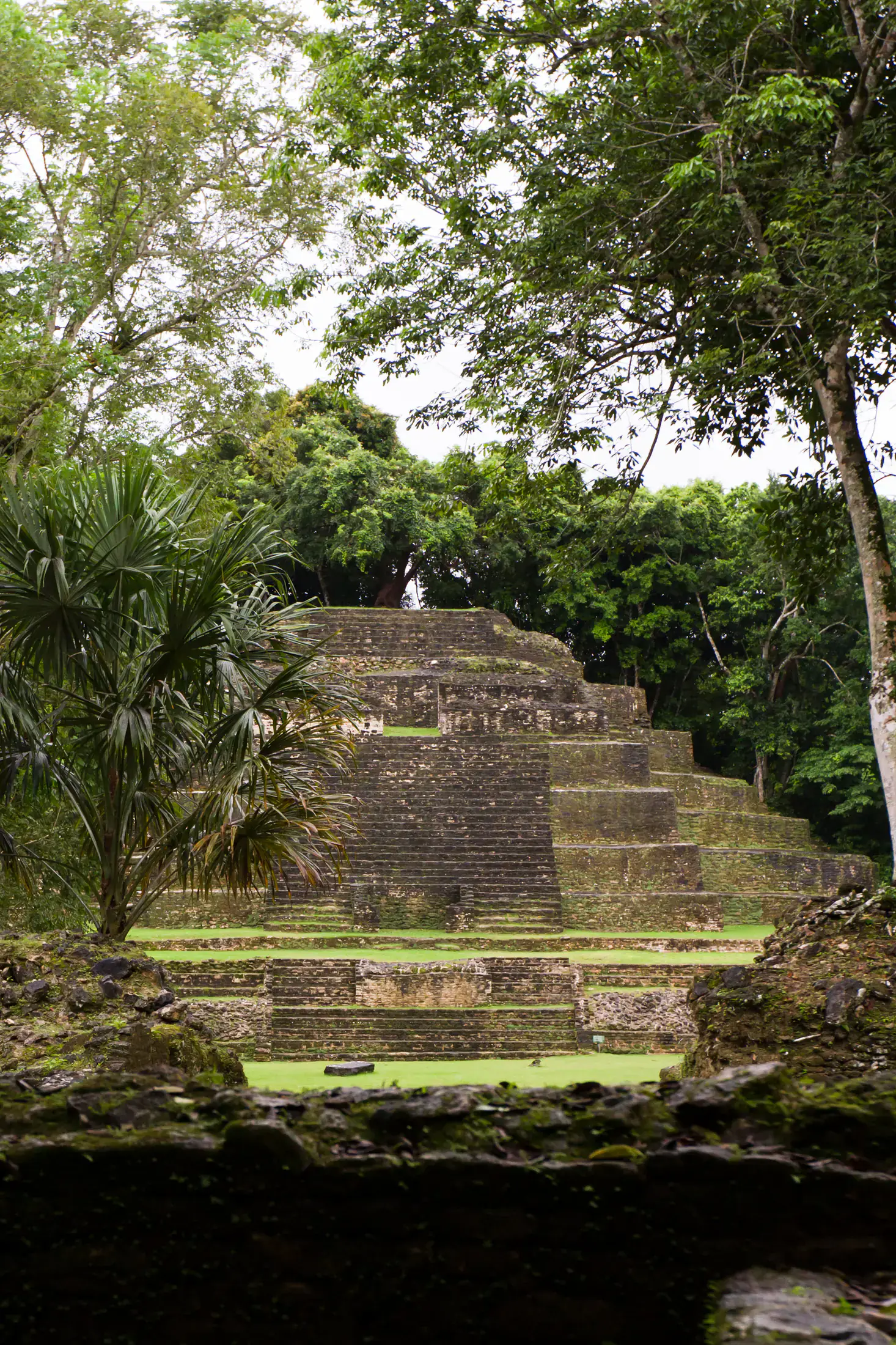
Xunantunich is the site I recommend most often to travelers staying in San Ignacio, and part of the reason is simply getting there. The final approach crosses the Mopan River on a hand-cranked ferry, then climbs a short forest road before the plazas open up in front of you. From ground level El Castillo feels massive. As you climb, the Belize River Valley opens toward Guatemala and you understand why this spot was so commanding.
Don't miss: El Castillo, with views across western Belize into Guatemala
One of the things I like most about Cahal Pech is how quickly the atmosphere changes once you walk in. It sits on a hill minutes from downtown San Ignacio, but inside, the town almost disappears. Where Xunantunich is dominated by El Castillo, Cahal Pech feels intimate: you move from one courtyard into another through narrow passageways and staircases, and it becomes easy to picture people living here more than 3,000 years ago.
Don't miss: Walking through the interconnected palace rooms, courtyards, and passageways of the acropolis
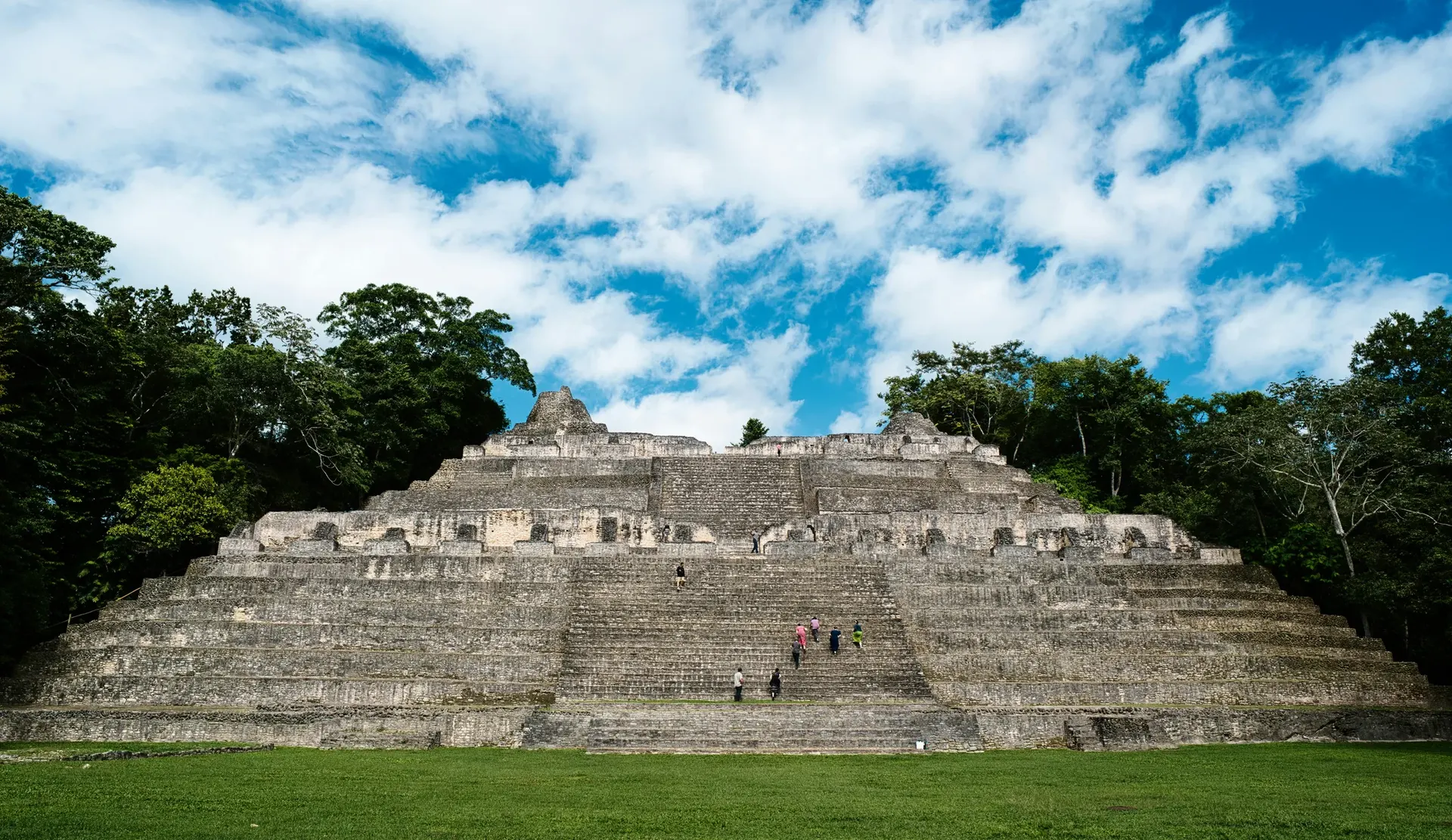
For me, the journey to Caracol is part of what makes the site special. From San Ignacio you head up through Mountain Pine Ridge and deeper into the Chiquibul Forest, and development gradually disappears behind you. What gets me is the contrast: quiet plazas and what looks like untouched forest, hiding the causeways, reservoirs, and terraces that supported more than 100,000 people at the city's height. Then you reach Caana and look up.
Don't miss: Caana, the royal and administrative complex that still towers over the forest
The north is for river days and short hops from Belize City. Lamanai is reached by boat up the New River, while Altun Ha is the compact half-day that works even on a tight schedule or between the airport and the water taxi.
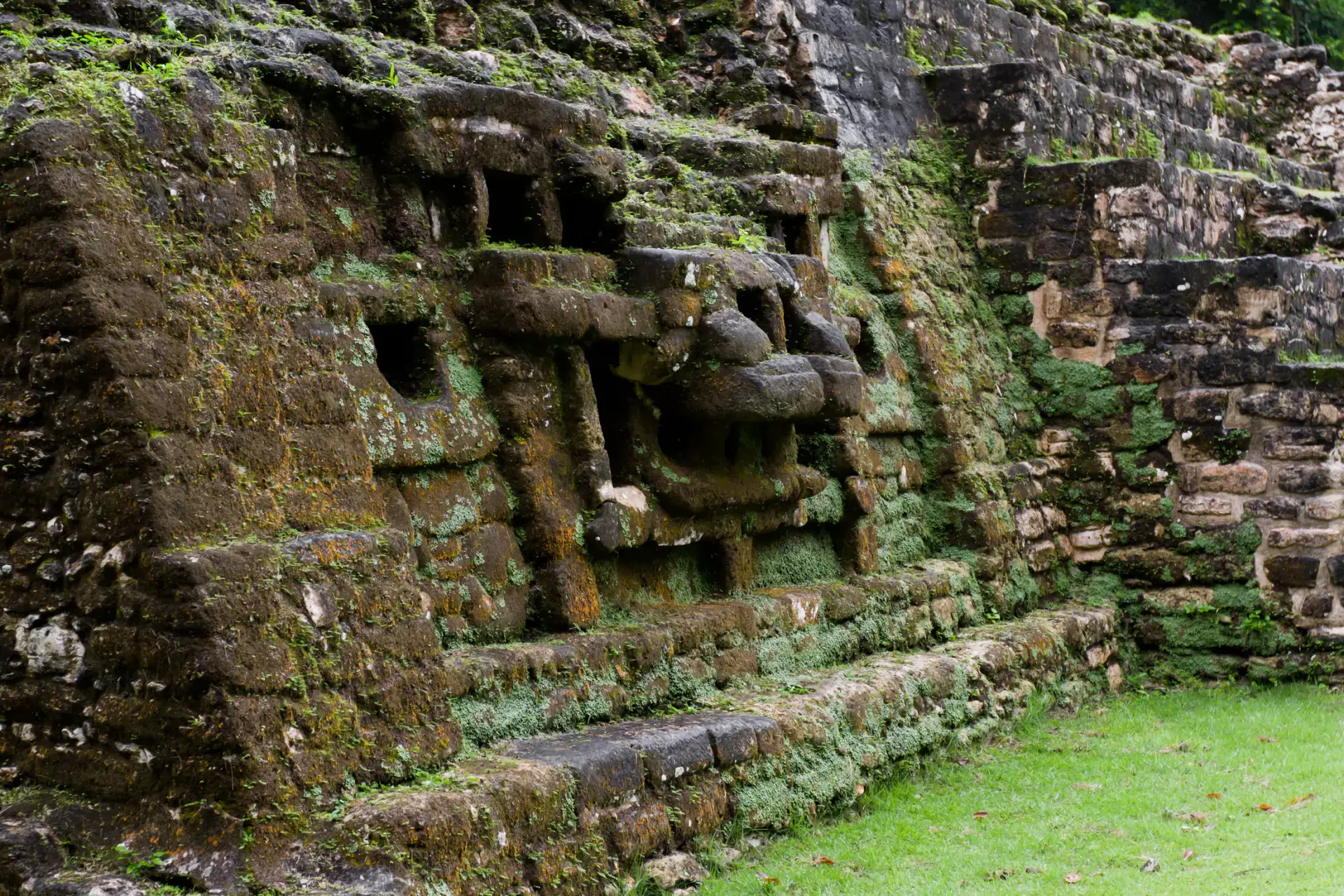
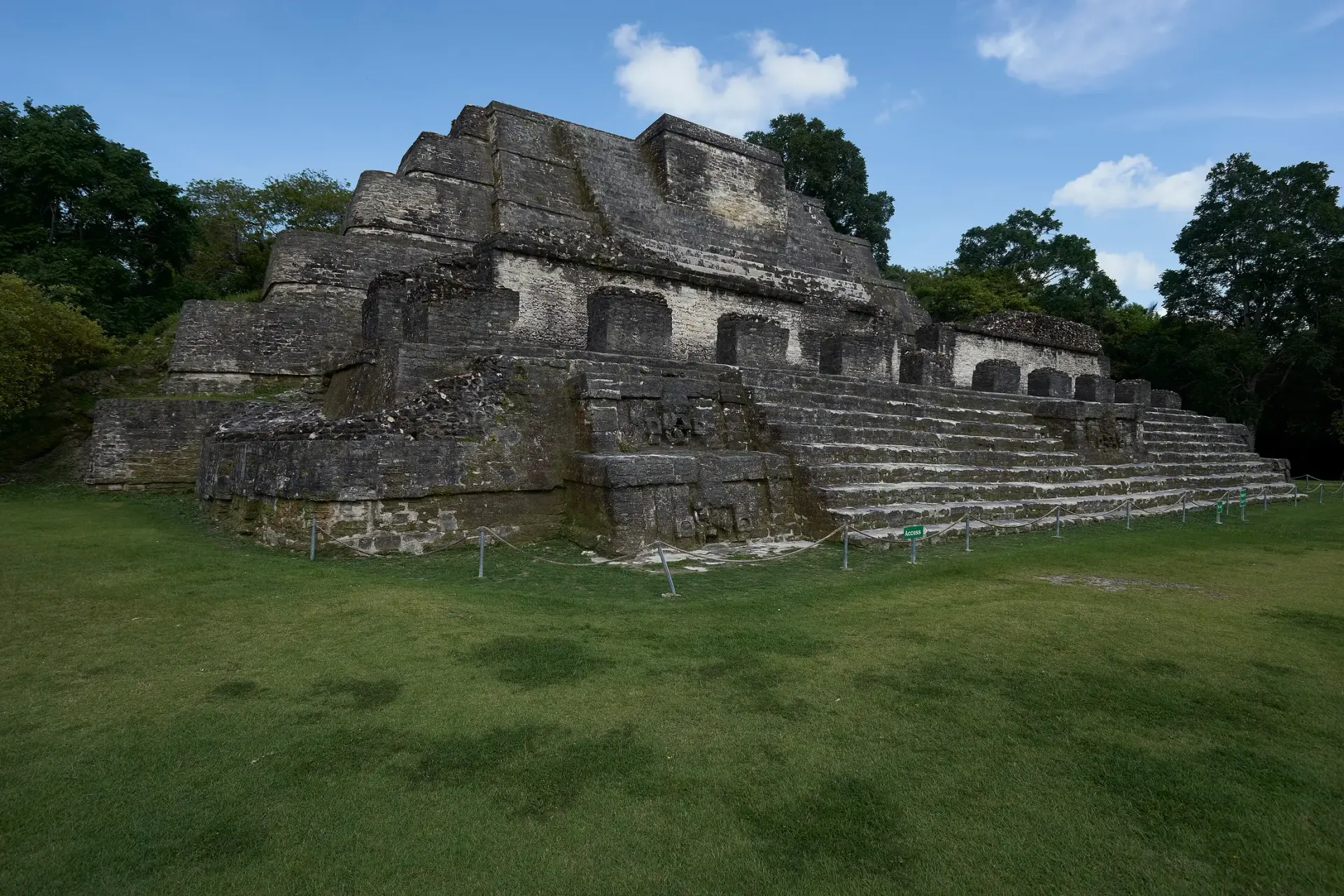
What I like about Lamanai is that the day feels bigger than arriving at another archaeological site. Come by boat up the New River and the journey is half the point: forest along the banks, and a real chance of birds, iguanas, and crocodiles before you reach the ruins. People had established a community here by around 1500 BC and stayed into the Spanish colonial era, one of the longest occupation histories of any major Maya center in Belize.
Don't miss: The High Temple, Mask Temple, and Jaguar Temple within one of Belize's longest-lived Maya communities
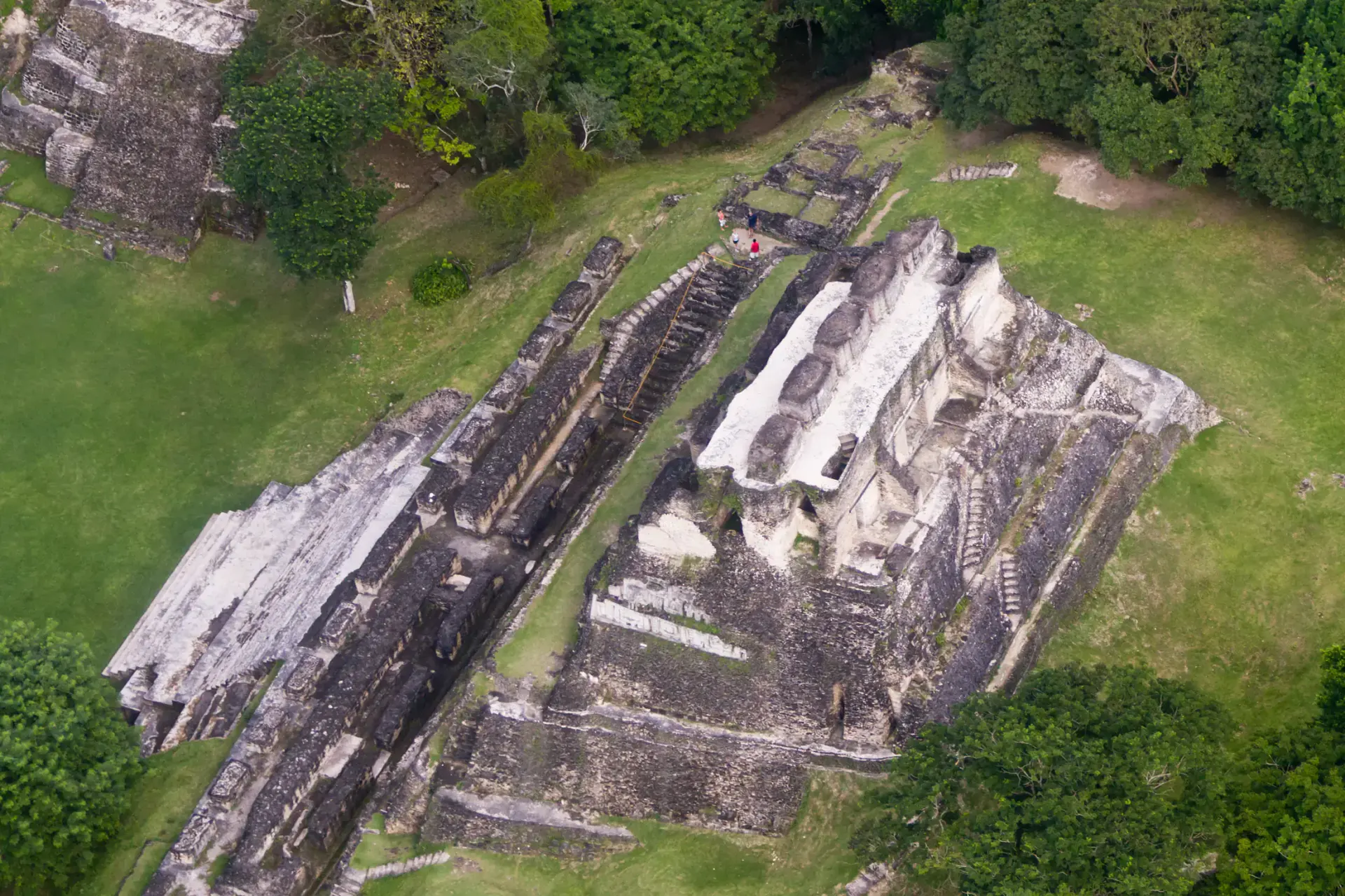
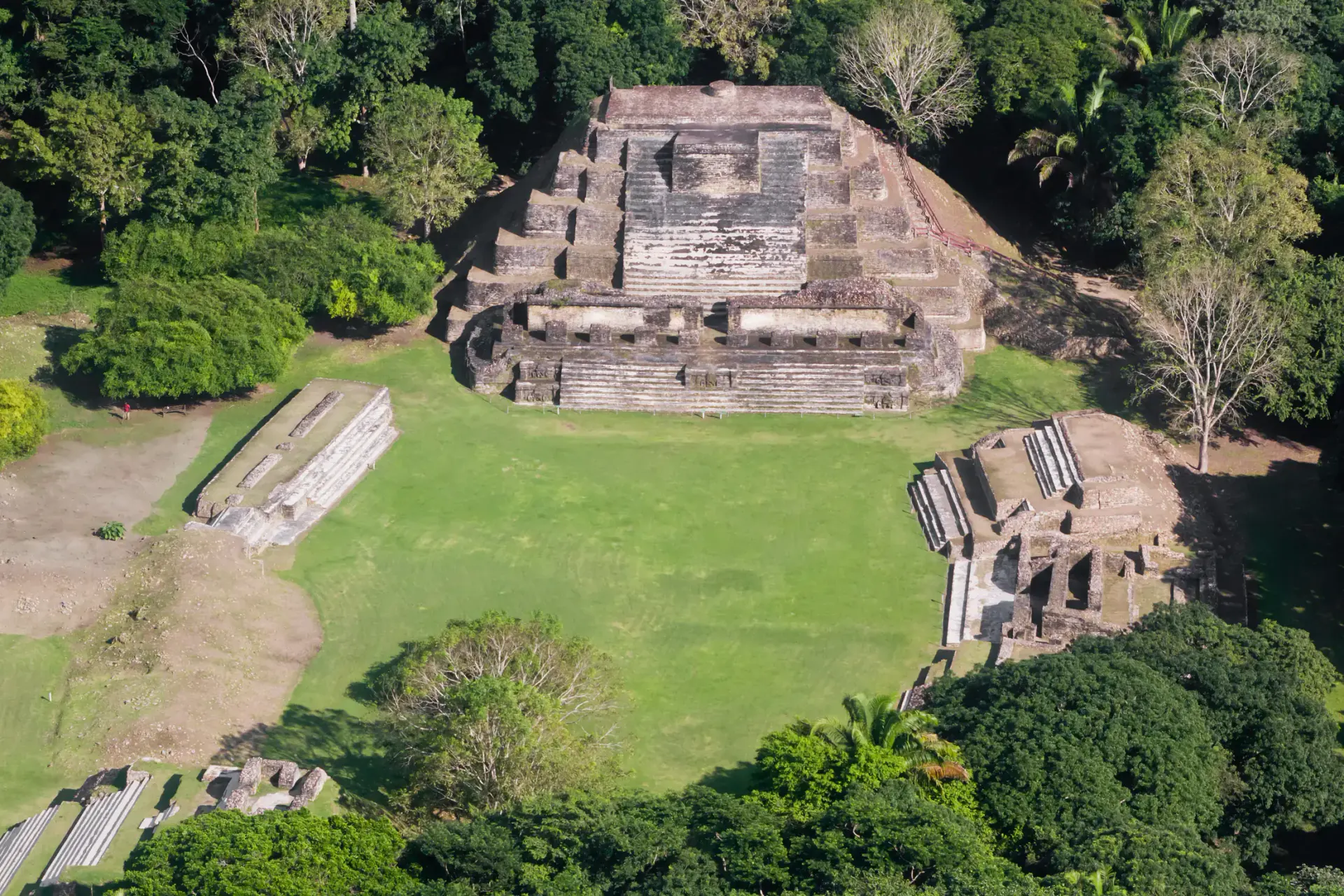
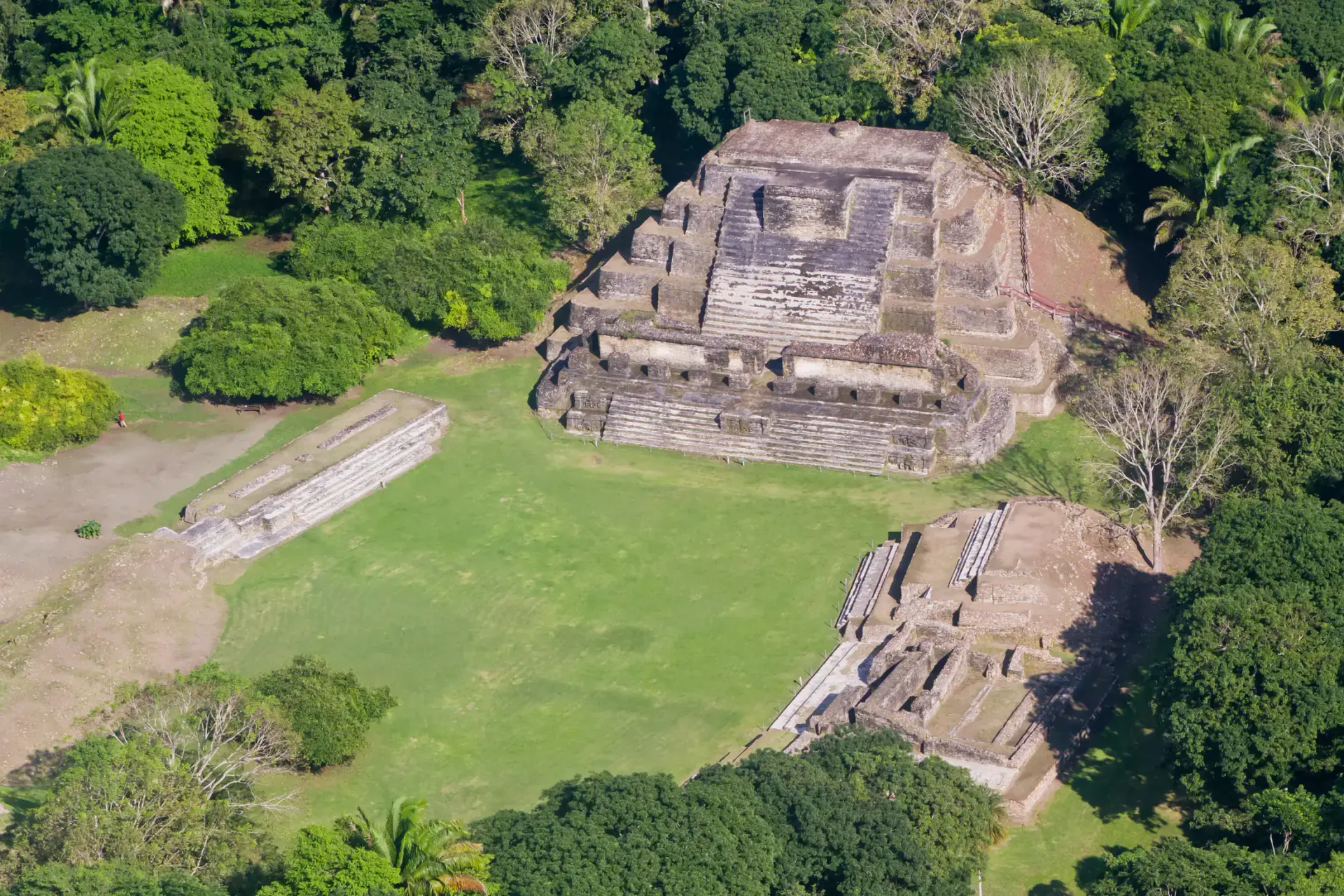
What I like about Altun Ha is how easy it is to take in once you step into the main plazas. It feels completely different from Lamanai: the site is open, and from the middle of a plaza you can see several of the main buildings at once. It is best known for what came out of the Temple of the Masonry Altars, a carved jade head of the sun god weighing almost ten pounds.
Don't miss: The Temple of the Masonry Altars, where Belize's famous jade head was found
Toledo's sites are quieter, smaller, and more about detail than dramatic climbs. Lubaantun and Nim Li Punit sit about half an hour apart, so they pair well in one morning from Punta Gorda or as a stop on the drive between Placencia and the far south.
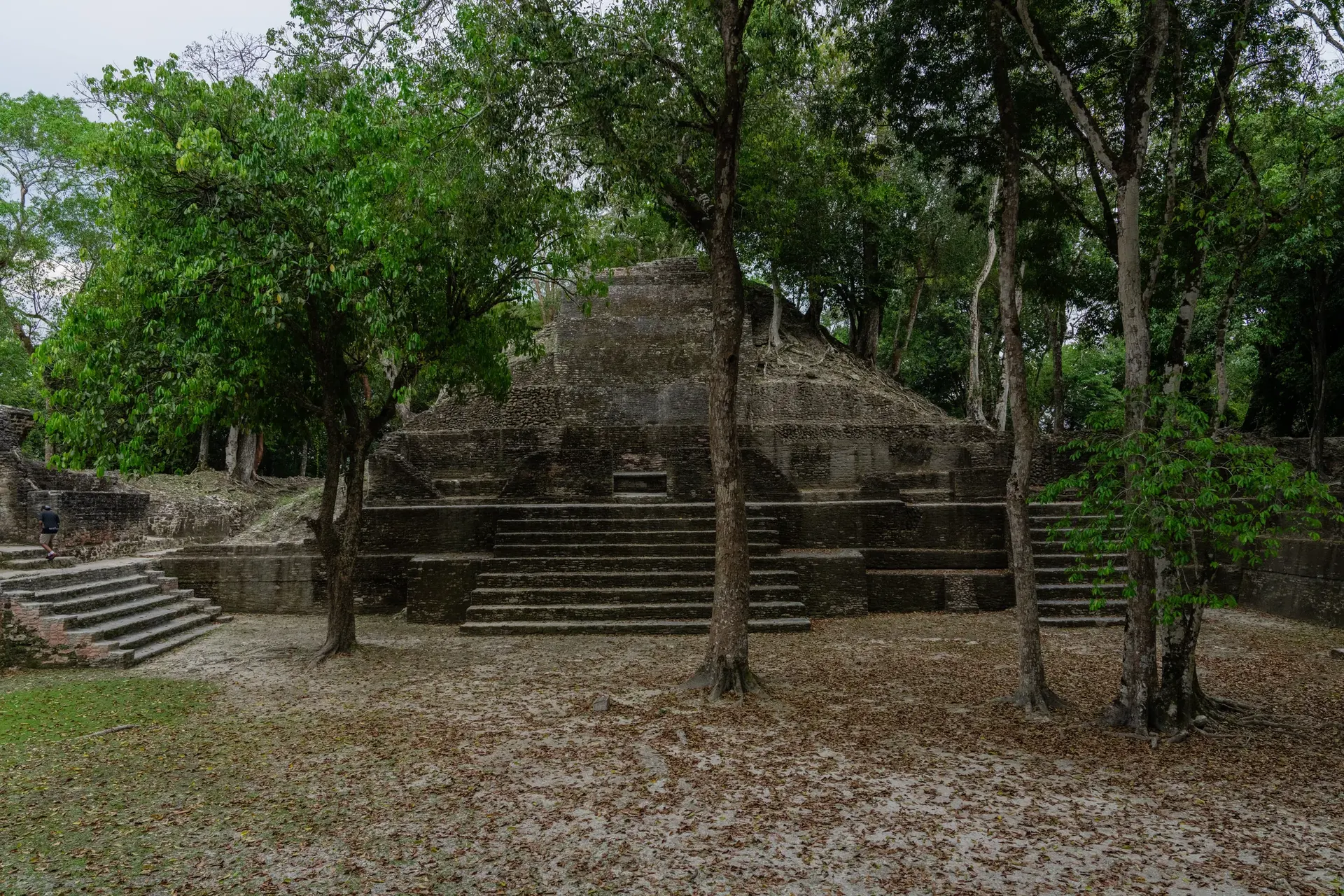
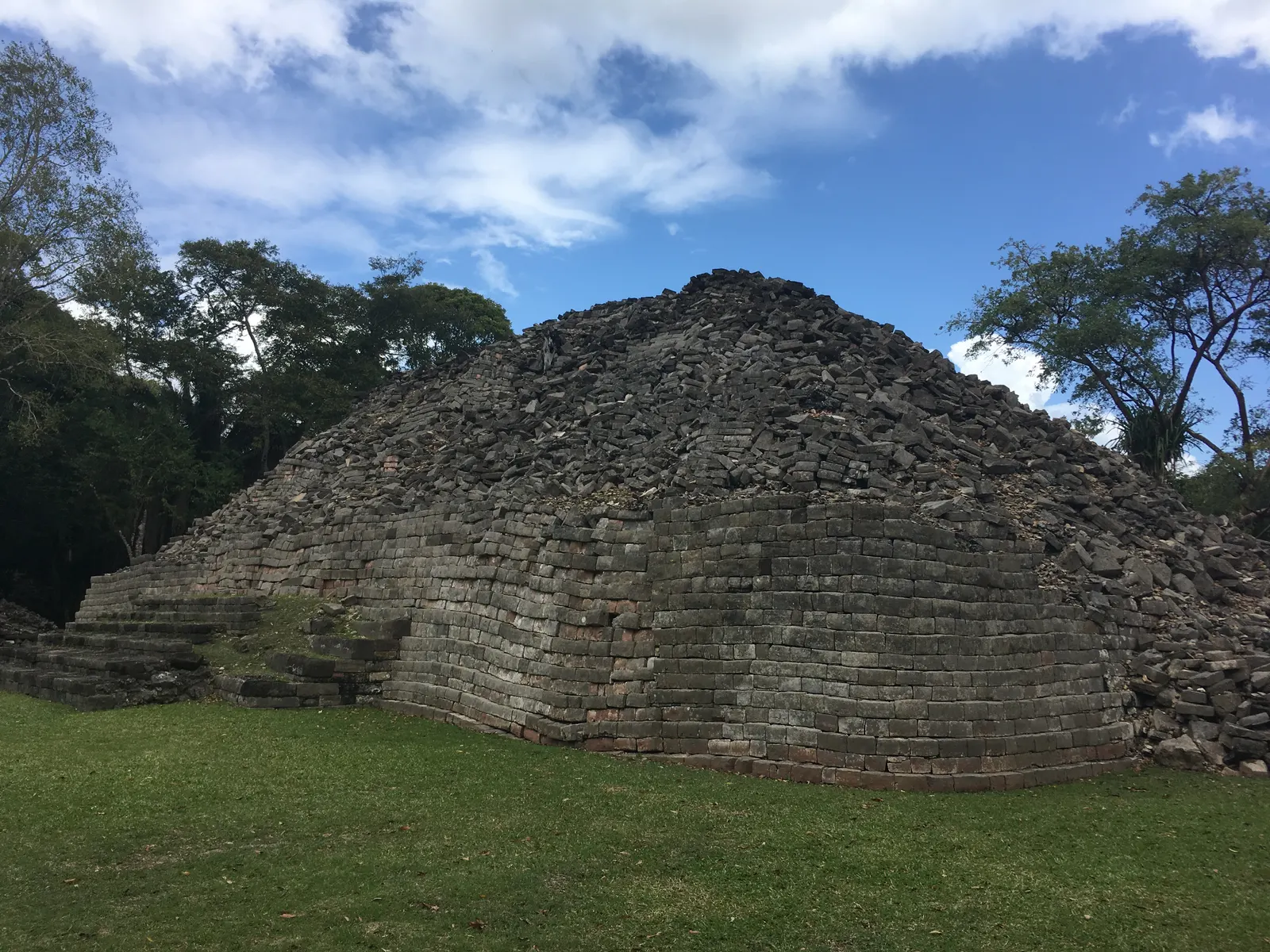
Lubaantun does not look or feel like Belize's other major Maya sites. There is no El Castillo, no towering Caana. Instead you move between terraces, stairways, plazas, and ballcourts, with the forest growing around everything. The first thing I notice is the stonework: shaped blocks fitted together without mortar, which is why so many stones have shifted and fallen. The name, Place of Fallen Stones in Mopan Maya, fits perfectly.
Don't miss: Mortarless stone architecture, stepped plazas, and three ballcourts on a forested hilltop
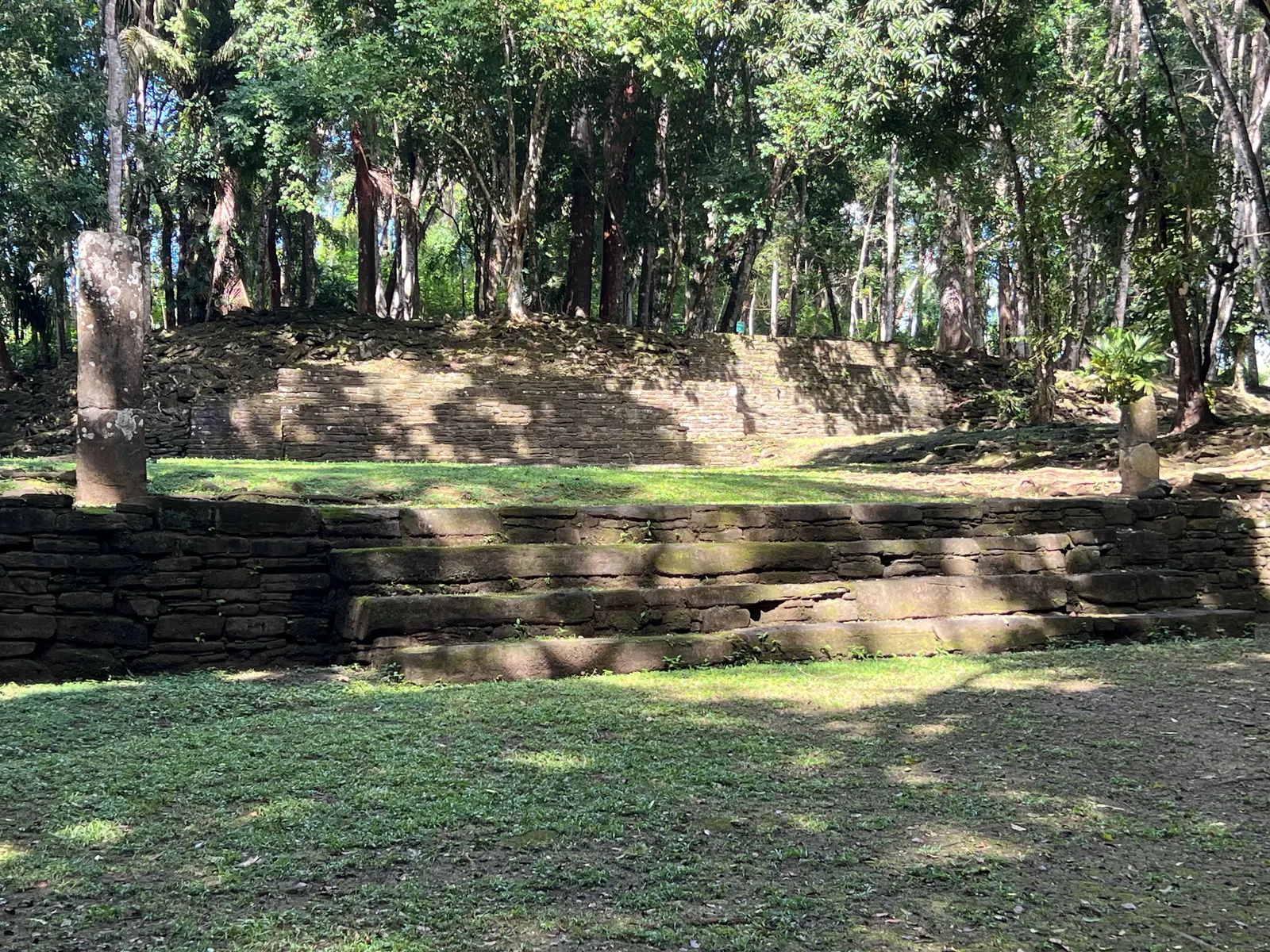
I first visited Nim Li Punit with my class on International Archaeology Day, so my experience was a little different from a normal visit. No single restored temple dominates here. Instead I found myself paying attention to the stelae, and to Stela 14 above all, whose towering carved headdress gave the site its name and stands about 9.5 metres tall. Once someone explains the carvings, they stop being slabs of stone.
Don't miss: Stela 14, the 9.5-metre monument whose enormous headdress gave the site its name
Pick Xunantunich for a half day from San Ignacio. You cross the Mopan River on the ferry, climb El Castillo and look into Guatemala. Pick Caracol when you can give it a full day. The drive runs through Mountain Pine Ridge into the Chiquibul, and the city at the end is far bigger. Short on time? Xunantunich.
Cahal Pech sits on the hill above town and takes an hour or two. You walk through palace rooms, courtyards and narrow passageways. Xunantunich has the bigger pyramid and the valley views. Both are close to San Ignacio, so plenty of people do the pair in one day.
Altun Ha is about 30 miles north of Belize City and takes a couple of hours, so it fits a tight schedule. Lamanai takes most of the day. The boat ride up the New River is half the point, with a real chance of crocodiles and birds before you reach the temples. Want wildlife with your ruins? Lamanai.
You don't have to choose. They sit about half an hour apart and fit in one morning. Lubaantun is the one for the mortarless stonework and three ballcourts. Nim Li Punit is the one for carved stelae, including the 9.5-metre Stela 14.
Entrance fees at Belize's archaeological reserves are modest and paid at the gate; bring cash. You can explore Xunantunich, Cahal Pech, and Altun Ha independently using the onsite interpretive signs, but a licensed guide is worth it almost everywhere. Guides point out the symbolism in carvings and the royal residential areas that are easy to walk past, and for Caracol most travelers go with an operator because of the distance. How to find a licensed Belize tour guide.
What to wear and bring
Footwear
Closed-toe walking shoes with grip for steep steps and uneven trails.
Clothing
Lightweight, breathable fabric for tropical heat; a light layer for early starts in the Pine Ridge.
Protection
Wide-brimmed hat, sunscreen, and sunglasses. The plazas have very little shade.
Personal care
Insect repellent, essential at the jungle sites, and more water than you think you need.
Rules can change by site and season, so check before you go. Some Belize ruins still allow climbing on selected structures, while others limit access to protect the site.
Which Maya site is best if I only have one day?
Xunantunich is usually the easiest pick if you want a shorter day from San Ignacio. Caracol is better if you want a bigger inland outing and do not mind a longer drive.
Is Caracol worth the long drive?
Yes, if you want a major jungle and archaeology day and you are fine starting early. It is the site most people choose when they want one memorable inland trip rather than a quick stop.
Can you visit Lamanai as a day trip from the cayes?
Not easily from the cayes directly. Lamanai sits inland near Orange Walk and is best accessed from Belize City or Orange Walk Town, typically via a boat tour up the New River. Some operators run it as a long day from Belize City. If you are basing on the islands, it works better as part of a transit day through Belize City or as an add-on when traveling between the north and the cayes.
Is Cahal Pech worth visiting if I am already seeing Xunantunich?
Yes, especially because it is right on the edge of San Ignacio and takes only a couple of hours. The site is smaller and less dramatic than Xunantunich, but it is one of the oldest Maya sites in the Belize River Valley and easy to add as a half morning before heading somewhere else. It makes more sense as a pair than as a standalone day.
Do I need a guide for Xunantunich or can I go independently?
You can visit Xunantunich without a guide. The site has onsite staff and interpretive signs. A guide adds context on the history and the carvings on El Castillo, which matters more for people interested in the archaeology than those just looking for the views. Getting there requires a hand-cranked ferry crossing across the Mopan River near Benque Viejo, which is part of the charm.
What is the best way to combine a Maya site with a Belize caye trip?
The most common combination is two to three nights in San Ignacio for ruins and cave days, then water taxi to either Caye Caulker or San Pedro for reef time. San Ignacio to Belize City by shared shuttle takes about two hours, then water taxi from there. Some people do it in reverse, starting with island time and ending with the inland leg. Either order works, but ending with the islands tends to be more relaxing as a close to the trip.
Xunantunich or Caracol: which Mayan site should I choose?
Xunantunich is the easy half-day from San Ignacio: a hand-cranked river ferry and a climbable pyramid with views into Guatemala. Caracol is the full-day jungle expedition to Belize's tallest structure, far less crowded but a long forest drive. Short on time, choose Xunantunich; want one epic archaeology day, choose Caracol.
Is there a map of Belize's Mayan ruins?
Yes. The interactive map above plots every major site. They group into three areas: the Cayo west around San Ignacio (Xunantunich, Cahal Pech, Caracol), the north near Orange Walk and Belize City (Lamanai, Altun Ha), and the south in Toledo (Lubaantun, Nim Li Punit). Tap any pin for details and how to get there.
What is the largest Maya site in Belize?
Caracol. It is Belize's largest archaeological reserve, covering roughly 200 square kilometres of the Chiquibul Forest, and at its height around AD 600–700 it was home to more than 100,000 people. Its Caana complex is still one of the tallest structures in the country.
Which Maya ruins are near San Ignacio?
Three of the seven sites in this guide. Cahal Pech is on the hill above town, Xunantunich is about 20 minutes away across the Mopan River ferry, and Caracol is a full-day trip through Mountain Pine Ridge into the Chiquibul Forest. Tikal in Guatemala is also a routine guided day trip from San Ignacio.
How many Maya ruins are there in Belize?
Belize has hundreds of recorded Maya sites and more than seven reserves open to visitors. This guide compares seven popular stops: Xunantunich, Caracol, and Cahal Pech in the west; Lamanai and Altun Ha in the north; and Lubaantun and Nim Li Punit in the south. Most travelers see two or three in one trip.
Are the Maya ruins in southern Belize worth visiting?
Yes, if you are already in Toledo or driving south from Placencia. Lubaantun's mortarless architecture and Nim Li Punit's carved stelae are unlike anything in the west, they are rarely crowded, and the two sites are close enough to visit in one morning.
What is the oldest Maya site in Belize?
Cahal Pech has some of the earliest known settlement in the Belize Valley, around 1200–900 BC, and Lamanai was established by about 1500 BC. Both are among the oldest Maya communities documented anywhere in the country.
#ExploreBelize
#BelizeTravelInsider
Tag us in your photos for a chance to be featured.