Loading page content.
Loading Planning Guides
Preparing itineraries, logistics, and practical travel tools.
Compiling planning guides and trip resources tailored for Belize.
Loading page content.
Loading Planning Guides
Preparing itineraries, logistics, and practical travel tools.
Compiling planning guides and trip resources tailored for Belize.
Stay in the know
Belize
before
everyone else.
Events, hidden gems, seasonal highlights, and local stories, delivered straight to your inbox before they go viral.
Loading page content.
Loading Activities
Finding tours, day trips, and experiences across Belize.
Preparing destination details and local recommendations.
Keep Planning
Certified Belize tour guides for ATM Cave, Maya ruins, reef trips, wildlife outings, and private day tours across the country.
Most first trips need 7 to 10 days. Compare 20 Belize itineraries by trip length, style, bases, transfers, and car needs, from 5 days to 3 weeks.
Belize health & safety, the practical side: tap water, mosquitoes and Zika, vaccines, marine and dive hazards, clinics, and travel insurance for 2026.
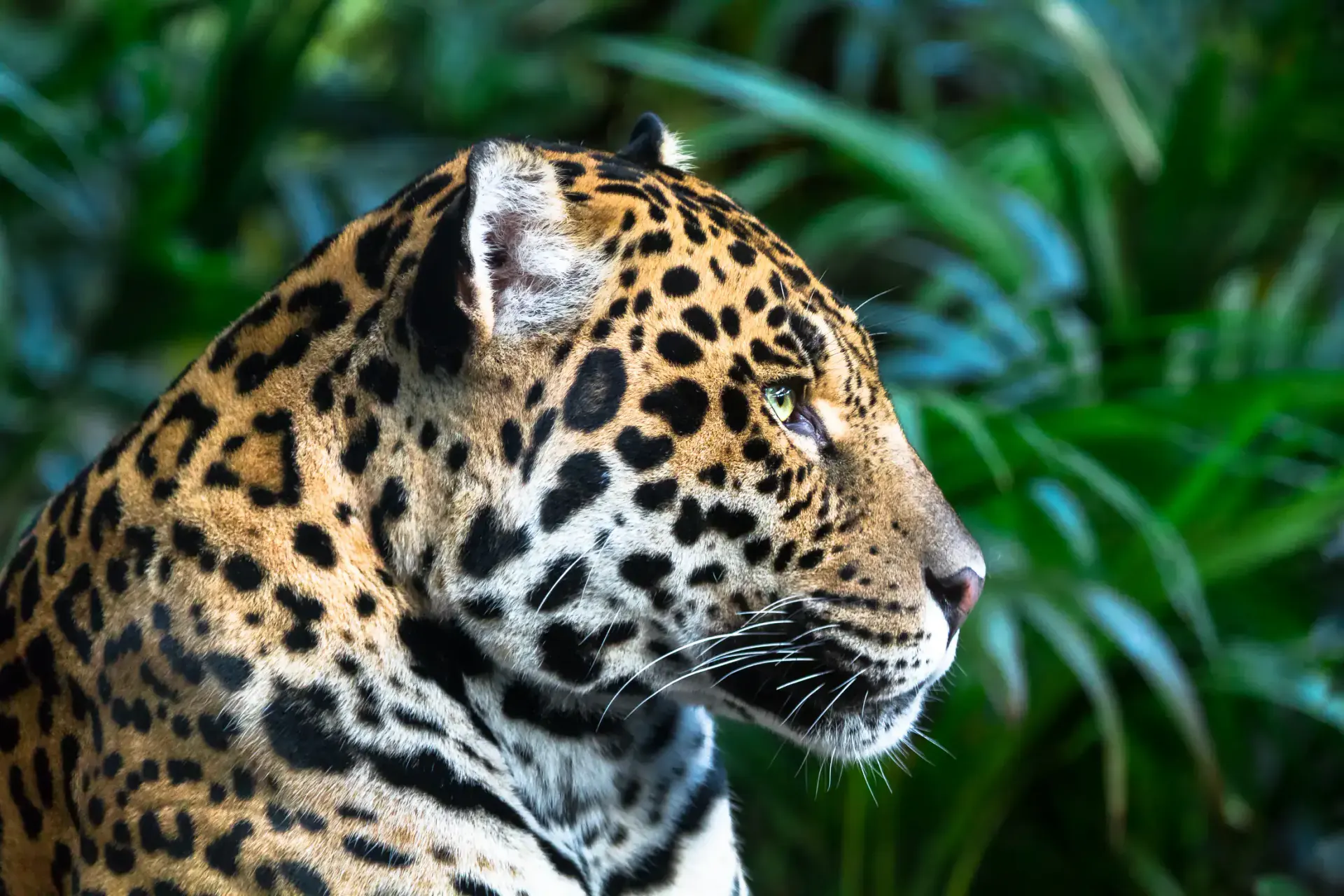
Jaguars, tapirs and harpy eagles, every one of them native to Belize, at Mile 29 on the road west
The Belize Zoo keeps only animals native to Belize, almost all of them rescued, orphaned or born there. It sits beside the George Price Highway between the airport and Cayo, so most travelers stop on a transfer day. Use the map to plan the loop, then decide whether to come back after dark for the night tour.
Last reviewed November 2, 2026
The best little zoo in the world
The Belize Zoo is a small zoo in the forest at Mile 29 on the George Price Highway, about halfway between Belize City and Belmopan. It keeps only animals native to Belize: jaguars, Baird's tapirs (the national animal), harpy eagles, scarlet macaws, crocodiles, howler monkeys and more than 40 other species, in leafy enclosures along shaded paths.
It started by accident. In 1983 a wildlife film crew finished shooting in Belize and left behind about 20 animals that had grown too tame to release. Sharon Matola, who had looked after them during filming, refused to abandon them and opened a roadside zoo to pay for their care. Today every animal there was rescued, orphaned, rehabilitated, born at the zoo or sent by another institution. None were taken from the wild for display.
Insider note
Read the signs at each enclosure. They explain how that animal came to the zoo, and knowing why a jaguar is here and not in the forest changes how the whole visit feels.
Find your way
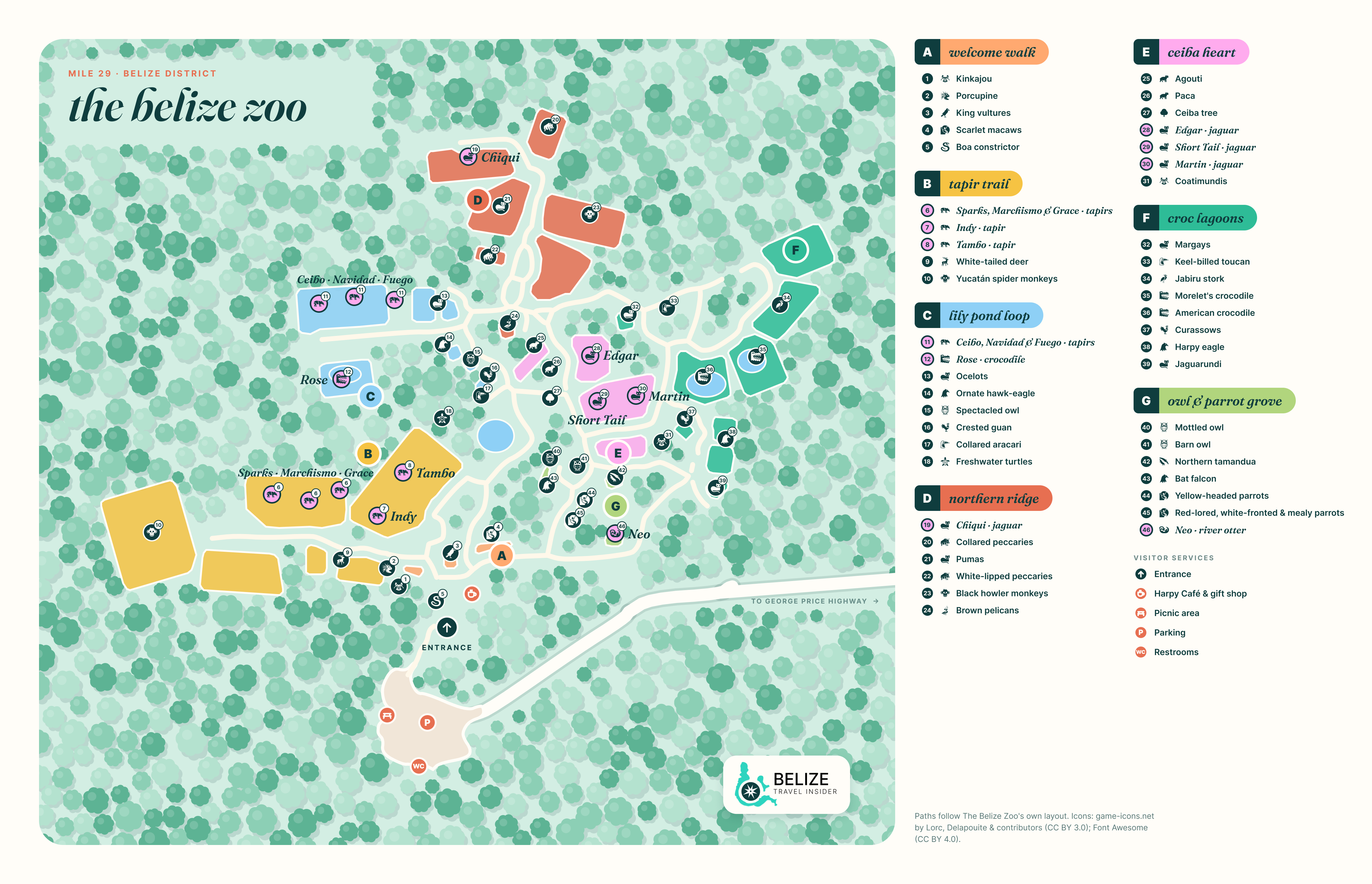
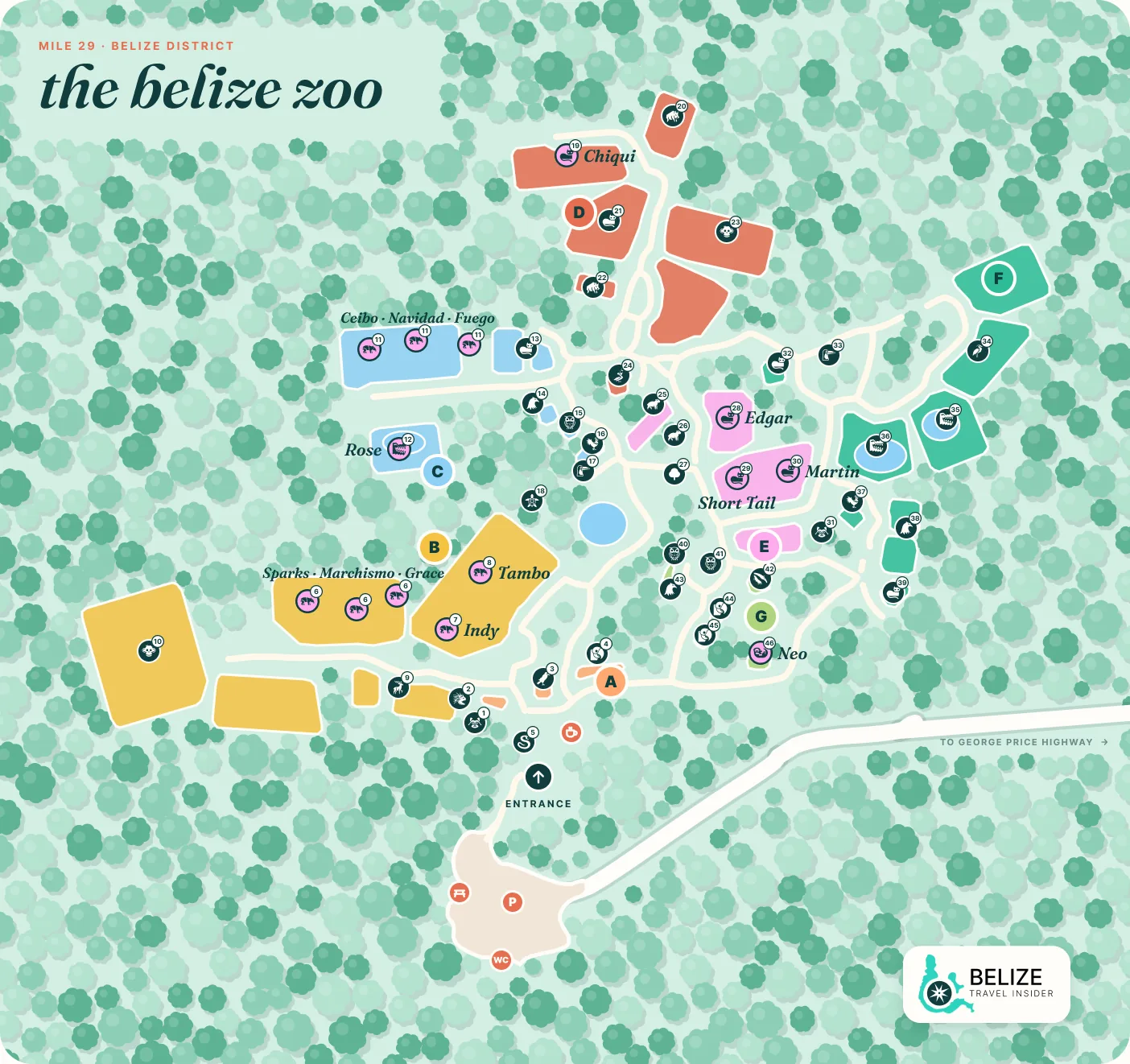
One loop of shaded paths runs from the entrance through seven areas. Pink pins are the named residents: the jaguars, the tapirs, Rose the crocodile and Neo the river otter.
The full map with the key, sized to print on one tabloid or A3 sheet, or to keep on your phone.
Rowan's visit
The sign at the entrance is small, and so is the first impression: this looks like a little zoo. Once we were through the gate, I realized how much there was to see.
Right after buying tickets we headed for a small bridge and found a snake lying across the top of it. My sister refused to cross, so we turned around and found another way. It was a startling start, but it became one of my favorite things about the place. The zoo sits in real forest, and the wild animals living around the enclosures are part of the visit too.
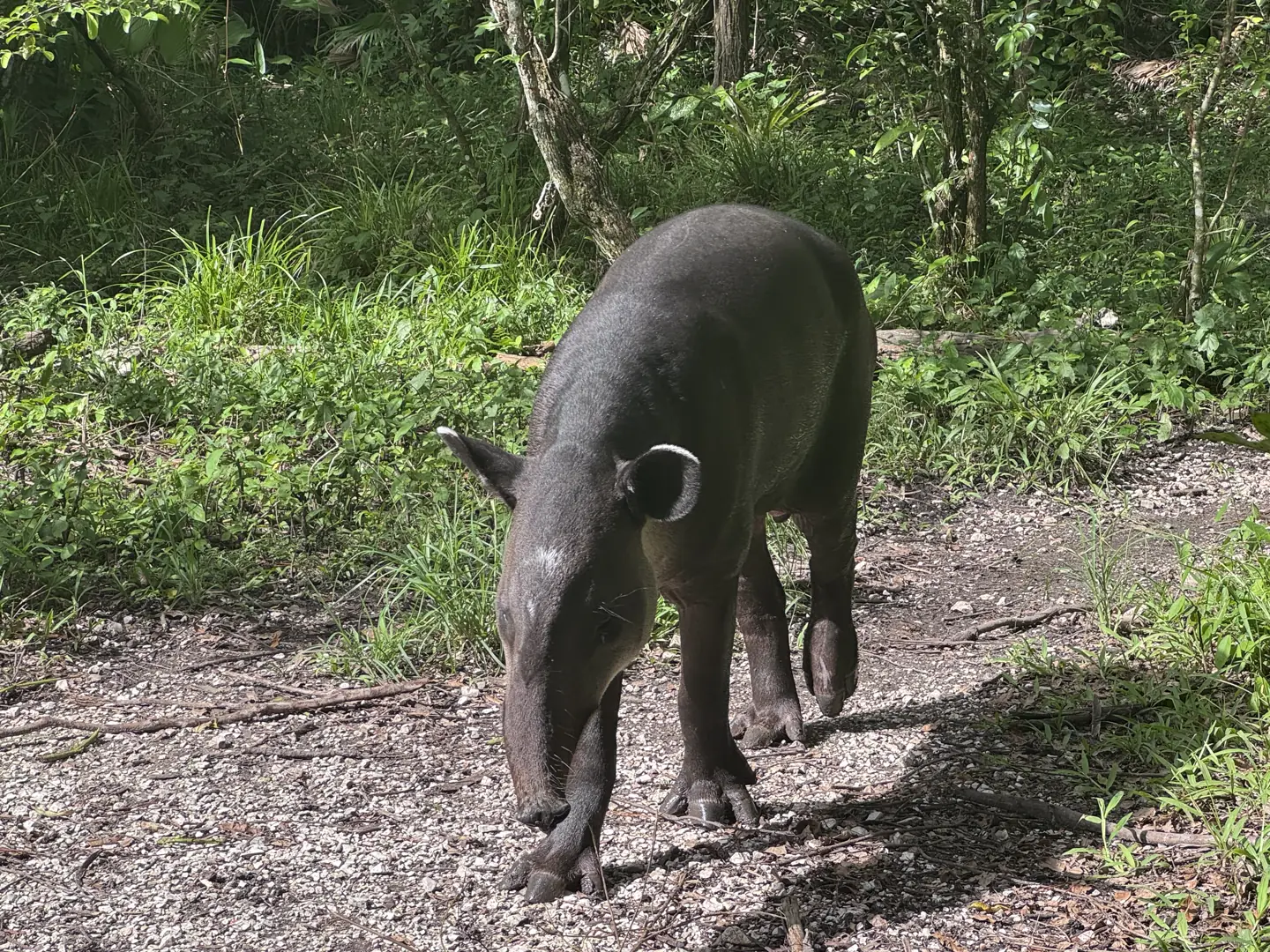
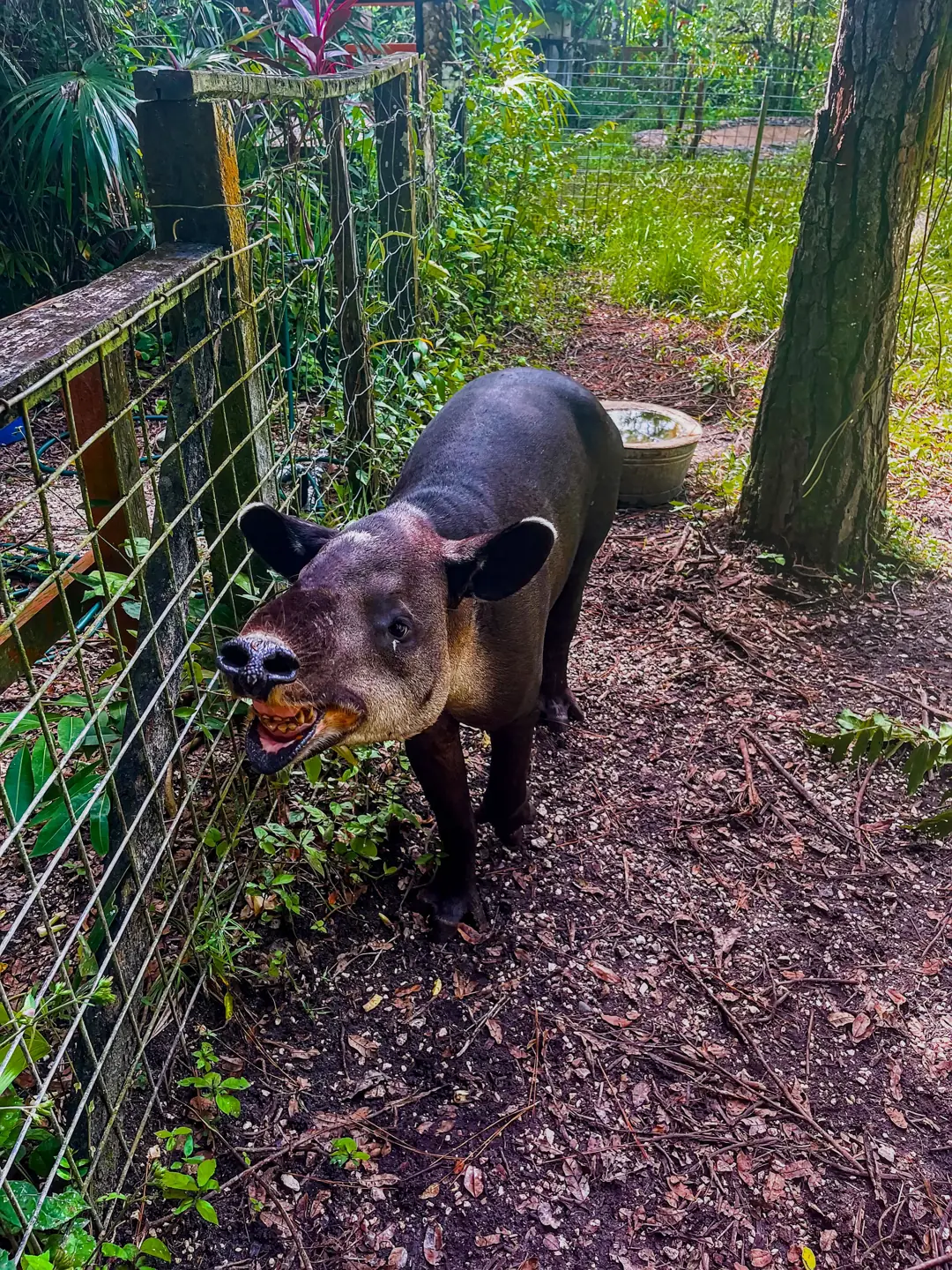
The tapir, Belize's national animal, came first. Its face is shaped so that it seems to be smiling at you. I know that is just how a tapir looks, but it was hard not to smile back.
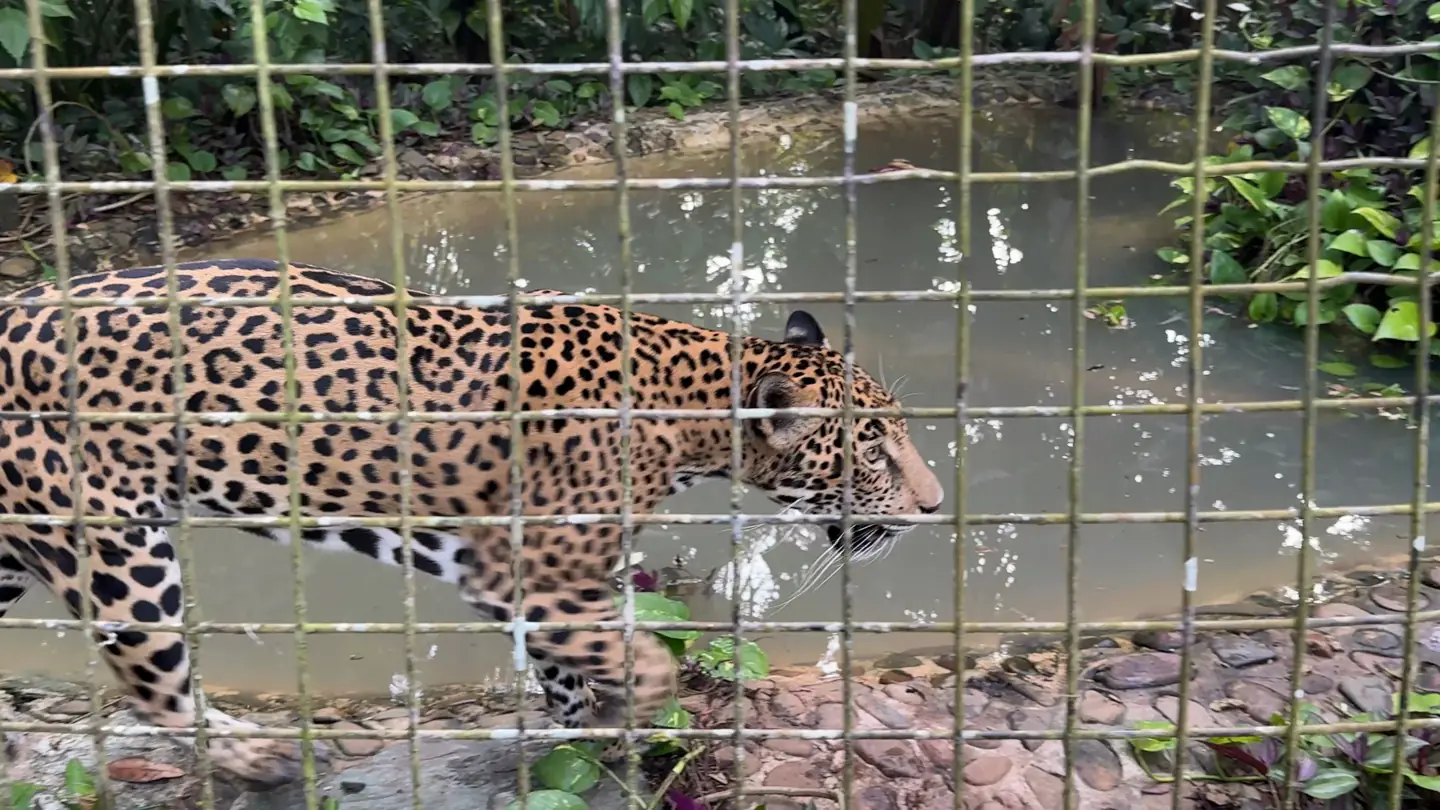
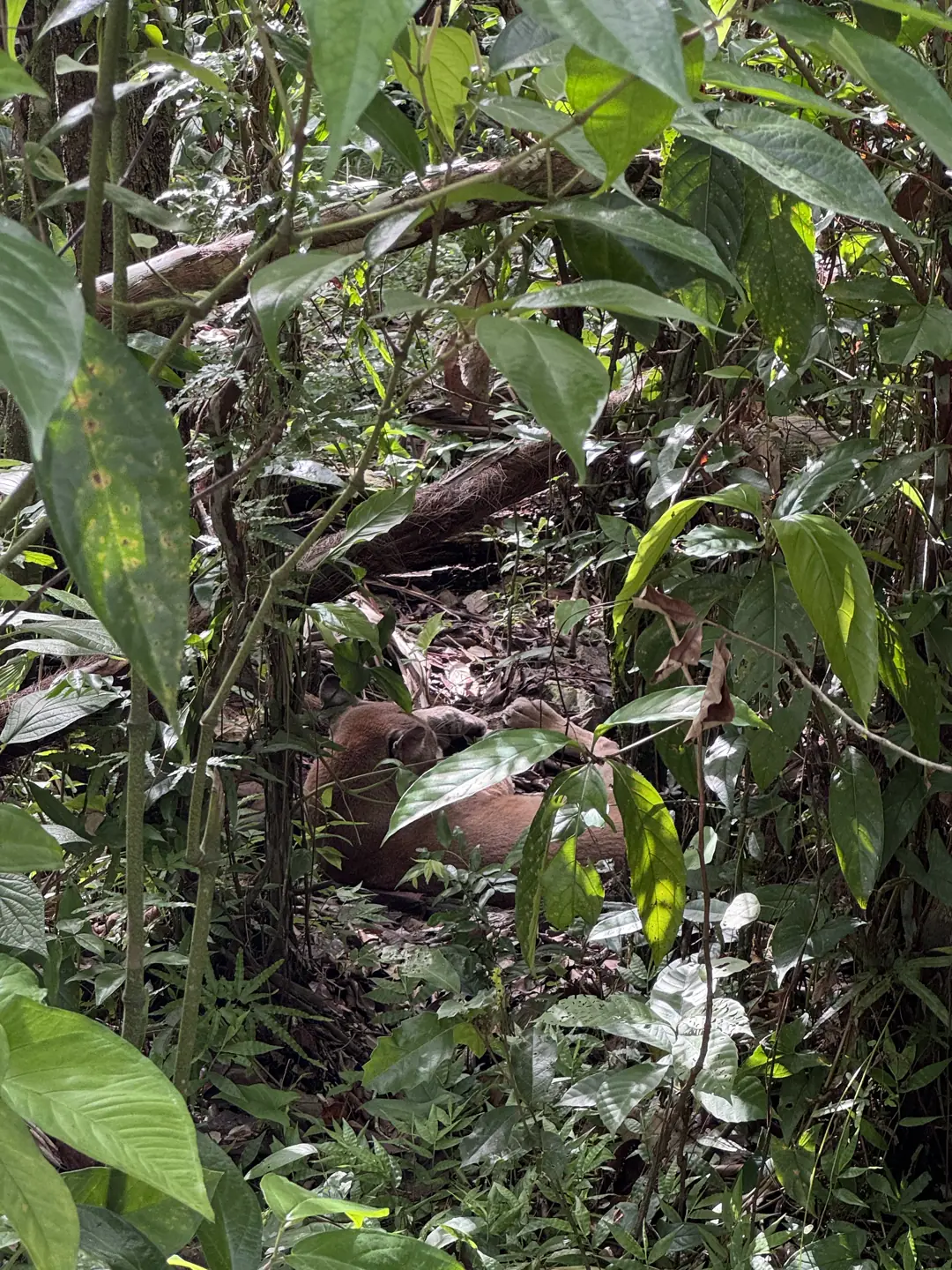
Chiqui the jaguar took longer. I stared into the enclosure and saw nothing until another visitor pointed the jaguar out; that spotted coat disappears completely into the leaves. Then Chiqui walked straight toward us, and the whole crowd fell a little in love. After working that hard to find a jaguar, seeing one that close felt earned.
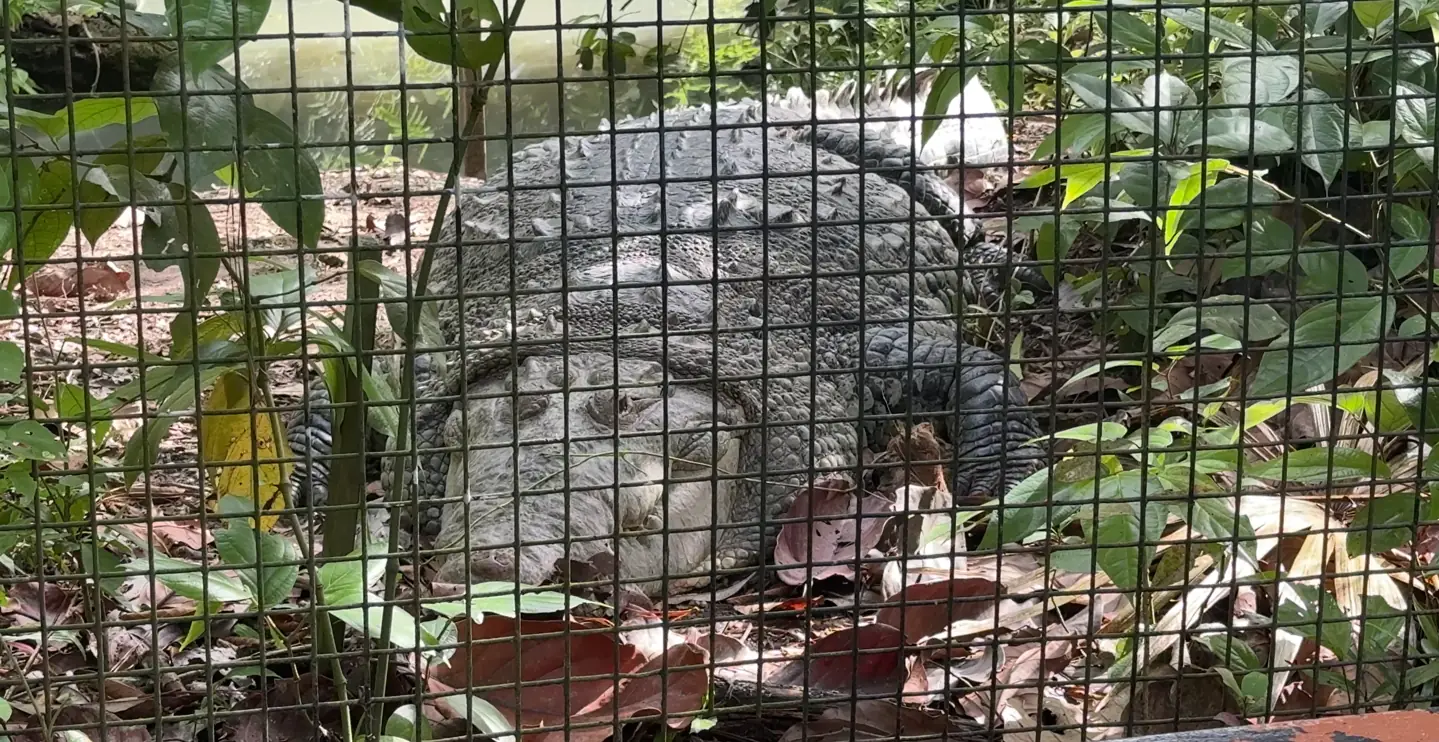
Brutus, a huge American crocodile, lay so still that my older sister decided he was fake. I asked her why she didn't climb in with him, then. Up close, his size is genuinely intimidating.
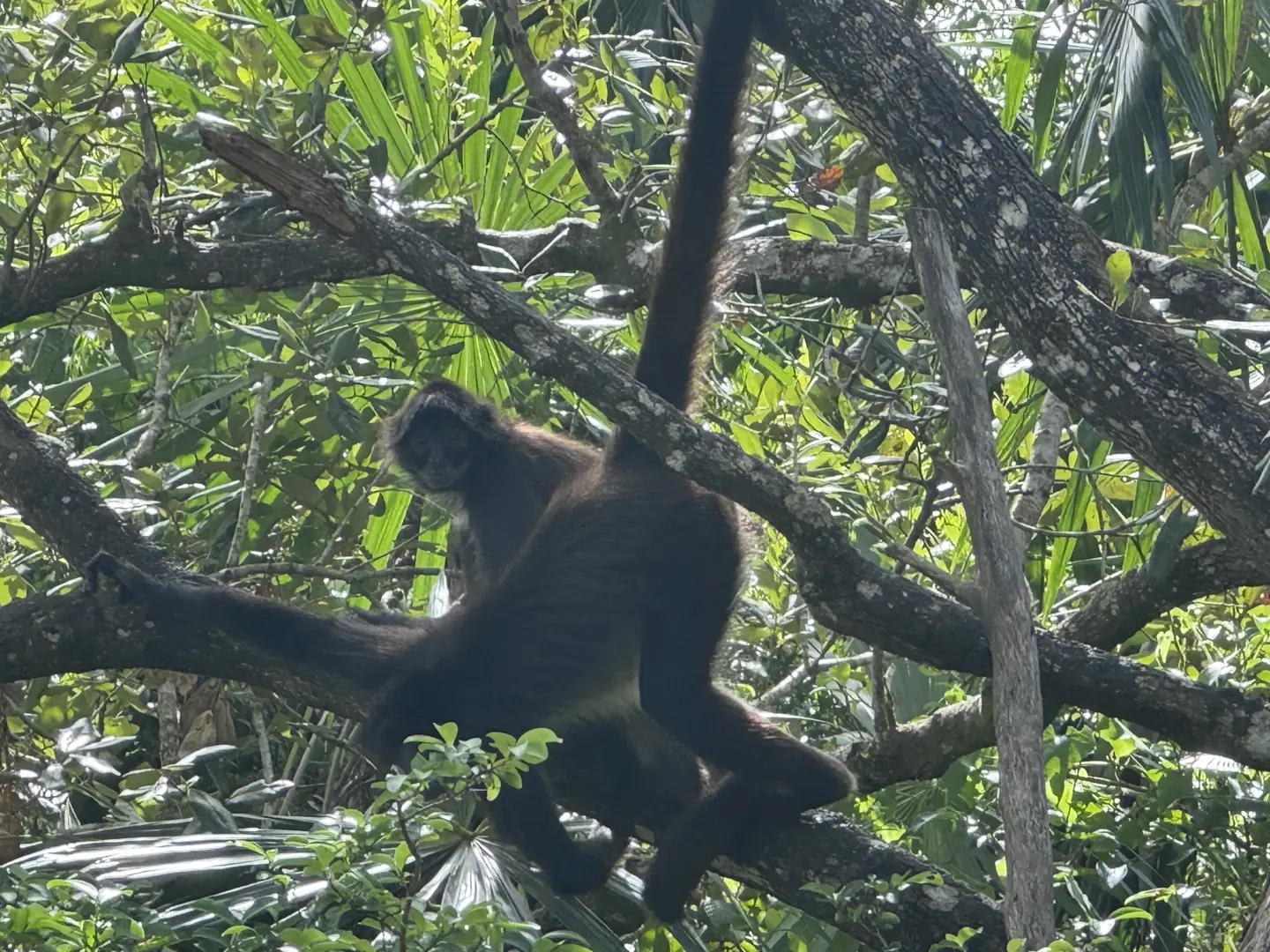
Howler monkeys moved from tree to tree and stopped to look back at us, two toucans sat together, and what I am fairly sure was a collared peccary reminded my sister of Pumbaa from The Lion King. The harpy eagle surprised me most. Photos do not prepare you for how big it is.
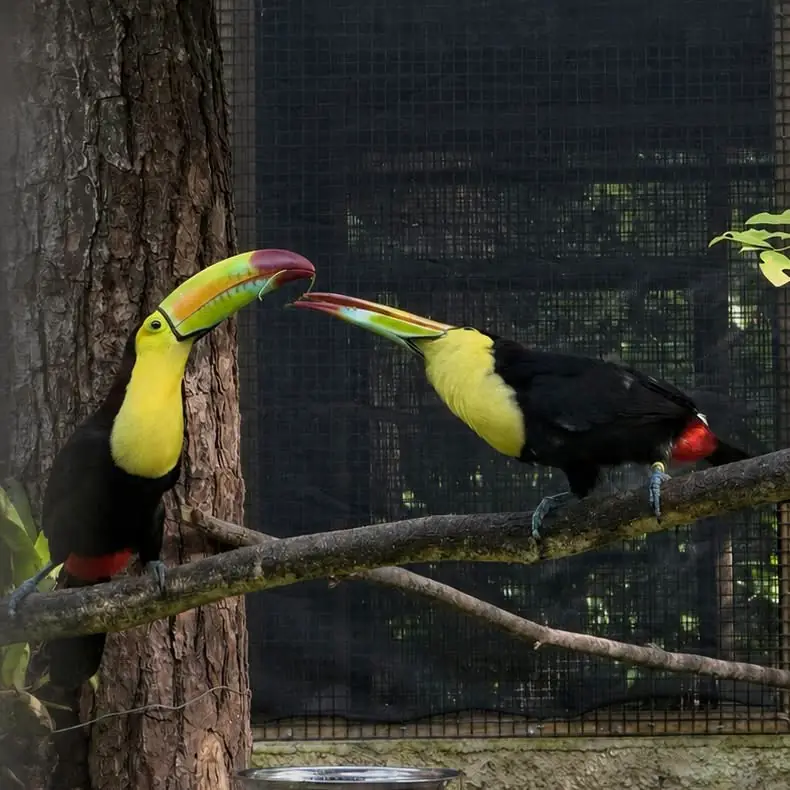
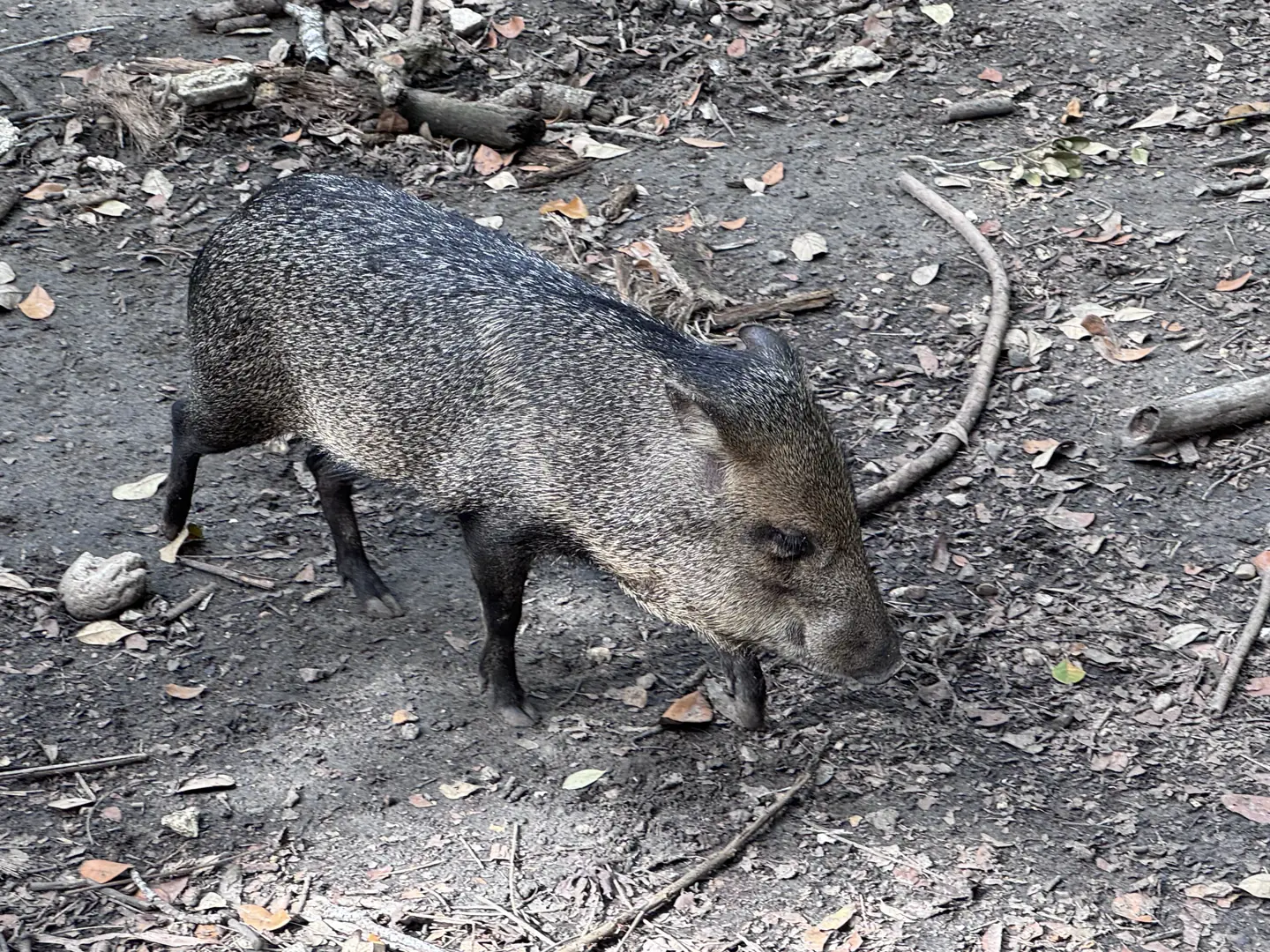
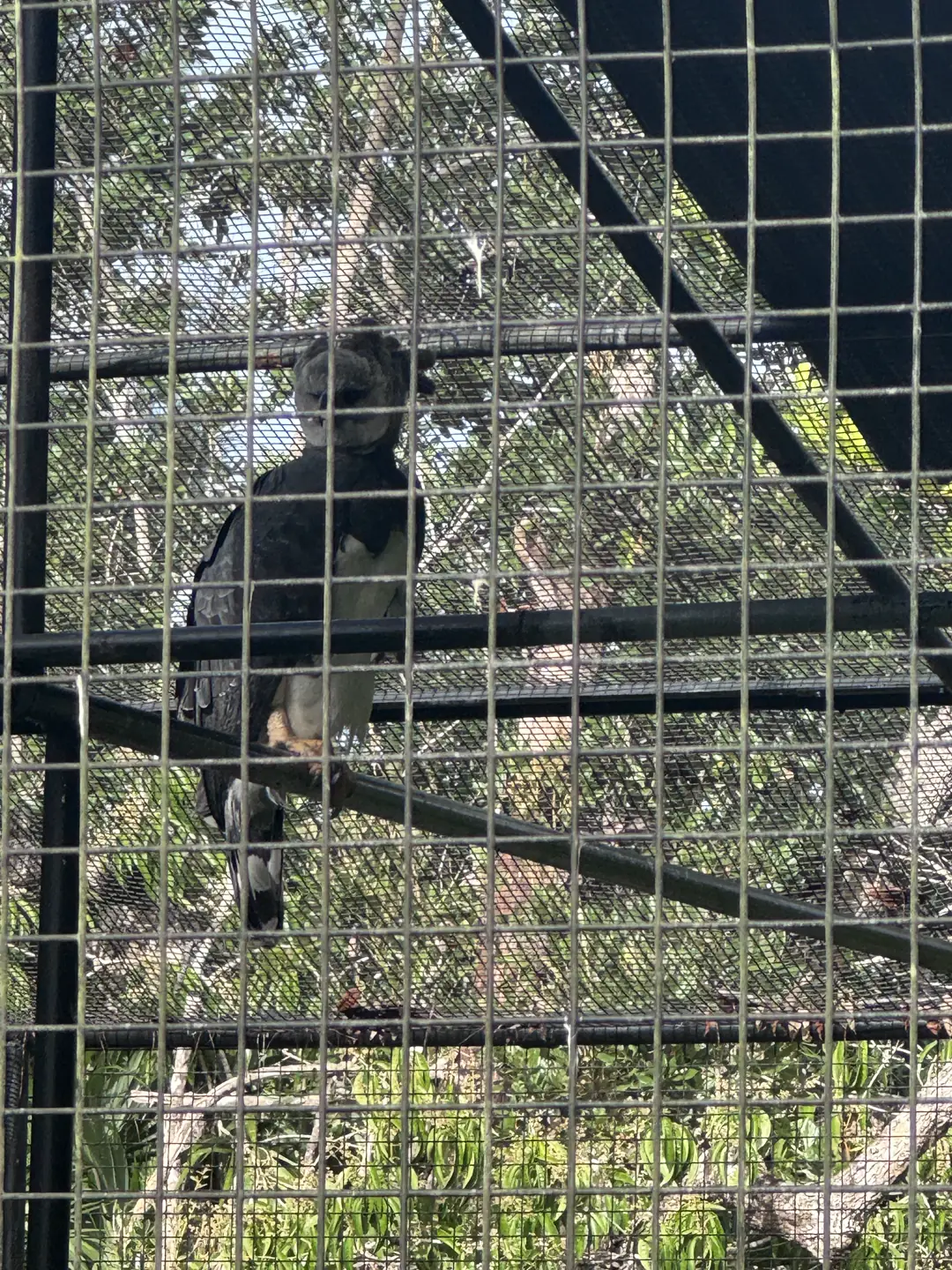
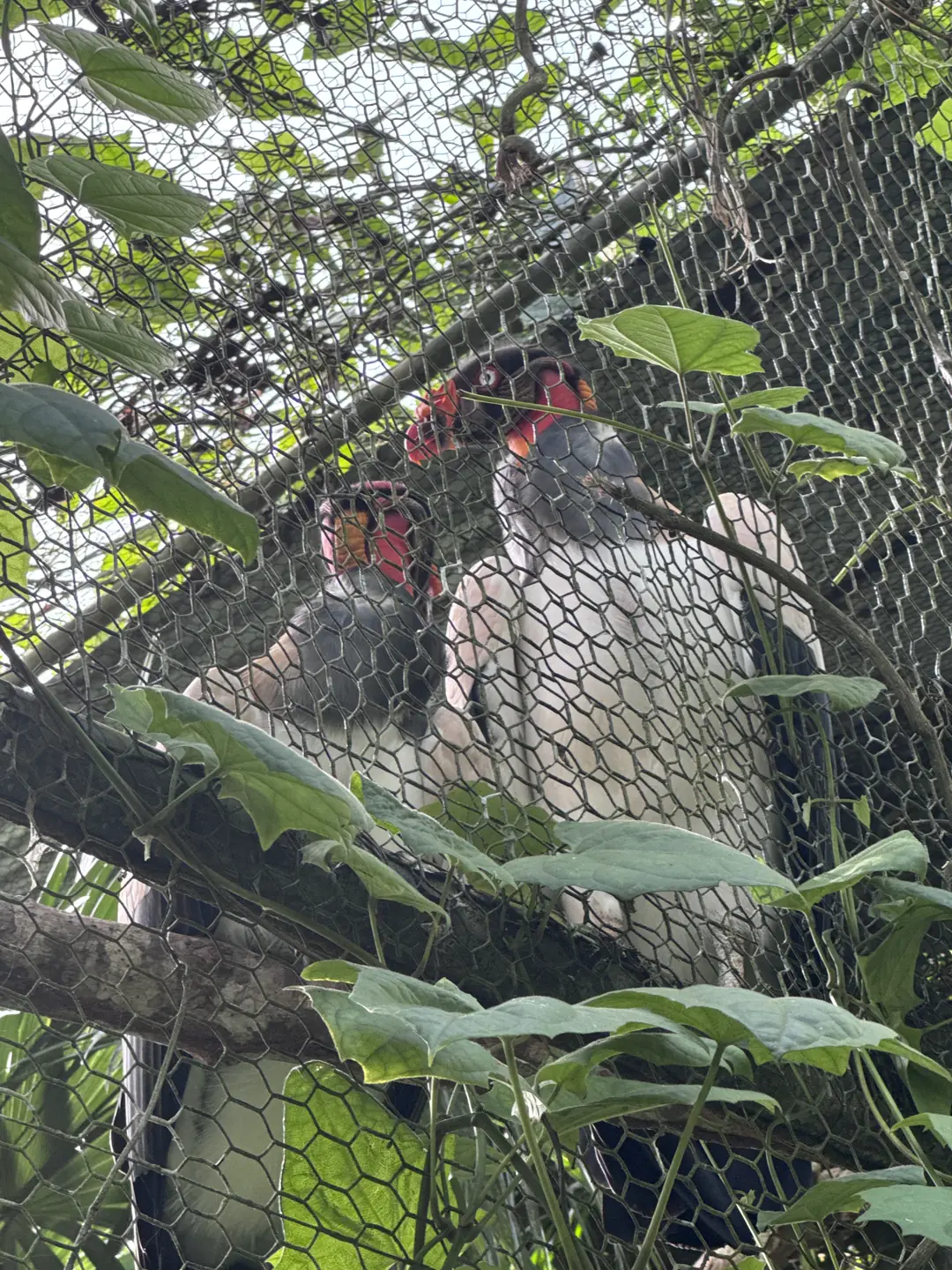
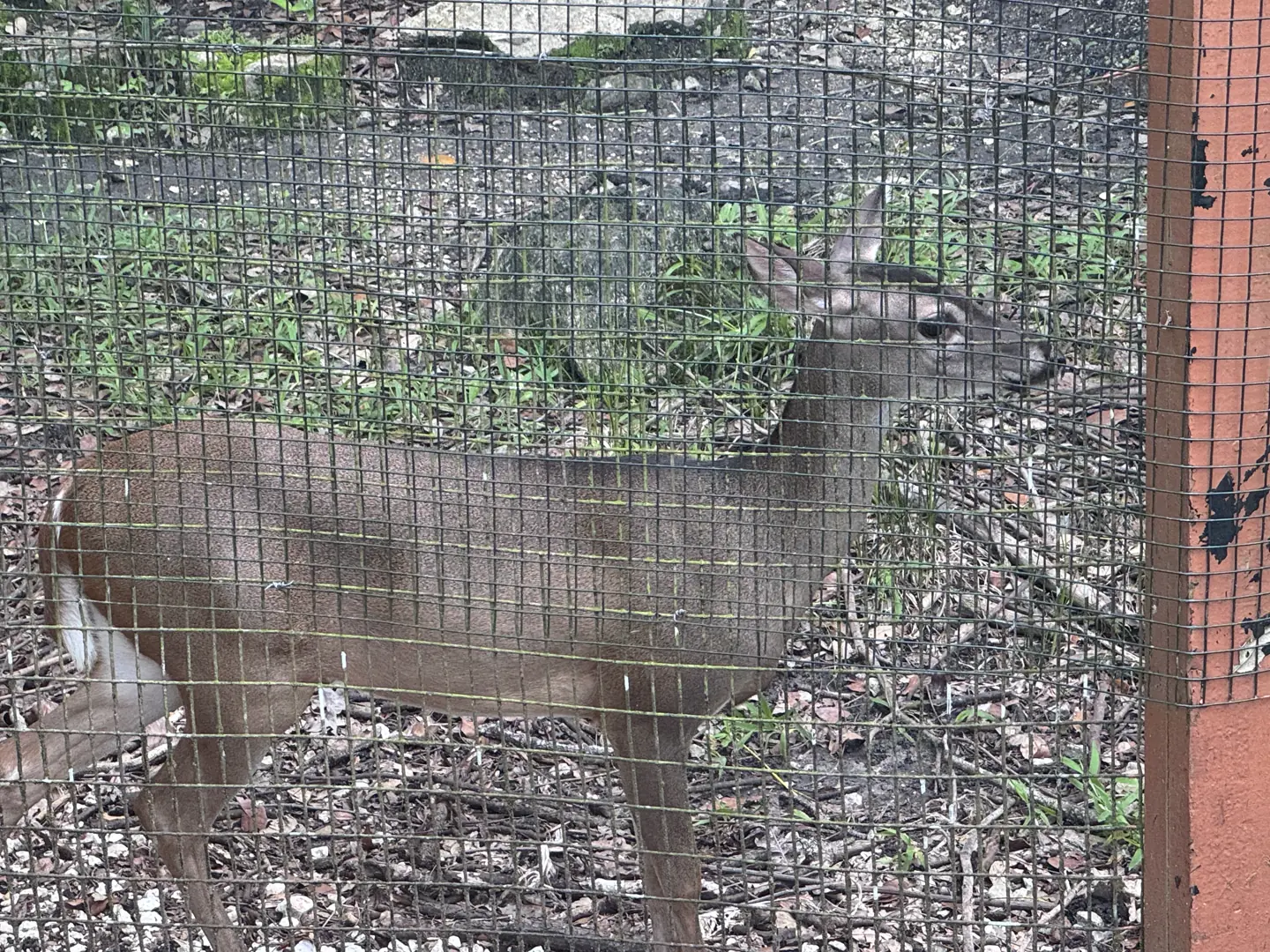
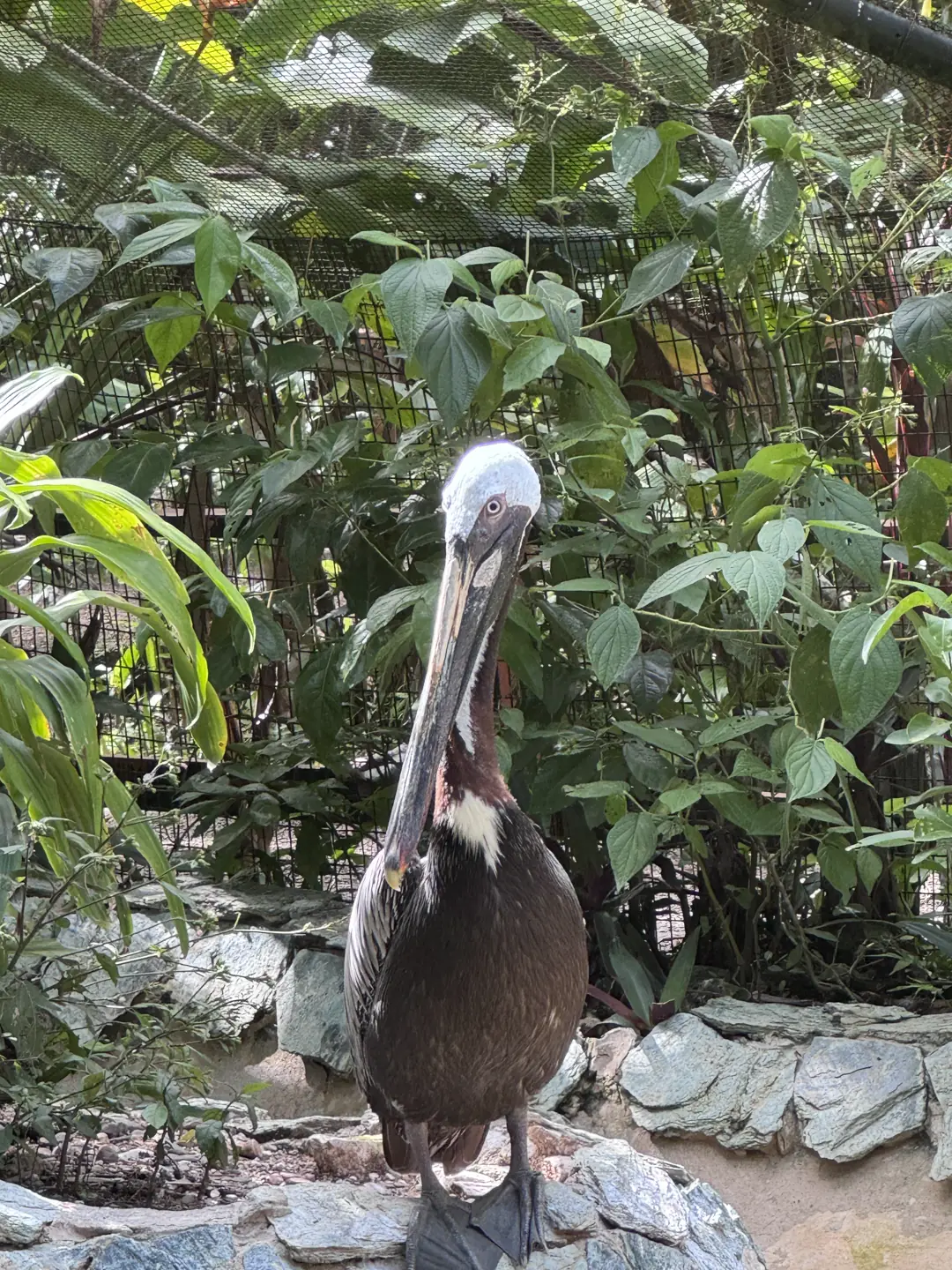
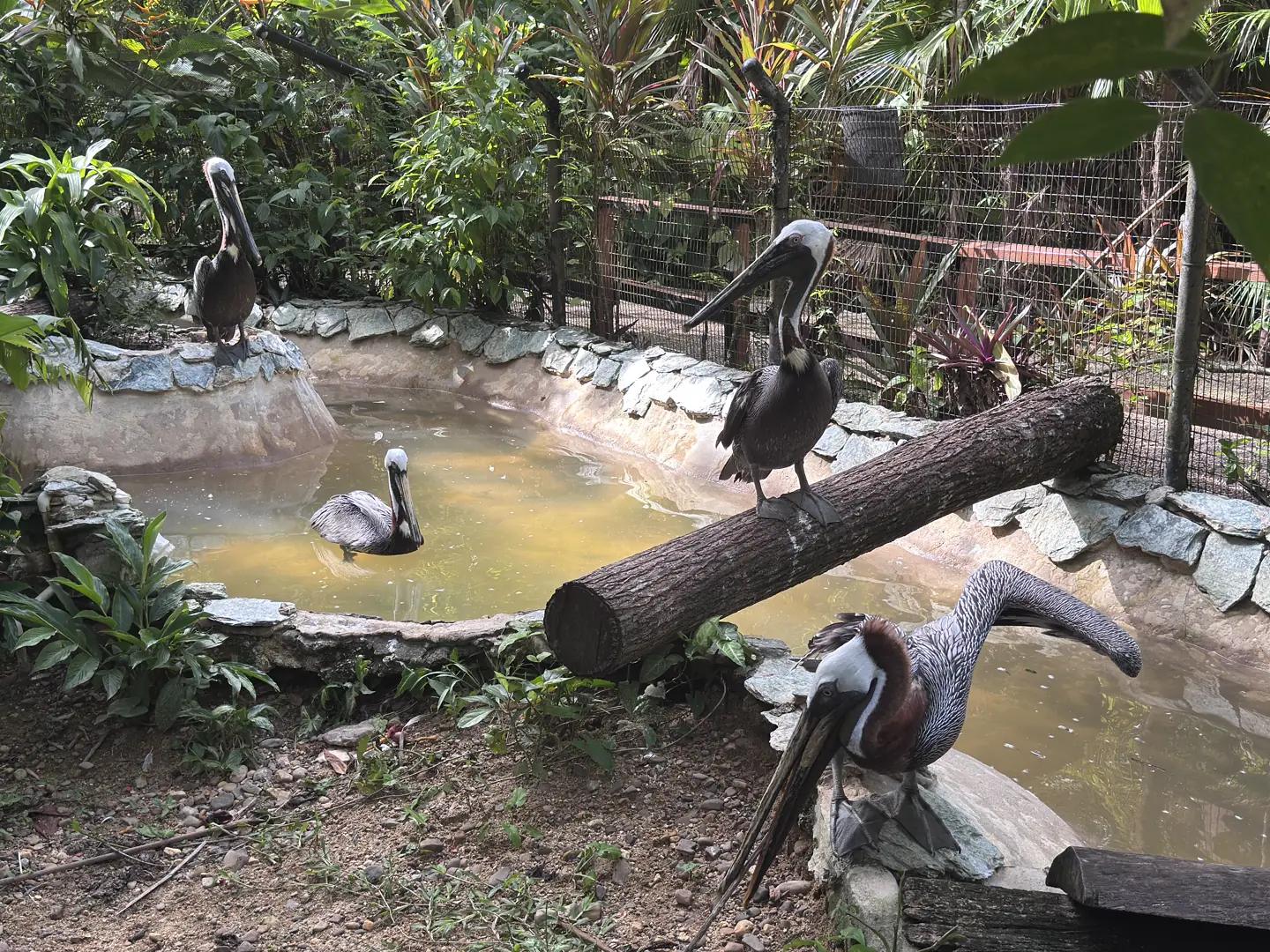
The two gray foxes, Tripod and Quad, stayed with me longest. Tripod was found as a pup in Placencia in critical condition, and his back leg had to be amputated, so he could never be released. Quad was once kept as a pet. Now they share a home at the zoo, and Tripod has adapted to life on three legs. Stories like theirs are why this place exists.
From the snake on the bridge to Chiqui melting into the leaves, every encounter felt like its own small story. I left with a much bigger appreciation for Belize's animals, and for the people who look after them.
Insider note
Look twice at every enclosure. The cats blend in so well that you can stare straight at one and miss it; if you cannot find an animal, ask a keeper or the people next to you.
Give back
Animals like Tripod cannot go back to the wild, and the zoo cares for them for life. If your visit moved you, these are the zoo's own ways to help.
Tickets and hours
Prices from the zoo's own visitor page, checked November 2, 2026. The Belize dollar is pegged at two to one with the US dollar, so the US figures are exact. Children under 3 are not listed; ask at the gate.
| Visitor | Belize dollars | US dollars |
|---|---|---|
| International adult | BZ$40 | US$20 |
| International child (3 to 12) | BZ$10 | US$5 |
| Belizean adult | BZ$10 | US$5 |
| Belizean child (3 to 12) | BZ$2 | US$1 |
Plan the visit
Allow about two hours to walk the whole loop at an easy pace, longer if you read every sign or have children who want to watch the tapirs. The paths are flat, shaded and suitable for wheelchairs and strollers, and the zoo lends a limited number of wheelchairs free of charge.
Many of the cats and nocturnal animals sleep through the midday heat, so the first hour after opening and the last hours of the afternoon are usually the liveliest. Bring water, insect repellent and a rain layer in the wet season (June to November). Lockers and parking are free.
Insider note
Last entry is an hour before closing. If you are driving west from the airport after a morning flight, you still have time; after a mid-afternoon arrival, you probably do not.
After dark
The Belize Zoo night tour starts at 7 p.m. every day and lasts about 90 minutes. A zookeeper leads you through the grounds by flashlight to meet more than a dozen nocturnal animals, many of them the same animals that were asleep when you walked past in daylight.
It is priced per group, not per person: US$125 for up to four people, then US$25 for each extra guest, with a maximum of 12. Spaces are limited, so book ahead rather than turning up in the evening. The zoo is on the highway with nothing else around, so plan where you will sleep. Staying at the zoo's own lodge across the road, or in Belmopan 25 minutes west, means no late drive to the coast.
See the night tour listing for current times, or contact the front desk at frontdesk@belizezoo.org.
Insider note
Four travelers pay the same US$125 as two. If you are a pair, ask your lodge whether other guests want to share a group.
Food
The zoo's restaurant is the Harpy Café at the visitor center. It serves a full menu with breakfast all day, drinks, pastries and desserts. Groups can see the menu or order ahead by emailing frontdesk@belizezoo.org or sending a WhatsApp message to +501-613-4966. The Wild Ting gift shop also sells snacks.
Food is not allowed on the zoo grounds themselves, including anything you buy at the café. Eat at the visitor center or at the picnic tables in the parking lot, which is also the only place you can bring your own food. It is a sensible rule: the animals are not meant to learn that people carry lunch.
Getting there
The zoo sits right on the George Price Highway, the main road west from Belize City to Belmopan and San Ignacio, so it fits naturally into a transfer day. It is about 45 minutes from the international airport, about 40 minutes from Belize City and roughly an hour from San Ignacio.
By car or private transfer, it is a simple stop on the drive west. Arrange the stop when you book your shuttle; it is easier than negotiating on the day. By bus, take any westbound service from Belize City toward Belmopan or San Ignacio and ask the driver to let you off at the zoo; the entrance is beside the highway. Flag down a passing bus to continue, and leave before late afternoon, when services thin out.
Planning the drive? See Belize airport to San Ignacio for shuttle, taxi and bus options on the same road.
Insider note
Put the zoo on your arrival day. After a morning flight, it turns the drive inland into an outing instead of a lost afternoon.
Coordinates17.35195, -88.55396
One more stop west
Guanacaste National Park sits at the Belmopan turnoff, about 20 minutes west of the zoo, where Roaring Creek meets the Belize River. It is a small park with about two miles of marked trails, named for a huge guanacaste tree near the main loop, with a riverside swimming spot at the end of the river path.
It is open daily from 8 a.m. to 4:30 p.m., and the entrance fee for visitors has been listed at BZ$5; confirm it at the gate. Zoo in the morning, Guanacaste and a swim at midday, and you can still reach San Ignacio for dinner.
Questions travelers ask
International visitors pay BZ$40 (US$20) per adult and BZ$10 (US$5) per child aged 3 to 12. Belizeans pay BZ$10 per adult and BZ$2 per child. Parking and lockers are free. The night tour is priced separately at US$125 for up to four people.
The zoo is open 8:30 a.m. to 5 p.m. Monday to Saturday, with last entry at 4 p.m., and 8:30 a.m. to 4:30 p.m. on Sunday, with last entry at 3:30 p.m. It closes on Good Friday and Christmas Day.
Yes. The map on this page shows the loop trail, every exhibit by number, the named residents such as the jaguars and tapirs, and the café, entrance and parking. Exhibits can change, so check the zoo's signs on the day.
Yes. A zookeeper leads a flashlight tour at 7 p.m. every day, lasting about 90 minutes, to see more than a dozen nocturnal animals. It costs US$125 for up to four people plus US$25 per extra guest, up to 12. Book ahead.
Yes, the Harpy Café at the visitor center serves a full menu with breakfast all day. Food is not allowed on the zoo paths, so you eat at the visitor center or the parking-lot picnic tables.
Yes, especially on the drive between the airport and Cayo. It is the most reliable way to see a jaguar, a tapir or a harpy eagle in Belize, and every animal is native, with its own story of how it came to the zoo.
About 29 miles, or 40 minutes by road. It is about 45 minutes from the international airport and about an hour from San Ignacio, all along the George Price Highway.
At Mile 29 on the George Price Highway in the Belize District, about 29 miles (47 km) west of Belize City on the road to Belmopan and San Ignacio. The entrance is right beside the highway, and the map on this page shows the exact spot.
The zoo covers about 29 acres (12 hectares) of forest and is home to more than 175 animals from about 48 species, every one of them native to Belize.
Cruise passengers come ashore in Belize City, about 29 miles from the zoo, so plan on roughly 40 to 45 minutes each way by road. Book a shore excursion or a driver who knows your all-aboard time, and allow at least two hours at the zoo itself.
Yes, at the zoo's Tropical Education Center, sometimes listed as the Belize Zoo Jungle Lodge. It sits on an 84-acre savanna site about a mile from the zoo, with dormitories, forest cabanas, a guest house and pine cabins. Book through tecreservations@belizezoo.org or +501 613 1832.
Two hours at Mile 29 is the easiest way to meet the animals most visitors never see in the wild.