Sargassum Season
June to Oct
Highest sargassum risk
Loading page content.
Loading Planning Guides
Preparing itineraries, logistics, and practical travel tools.
Compiling planning guides and trip resources tailored for Belize.
Stay in the know
Belize
before
everyone else.
Events, hidden gems, seasonal highlights, and local stories, delivered straight to your inbox before they go viral.
Loading page content.
Loading Travel Tips
Compiling essential tips and advice for visiting Belize.
Preparing destination details and local recommendations.
Keep Planning
Belize health & safety, the practical side: tap water, mosquitoes and Zika, vaccines, marine and dive hazards, clinics, and travel insurance for 2026.
How much Belize costs by travel style, with sample budgets for San Ignacio, Caye Caulker, Placencia, San Pedro, transfers, tours, food, and cash planning.
Getting around Belize made simple: water taxi schedules to the cayes, Tropic Air domestic flights, NBC bus timetables, BZE airport transfers, shuttles, and rental cars.
What travelers need to know, by season, by region, by plan
From conditions to a better beach
The forecast tells you where sargassum may land. The next guide shows the west-facing beaches, lagoon swims, reef water, and inland alternatives that stay clearer when the exposed coast is affected.
Sargassum alerts
One email a week during the season: where sargassum is landing, which coasts are staying clear, and what it means for your beach days. Built from the same NMS and NOAA data as this tracker.
Free. No spam. Unsubscribe anytime.
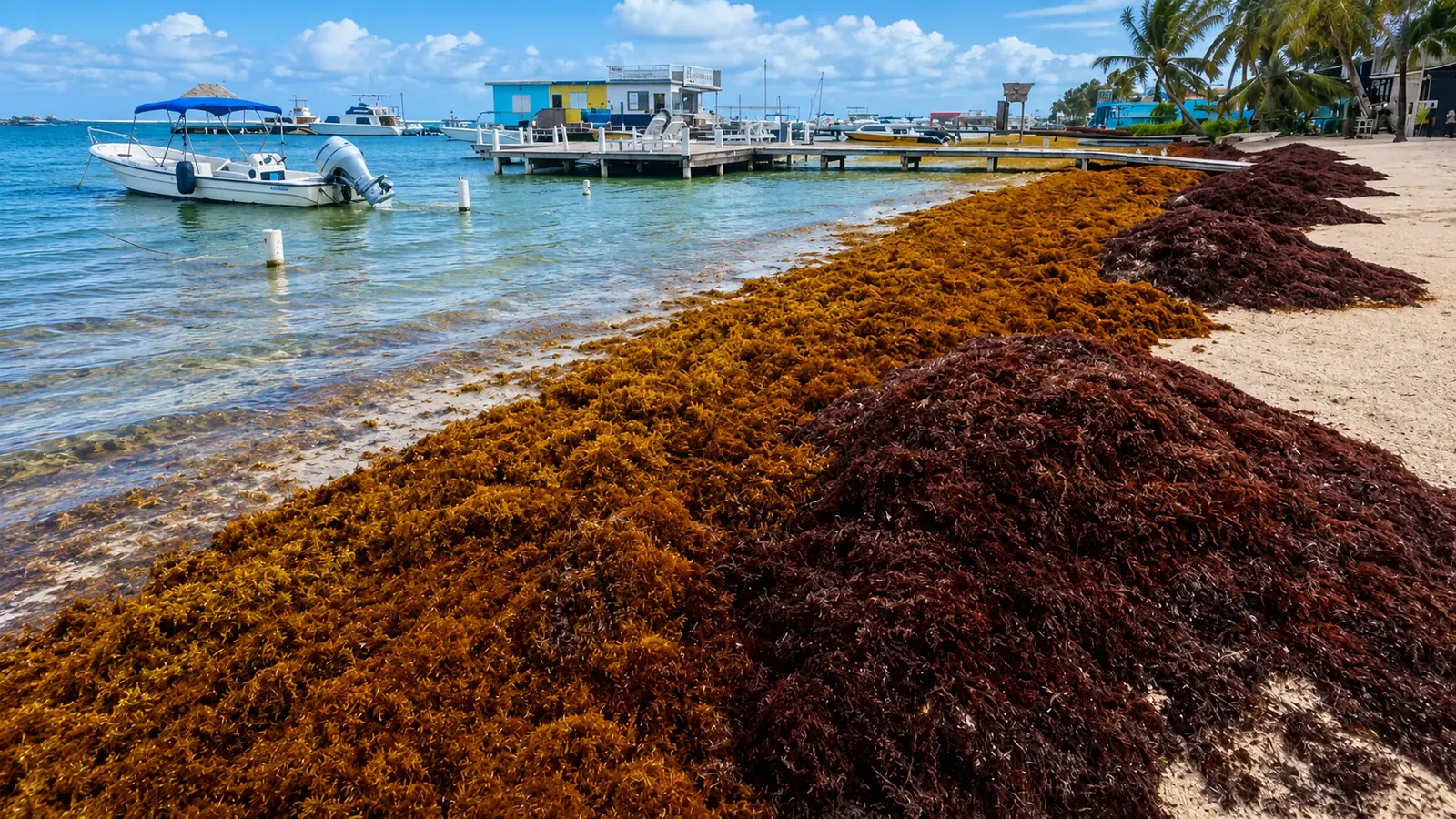
Sargassum seaweed reaches Belize beaches, mostly June through October on east-facing shores. The barrier reef protects reef snorkelling entirely. If your visit overlaps with a heavy week, there are better alternatives than a sargassum-covered beach. This guide covers which areas are most affected, when, and exactly what to do instead.
Sargassum Season
June to Oct
Highest sargassum risk
Low Risk
Jan to Mar
Best beach conditions
Reef Trips
Always clear
Unaffected year-round
Reviewed by RowanLast reviewed September 1, 2026
Sargassum conditions change week to week. Check Belize forecasts, NOAA/AOML reports, and local operator updates before travel, especially June through October.
Leer esta guía en españolThe Science
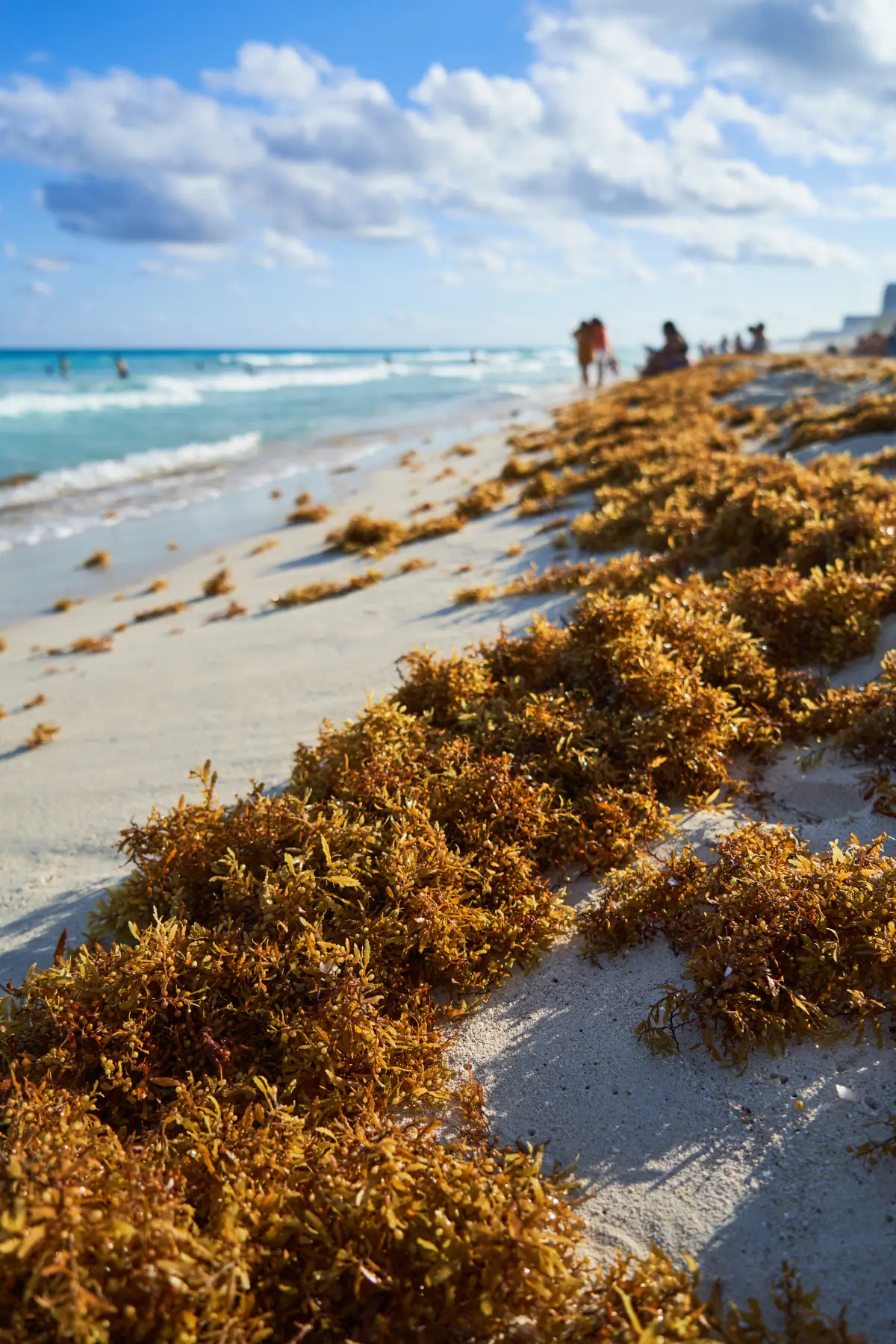
Sargassum seaweed is a free-floating brown seaweed that originates in the Sargasso Sea and the equatorial Atlantic. Since 2011, a weather pattern shift has caused enormous quantities to wash into the Caribbean, including Belize's coastline, each year. That geography, where Belize sits in the Caribbean, is exactly why east-facing beaches catch the drift each summer while inland Belize never does.
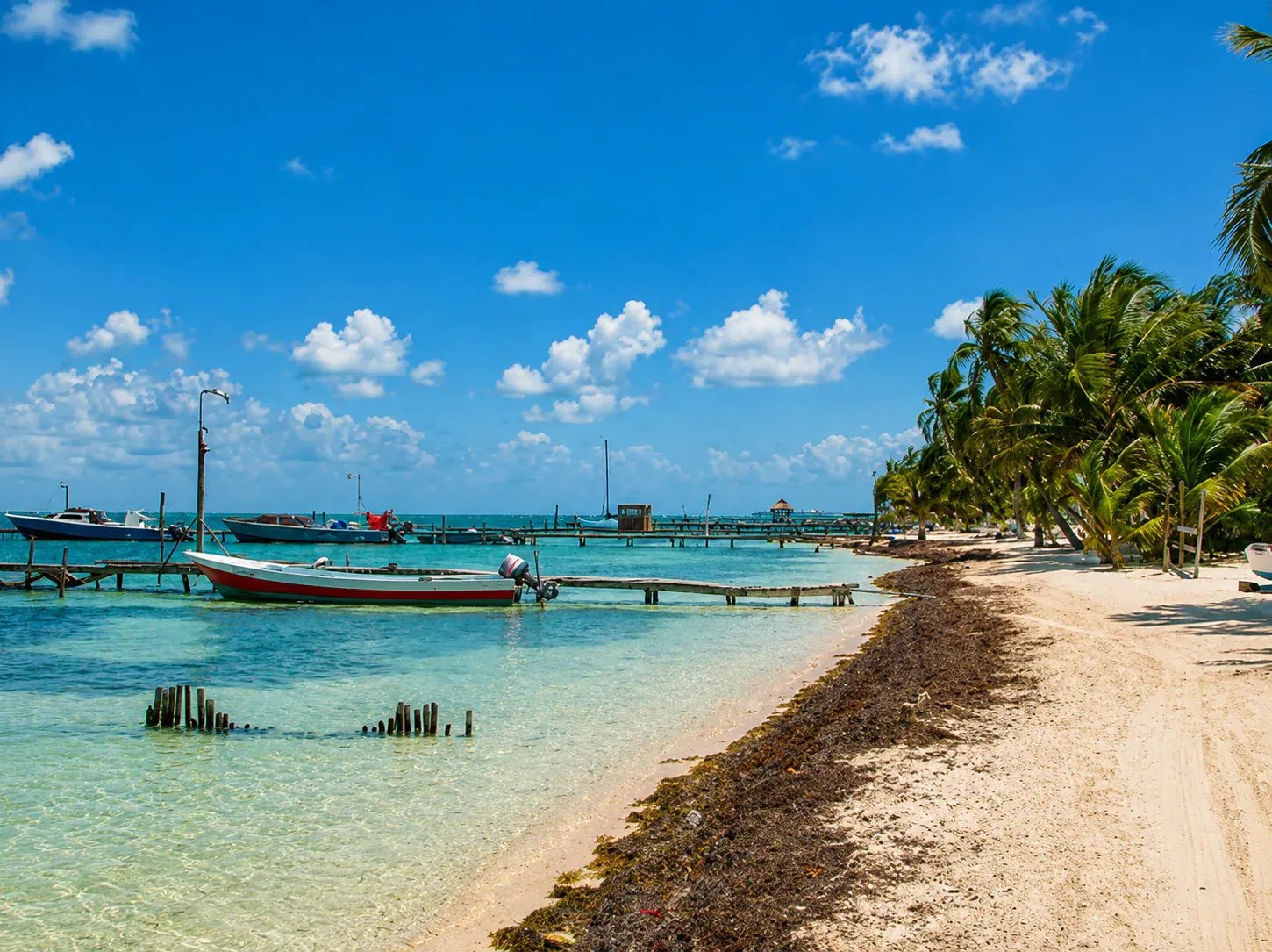
By Region
Exposure varies dramatically by location. The barrier reef, prevailing winds, and beach orientation determine how much sargassum any given stretch receives, from Ambergris Caye and San Pedro Belize to Hopkins and Placencia. Here is the honest regional picture.
Stay smart in seaweed season
Your hotel's side of the island matters more than the forecast. These bases keep a reliable swim within reach even in a heavy season.
Secret Beach and the lagoon side face west, so the island itself blocks the seaweed.
West-side cove by Secret Beach, shallow and clear
Secret Beach · $249–$300/night
On Secret Beach itself, shallow lagoon swim
Secret Beach · $163-$200/night
Rivers, waterfalls, and cave pools inland, where sargassum never reaches.
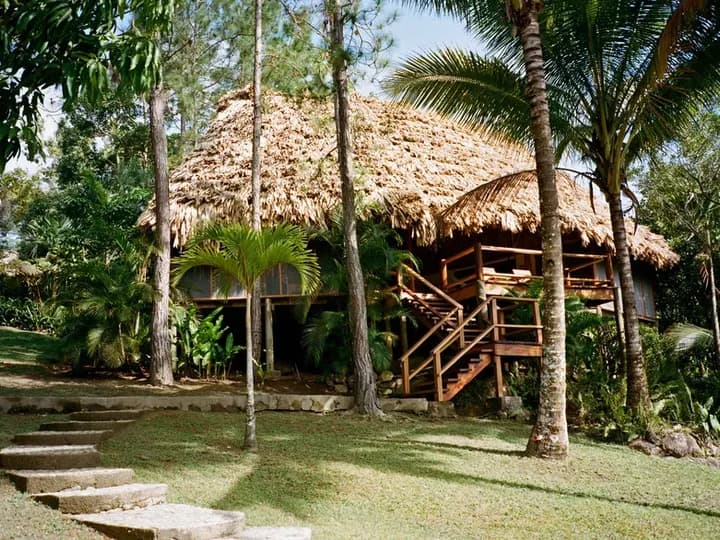
Mountain Pine Ridge rivers and waterfalls
Mountain Pine Ridge · $400-$1200 per night
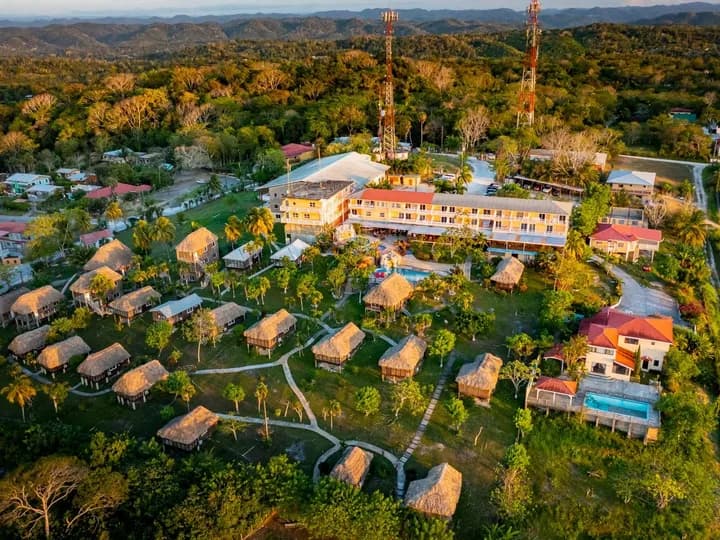
Hilltop base above San Ignacio
San Ignacio, Cayo · From $129 USD/night
Backup Plans
A sargassum day is not a wasted day. Belize has more ways to spend a morning than beach access, and most of them are better than the beach anyway. The single best trade: a coast day for an inland one, headlined by the ATM Cave, a full-day Maya cave tour with zero seaweed exposure of any kind.
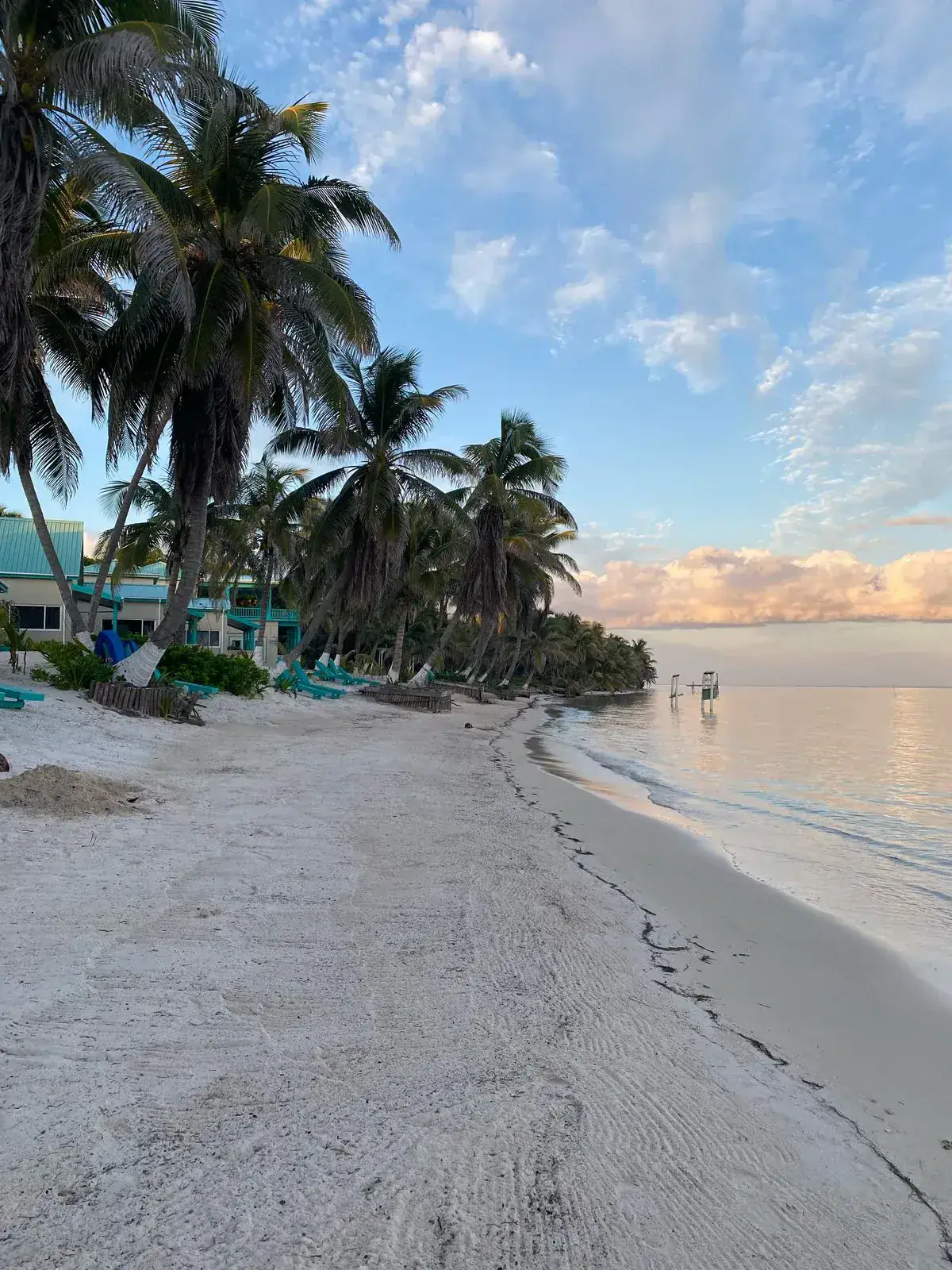

Timing
There is no month that guarantees zero sargassum, and no month that guarantees heavy accumulation. This is the typical pattern based on recent years, conditions vary annually.
Live regional conditions
Use this live sargassum seaweed map for 2026 to see the 7-day floating sargassum signal across the Caribbean before it drifts toward Belize.
Daily coastal risk
This daily sargassum inundation risk forecast is clipped to the Belize coast and updated from NOAA SIR data. It estimates how likely floating sargassum is to reach the shoreline, the practical step beyond the open-ocean map.
Coloured stretches show forecast risk along the coast and cayes, from low through high. For Belize sargassum season and Belize seaweed season planning, use this with the NMS beach forecast for town-level detail.
Open the NOAA SIR reportRegional outlook, August 31, 2026
The University of South Florida's August 31 satellite bulletin reports a broad decline from July while the sargassum belt still stretches from West Africa to the Gulf. USF estimated 12.5 million metric tons across the five monitored regions in August. It expects amounts to keep decreasing until possibly November, while beaching around the Caribbean continues at lower severity than during the summer months.
Belize sits in the Western Caribbean, where USF estimated 1.7 million metric tons in August 2026. That was the second smallest of the five regional amounts, above only the Gulf of Mexico.
Wet biomass, metric tons, August 2026
Despite the decline, every monitored region except the East Atlantic remained above the historical 75th percentile for August.
What this does not tell you
USF provides this bulletin only as a general regional outlook and says it should not be used commercially or to predict conditions at any specific location or beach. We cite it here only for basin-wide context. For beach-level planning, use the Belize NMS forecast, the NOAA shoreline-risk map, and current local operator reports.
Source: University of South Florida Optical Oceanography Lab, bulletin dated August 31, 2026.
How current this page is
We re-check this page against the monthly USF satellite bulletin and the live NOAA feeds, and log every review here, including the ones where nothing changed.
September 1, 2026
Updated to the USF August bulletin
Reviewed the University of South Florida bulletin published August 31, 2026. Updated the regional total to 12.5 million metric tons and the five regional estimates: Gulf of Mexico 1.4M, Western Caribbean 1.7M, Eastern Caribbean 3.5M, Western Atlantic 4.9M, and Eastern Atlantic 1.9M. The outlook now reflects continued decline through possibly November with beaching still expected, but less severe than during summer. No beach-level conditions were inferred from the regional bulletin.
August 30, 2026
No-change review before the August USF bulletin
Checked the University of South Florida bulletin index and Sargassum Watch System: the July 31 edition remains the newest monthly outlook. Rechecked the Belize National Meteorological Service sargassum forecast page and NOAA/USF near-real-time resources. The regional outlook and beach-planning guidance remain current.
August 24, 2026
No-change review, USF August bulletin not yet published
Checked for a newer University of South Florida bulletin: the July 31 edition is still the most recent, so the regional outlook above is unchanged. Verified both live feeds are serving correctly, the NOAA sargassum map and the inundation risk basemap. No change to beach-level guidance.
August 15, 2026
Checked against the USF July bulletin
Reviewed this page against the University of South Florida bulletin published July 31, 2026. Added the regional outlook section: sargassum fell across every monitored region in July, and the Western Caribbean, which includes Belize, recorded 3.5 million metric tons, the second lowest of the five regions tracked. No change to our beach-level guidance.
July 20, 2026
Peak-season review
Page reviewed during the seasonal peak, with the live NOAA map and inundation risk feeds verified as reporting correctly.
Heading to a beach base?
Sargassum hits coastal Belize differently depending on which beach you stay at. Read the destination guide for the base you're considering, each one covers local conditions and inland alternatives.
Destination guide
San Pedro east-facing beaches
Open guideDestination guide
The Split and east-side shores
Open guideDestination guide
Village beach and southern peninsula
Open guideDestination guide
East-southeast Garifuna coast
Open guideCompanion guide
Secret Beach, the lagoon sides, The Split, and the rivers and reef that stay clear all year: the full clean-water playbook.
Before you book
The other big question travelers ask before booking: what the Level 2 advisory really means, the one area to skip, and where visitors actually stay safe.
Still deciding
If seaweed season has you reconsidering the whole trip: an honest local verdict on what Belize is worth, what it costs, and who should go somewhere else.
Pick a clear-water base
West-facing caye properties and Placencia lagoon-side stays dodge the worst sargassum. Compare San Pedro, Caye Caulker, Placencia, and San Ignacio bases with hotel picks for each.
Hol Chan, Shark Ray Alley, Silk Cayes, the barrier reef is always clear. A 20-minute boat ride turns a sargassum beach day into the best day of your trip.
Plan Reef ActivitiesLast reviewed September 1, 2026
Sargassum conditions change week to week. Check Belize forecasts, NOAA/AOML reports, and local operator updates before travel, especially June through October.
Belize Sargassum Forecast
Belize-focused sargassum forecast and beach condition outlook
Belize NMS Forecast
National Meteorological Service of Belize sargassum forecast
NOAA/AOML SIR
Sargassum Inundation Reports for Caribbean monitoring context
Sargassum Map Viewer
Interactive satellite viewer for regional sargassum conditions
Questions travelers ask
Yes, sargassum reaches Belize's mainland beaches, particularly on east-facing shores like Hopkins and southern Placencia. However, the Belize Barrier Reef provides significant protection for inner-reef and caye areas. Snorkelling and diving sites are essentially unaffected. The worst months are typically June through October. In peak season (December to April), beach conditions are usually excellent.
Secret Beach Belize, on the western lagoon side of Ambergris Caye, is one of the most consistently clear beach-swimming options because it is sheltered from the main east-facing sargassum flow. Reef-side snorkelling spots (Hol Chan, Shark Ray Alley, Silk Cayes, Laughing Bird Caye) are also reliably clear. The Split on Caye Caulker, the Placencia Lagoon side, and the Sittee/Hopkins rivers are useful sargassum-free alternatives when the main beach is affected.
Hopkins faces east-southeast, making it one of the more exposed mainland beaches in Belize. Heavy accumulations are possible June through October. When sargassum is present, local resorts offer alternatives: Coconut Row has a BZ$15 pool day pass; Hopkins Bay Resort allows pool access with food or drink purchase; Jaguar Reef's Big Dock pier has a ceviche bar and rope swing into the ocean. A boat trip to Tobacco Caye (30 to 45 min) gets you into clear water fast.
No, reef snorkelling is essentially unaffected. Sargassum concentrates inshore in calm, protected waters. Once your boat reaches the open reef (Hol Chan, Shark Ray Alley, Silk Cayes, the Blue Hole approach), conditions are typically clear. It is beach swimming and calm lagoon areas that are affected, not offshore reef experiences.
The village beach and southern tip of the Placencia peninsula are the most affected mainland stretches. The lagoon side of the peninsula is consistently clear and excellent for kayaking. Day trips out to Silk Cayes and Laughing Bird Caye National Park (both at the reef, 45 to 60 minutes by boat) give you pristine water regardless of what is happening on the main beach.
Rather than avoiding Belize, plan your activities differently in June to October. The same months bring lower prices (20 to 40% off peak rates), fewer crowds, lush jungle, and exceptional wildlife. Sargassum is manageable with the right expectations: book reef snorkel trips instead of beach days, use resort pools, and take the cave or jungle day trips you planned anyway. January through May offers the most reliably sargassum-free beach conditions.
Yes, September in Hopkins is completely workable if you manage expectations. The beach may have some sargassum, but the reef is clear (30-minute boat to Tobacco Caye), the Sittee River is a great swimming and kayaking alternative, Cockscomb Basin Wildlife Sanctuary is at its greenest and most rewarding, and resort pool access is available at Coconut Row, Hopkins Bay Resort, and Jaguar Reef. Prices are significantly lower than peak season.
When fresh and floating, sargassum is mostly odourless. It's accumulated piles decomposing on a beach that release hydrogen sulfide and ammonia gases, the sulphurous smell people associate with a bad sargassum week. That smell is worst right at an affected beach during peak accumulation, standing over thick, days-old piles at low tide is the worst-case version. It does not carry inland, onto reef trips, or into the water itself, and it fades fast once you step away from the pile. Sensitivity varies: some visitors barely register it, others find it strong for the first day and then tune it out. If the smell, not the swimming, is your real concern, the fix is location rather than luck: the lagoon or west side of an island (Secret Beach Belize on Ambergris Caye, the Split on Caye Caulker), a reef trip, or an inland day in Cayo all sit outside the smell zone entirely. Resorts with active beach-cleaning programs also cut it substantially by clearing accumulation before it decomposes.
Use Belize-specific sargassum forecasts, NOAA/AOML Sargassum Inundation Reports, and satellite map viewers for regional context. For the most current local intel, contact your hotel or a local tour operator directly, they track it daily and will tell you exactly what to expect on arrival.
Sargassum hits east-facing beaches first. Resorts on the west or lagoon side of a peninsula or caye stay much clearer year-round. The cleanest picks during heavy weeks: Caye Caulker's west-side guesthouses, Placencia's lagoon-side properties (Robert's Grove, Naïa Resort's lagoon villas), Maya Beach mid-peninsula resorts with active beach grooming (Turtle Inn, Maya Beach Hotel), and any inland base like San Ignacio jungle lodges. Most Ambergris Caye luxury resorts (Victoria House, Cayo Espanto, Mata Chica) run daily beach-cleaning crews that keep their stretches usable even on peak sargassum weeks. Ask your hotel about their beach-cleaning program before booking June through October.
No. Cancelling is rarely the right move, it trades a paid trip for uncertainty, when sargassum is a beach-day variable, not a country-wide condition. Reef snorkelling, lagoon and river swimming, and inland Cayo are unaffected no matter what a given beach looks like that week. The better plan is to plan around it, not cancel around it. In the run-up to your trip, check a current forecast (the Belize Sargassum Forecast and NOAA/AOML Sargassum Inundation Reports above) rather than relying on old photos or a single alarming report. Once you land, ask your hotel which beach or lagoon side is clearest that week, book at least one reef trip, and, if you're on the mainland, hold an inland day in reserve (ATM Cave, cave tubing, a river) so one bad sargassum stretch doesn't define the whole stay. That won't guarantee a postcard-clear beach every single day, sargassum genuinely varies week to week, but it does mean a sargassum week doesn't have to mean a bad trip.
Beyond the seaweed
Three nights in San Ignacio and four on the cayes, planned day by day
Open guideSan Ignacio, Hopkins, Placencia, and the cayes in one full-country route
Open guideReal daily budgets for food, hotels, tours, and transport
Open guideZero sargassum, zero seaweed: the inland cave day that beats a bad beach week
Open guideLower prices, fewer crowds, and the greenest jungle, the right plan turns a sargassum week into one of the best Belize trips.