Worth the money when you come for the combination, not the bargain. Here is who should come, and who should go somewhere else
Belize is worth the money when you come for the combination
In one week you can walk through the rooms of an ancient Maya city, swim into a ceremonial cave, and snorkel along the second-largest reef system in the world. You can do all of it in English without spending half your vacation moving between destinations. But if your main goal is stretching every dollar as far as possible, Mexico and Guatemala will beat us. I live in Cayo, close to many of the experiences travelers come to Belize to see, and this is where I think our higher price is earned and where it is not.
Belize is worth the money when you come for the combination. In one week you can walk an ancient Maya city, swim into a ceremonial cave, and snorkel the largest barrier reef in the Northern Hemisphere.
It is not worth it if cost per day is your main measure. Mexico and Guatemala beat Belize on budget, and the tours that make Belize special are the hardest expenses to cut.
Plan on US$60 to US$90 per day shoestring, US$150 to US$250 mid-range. An ATM Cave tour runs US$100 to US$130 per person.
Choose two bases, not five. San Ignacio plus one coastal base is the trip Belize does better than its neighbors.
Beach-first travelers should favor December through April. Sargassum reaches east-facing beaches most heavily between June and October.
The actual argument
What Belize has that its neighbors do not
Mexico and Guatemala also have Maya sites, caves, wildlife, and Caribbean coastline. Belize does not win because we have one thing nobody else has. We win because of how closely everything fits together.
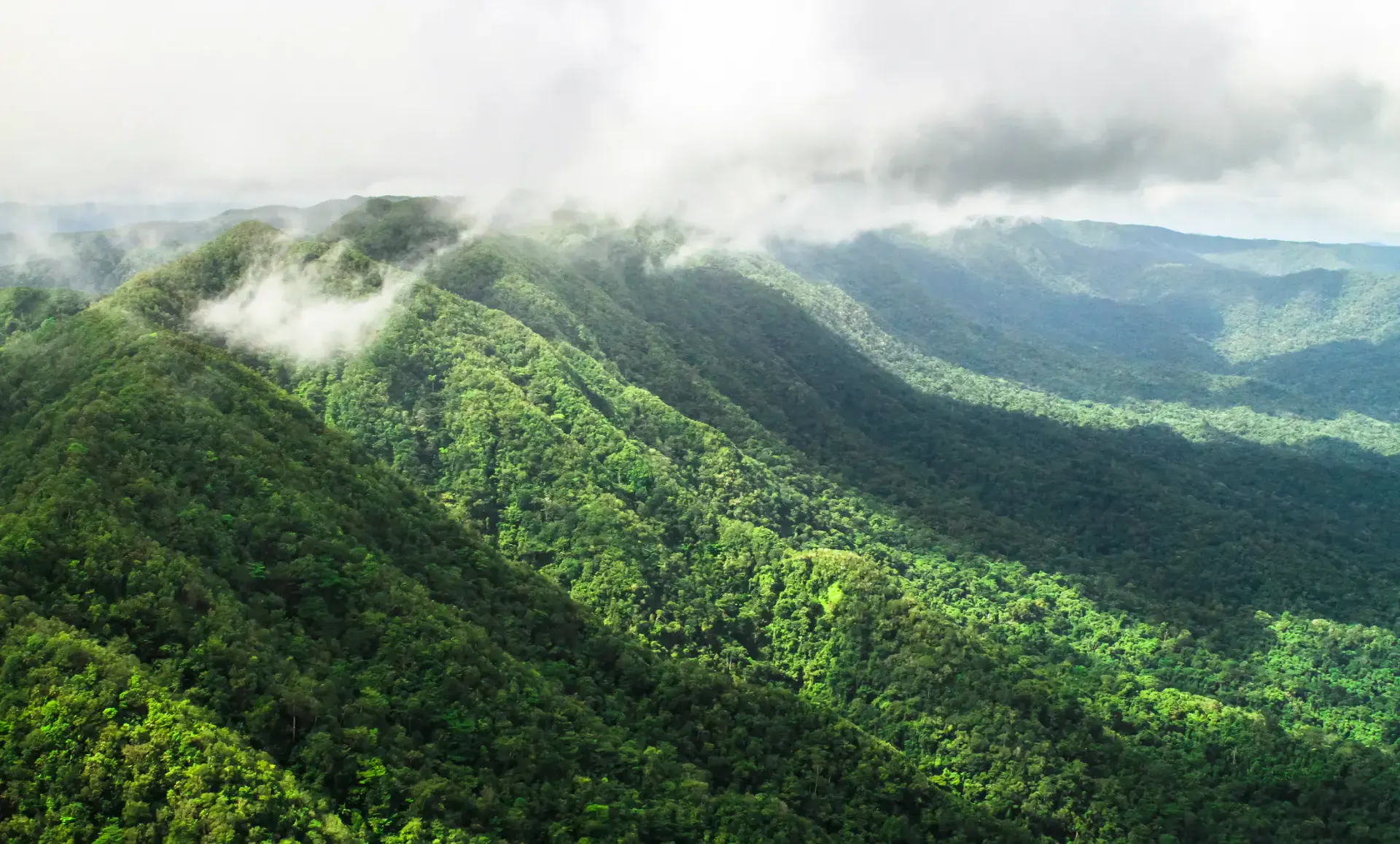
Belize is roughly the size of Massachusetts. Choose the right two bases and you can experience the reef, the cayes, rainforest, caves, and Maya history in seven days. That combination is the real reason to visit Belize, and it is what you are paying the premium for.
Where the price starts making sense
The reef is where Belize begins to justify the cost
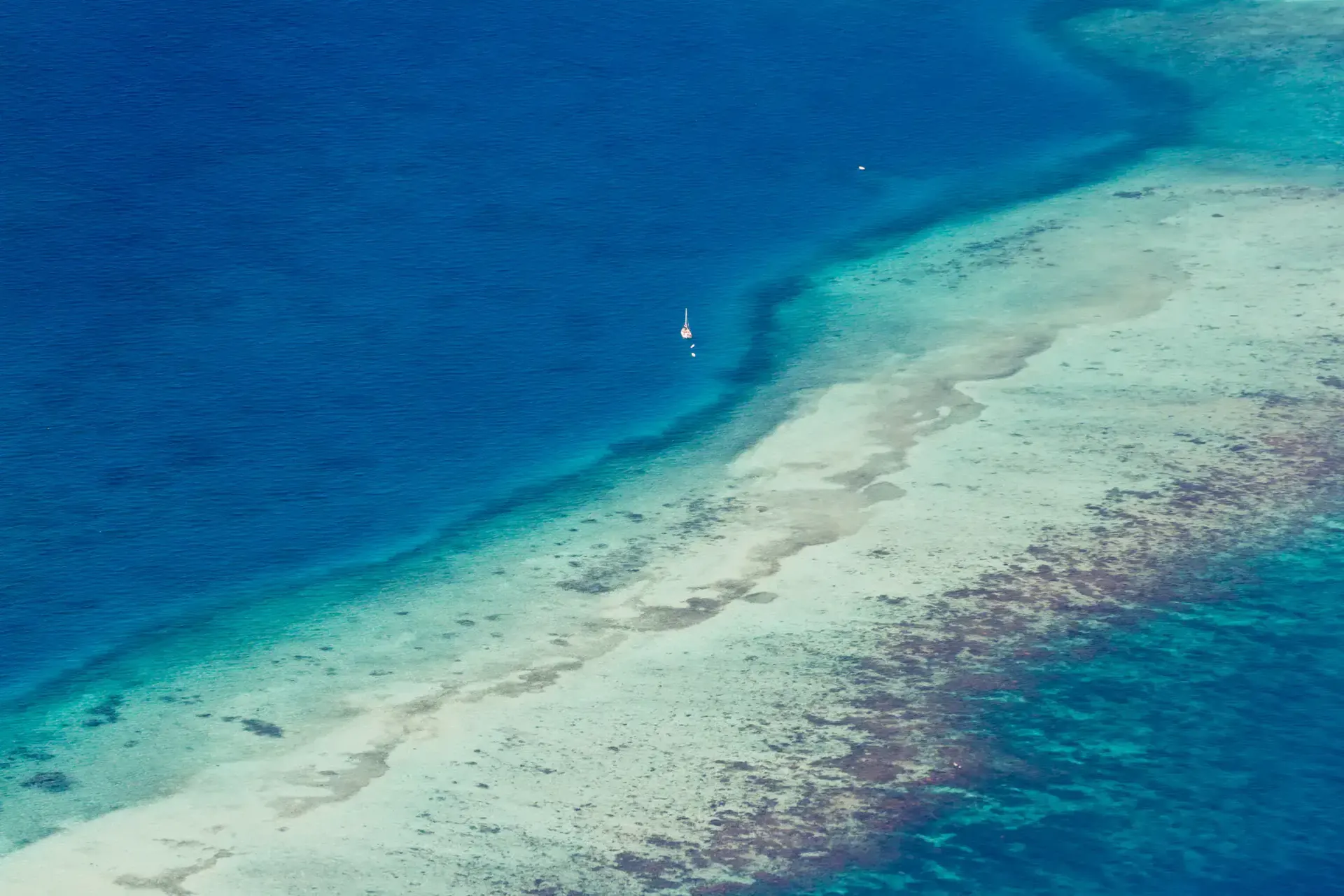
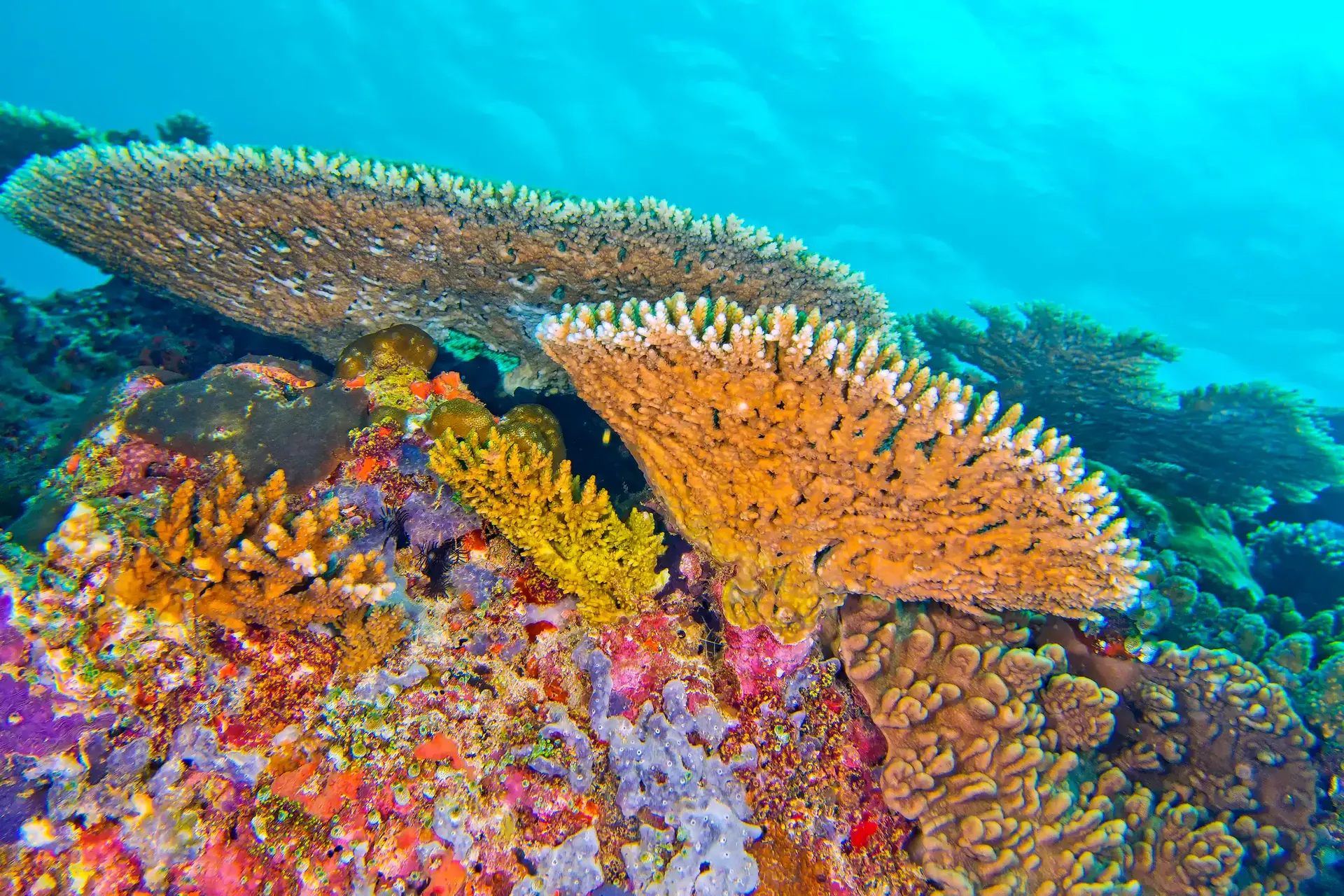
Belize has the largest barrier reef in the Northern Hemisphere. The Belize Barrier Reef forms part of the Mesoamerican Reef, the second-largest reef system in the world after Australia's Great Barrier Reef. It is also a UNESCO World Heritage Site and one of the most important reef ecosystems in the Western Hemisphere. Charles Darwin called it "the most remarkable reef in the West Indies." Yes, the guy who talked about evolution.
This reef is not something you only see in photographs. From San Pedro or Caye Caulker, a short boat ride takes you to Hol Chan Marine Reserve and Shark Ray Alley, where depending on conditions you may snorkel among nurse sharks, stingrays, sea turtles, and tropical fish. Southern Belize gives you access to Laughing Bird Caye, the Silk Cayes, and Glover's Reef. We also have three offshore atolls: Turneffe, Lighthouse Reef, and Glover's Reef.
Lighthouse Reef is home to the Great Blue Hole, an underwater sinkhole roughly 1,000 feet across and more than 400 feet deep. Experienced divers can enter it. Everyone else can see its full shape from a scenic flight. You do not need to dive to make Belize worth visiting. A first-time snorkeler can experience the reef without the training, cost, or pressure of scuba diving.
Insider note
If you only have budget for one water day, put it on the reef rather than the Blue Hole flight. The flight is a photograph. Hol Chan is an afternoon in the water.
History you walk through
Our Maya sites are quieter, and getting there is part of it
Mexico and Guatemala have larger and more famous Maya cities. Belize gives you quieter sites where reaching them can be part of the experience.
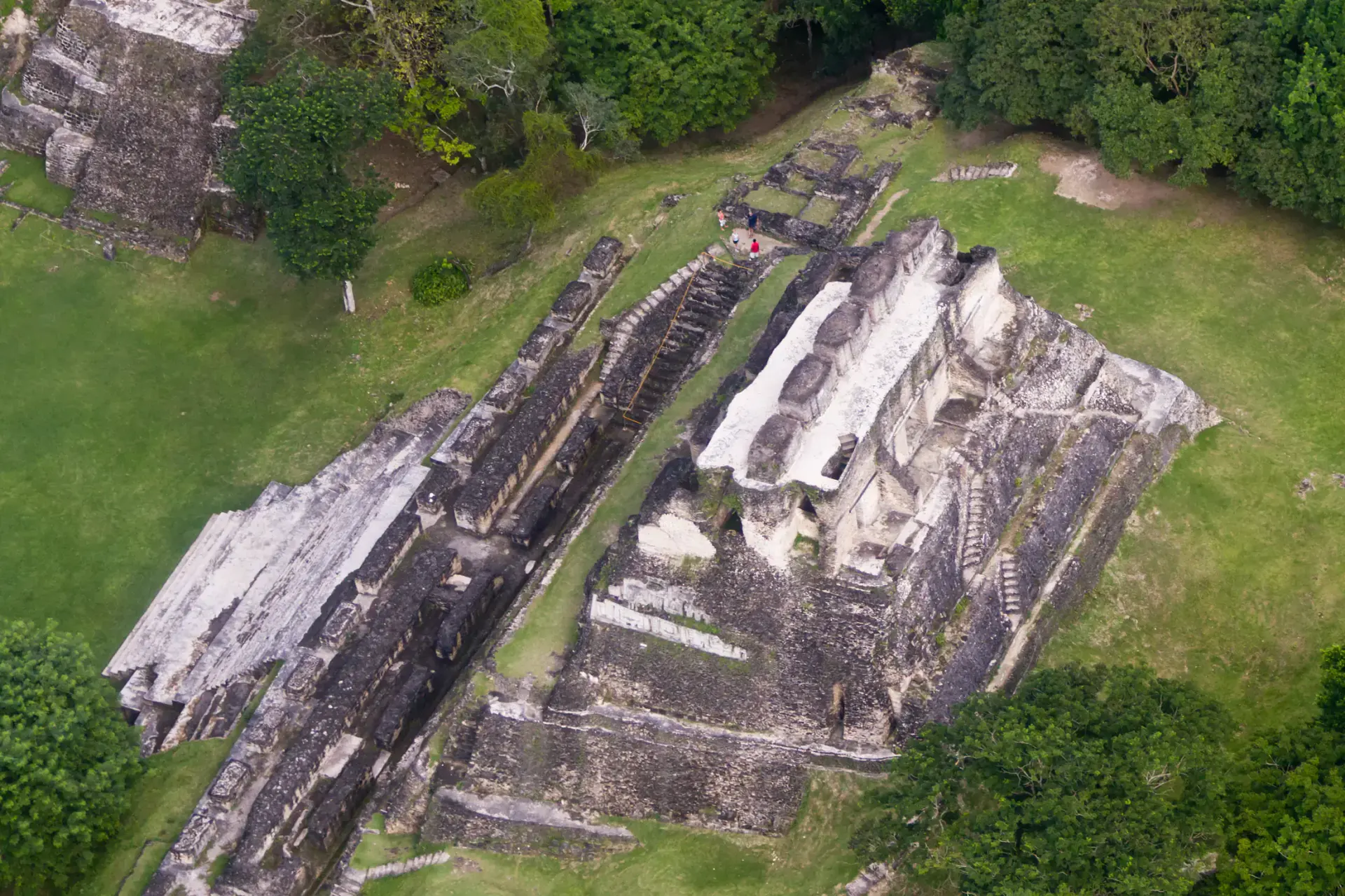
To visit Xunantunich, you cross the Mopan River on a hand-cranked ferry. After the crossing you travel uphill to an archaeological reserve dominated by El Castillo, and from the upper structures the Belize River Valley stretches toward Guatemala. Caracol takes you in another direction, through the forests of western Belize to what was once one of the most powerful cities in the ancient Maya world. Its largest structure, Caana, remains the tallest ancient human-made structure in Belize. Pretty cool if you ask me.
Lamanai offers a completely different entrance. Many visitors arrive by boat along the New River, where monkeys, crocodiles, and tropical birds can appear before the first temple does. The sites are not interchangeable. One begins with a ferry, another with a jungle road, another with a river journey. If you are choosing between them, our guide to the best Maya ruins in Belize breaks down the trade-offs.
Where I go
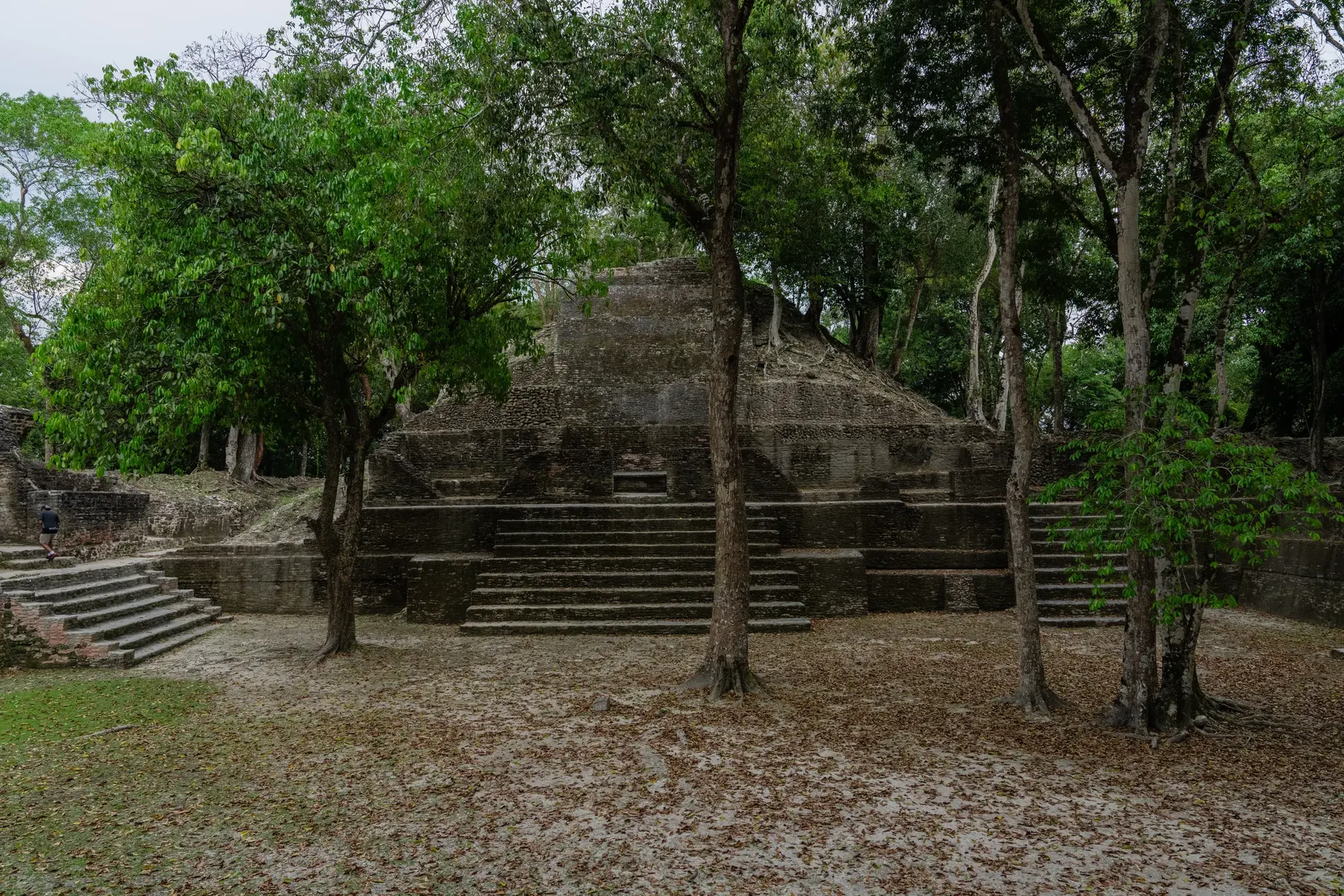
Cahal Pech made the Maya feel like real people to me
Cahal Pech is smaller than Xunantunich and Caracol, but that is part of what I liked about it. When we visited, we were the only people there.
Without tour groups moving us along, we could walk slowly through the courtyards, corridors, and rooms where Maya families and rulers once lived. You are not standing hundreds of feet away from one famous structure. You are moving through spaces people used as part of their daily lives. That changed the feeling of the site for me. Cahal Pech was no longer a collection of old stones. It was a community where people slept, worked, governed, and held ceremonies centuries ago.
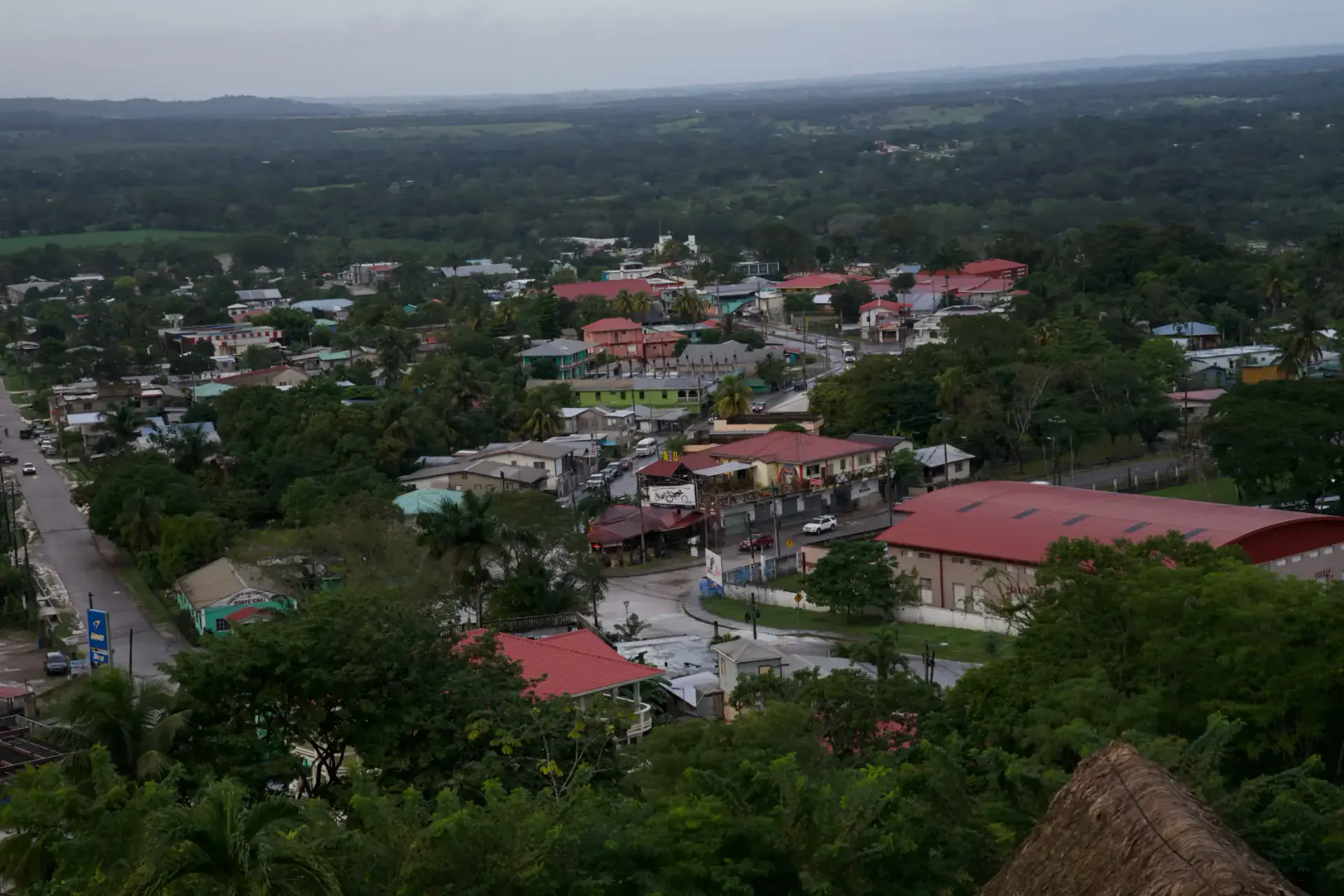
Smaller does not always mean less worth visiting. If you want the tallest structure and the biggest view, choose Caracol or Xunantunich. If you want a quiet site where you can picture how people actually lived, do not overlook Cahal Pech. It sits on the edge of San Ignacio, so it costs you almost nothing in travel time.
Insider note
Go first thing in the morning on a weekday. Cahal Pech is small enough that two tour groups change the whole feeling of the place.
The trip separator
ATM Cave is not a normal sightseeing tour
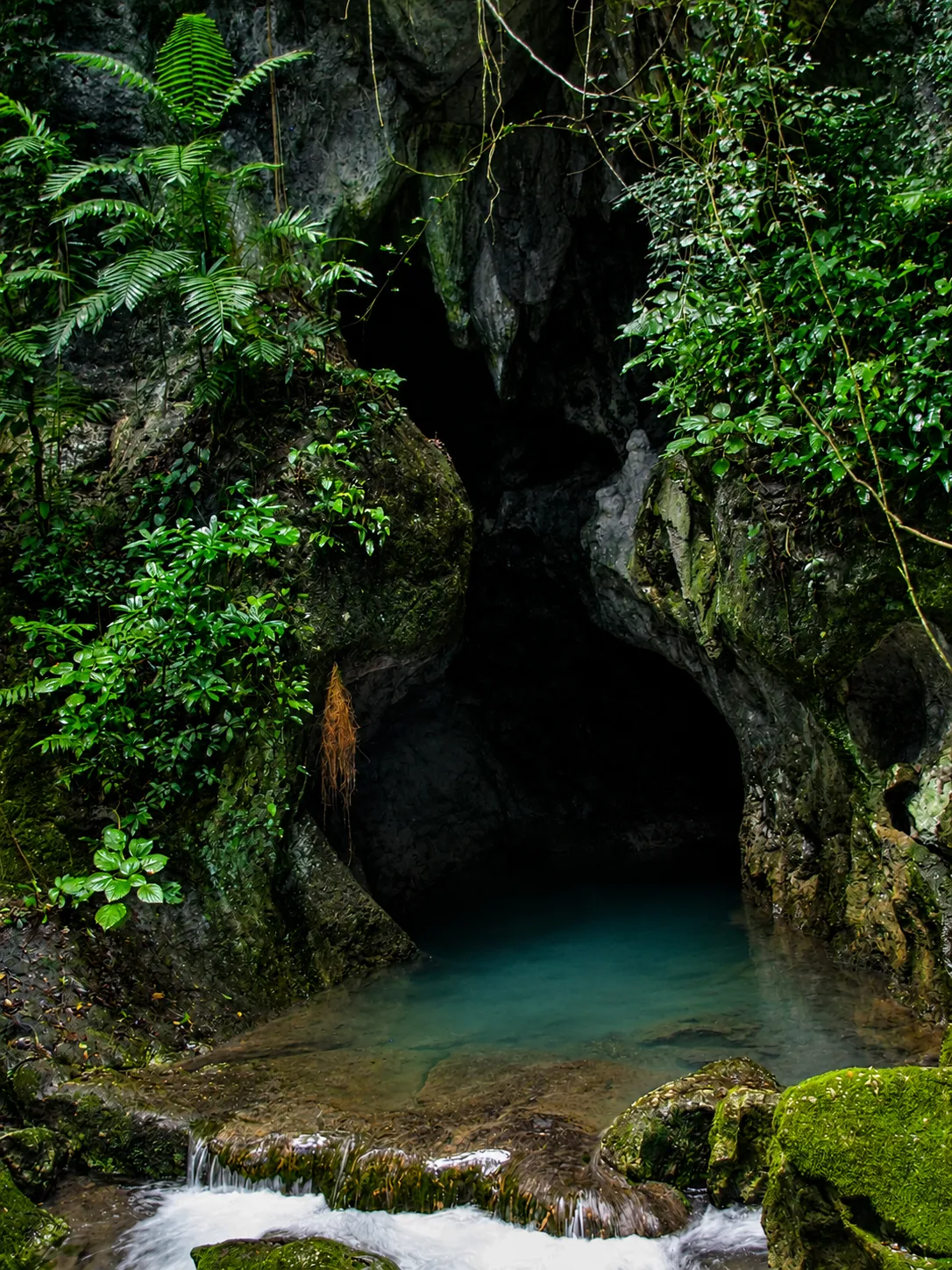
ATM Cave, or Actun Tunichil Muknal, is the experience that separates a Belize trip from a normal tropical vacation. The tour begins in the rainforest. Before reaching the cave you hike for roughly 30 to 45 minutes and cross the river three times. Then you swim through the entrance.
Inside, you move deeper by swimming, climbing, crouching, and squeezing through passages. Eventually you leave the underground river and climb into the upper chamber commonly called the Cathedral. That is where an adventure tour becomes an archaeological experience. Maya ceremonial vessels, offerings, and human remains have rested inside for more than 1,000 years. They were not collected and arranged behind museum glass. The cave itself is the archaeological site.
For the ancient Maya, caves were connected with Xibalba, the underworld. Xibalba was not exactly the Maya version of Christian hell. It was a supernatural realm associated with death, ancestors, deities, rain, and fertility. Imagine believing a cave was an entrance into another world, then swimming into that same cave today.
Cameras are prohibited because the site is extremely fragile, which is why you will not find photographs from inside the chambers on this page. You leave without your own pictures, and that is part of what makes ATM different. You experience it with your own eyes instead of through your phone. ATM is wet, dark, and physically demanding. If swimming, enclosed spaces, or climbing make you uncomfortable, choose one of the other cave and adventure tours instead. If those things sound exciting, ATM may be the best day of your entire trip.
Insider note
Licensed guides are legally required for ATM, and there is a daily visitor cap. Book before you fly, not once you arrive in San Ignacio.
Why the size matters
You can pair jungle and reef without losing days in transit
Belize's advantage is not that every journey takes 20 minutes. It is that completely different environments stay close enough to combine in one realistic itinerary. Base yourself in San Ignacio for Maya sites, caves, waterfalls, and rainforest, then move to San Pedro, Caye Caulker, Hopkins, or Placencia for the coast and reef. You do not need to choose between a history trip and a Caribbean vacation.
Do not mistake that convenience for permission to visit everywhere. San Ignacio, San Pedro, Caye Caulker, Hopkins, and Placencia do not belong in the same seven-day itinerary. Every extra destination means another checkout, transfer, wait, and check-in. For a first visit, choose two bases and experience them properly. Our seven-day Belize itinerary is built around exactly that structure.
The friction you avoid
English removes a problem American travelers expect to have
Belize is the only country in Central America where English is the official language. Road signs, menus, tours, and government information are generally available in English. You can speak with guides, ask for directions, and arrange transportation without a major language barrier. Many Belizeans also speak Kriol or Spanish, and Garifuna and Maya languages remain part of the country too.
You still experience a culture different from the United States, but you spend less time worrying about whether you understood the bus driver, the tour guide, or the restaurant menu. That convenience matters most when something goes wrong. A canceled tour, a missed transfer, or a medical problem is much easier to handle when you can explain exactly what you need.
Who you meet
Belize feels Central American and Caribbean at the same time
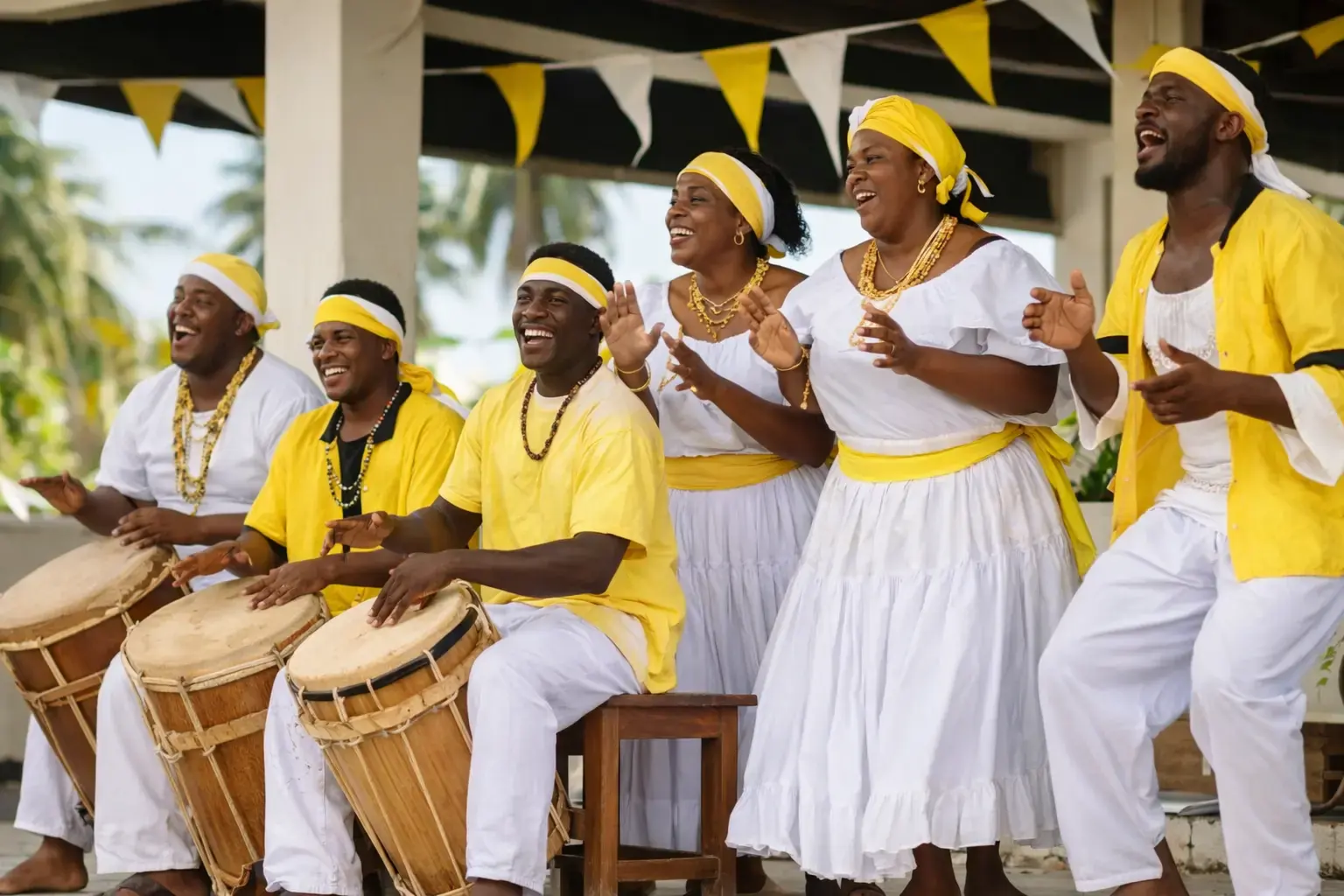
Belizeans often describe the country as a melting pot. Kriol, Garifuna, Mestizo, Maya, East Indian, Mennonite, Chinese, and other communities have influenced our food, music, languages, and celebrations. You can hear English, Kriol, and Spanish in the same day.
You can eat fry jacks for breakfast, rice and beans with stew chicken for lunch, then hudut, tamales, or fresh seafood for dinner. Belize sits in Central America, but much of our identity is also Caribbean, and our food is where you taste that most directly.
Do not spend the entire trip inside a resort. A Garifuna drumming experience in Hopkins, a Maya cultural tour, or a meal at a small family restaurant will show you more of Belize than another afternoon beside the hotel pool.
Insider note
Eat at least one meal somewhere with no menu posted outside. That is usually where the rice and beans is best and where the prices stop looking like tourist prices.
Money
The conversion is easy, the prices are not
The Belize dollar is fixed at BZ$2 to US$1. If something costs BZ$20, it equals US$10. Divide the Belize-dollar price by two and you have the US-dollar amount. US dollars are widely accepted, so American visitors normally do not need to exchange money. You may pay in US dollars and receive your change in Belize dollars.
Always confirm which currency someone is quoting. A 50-dollar taxi fare could mean BZ$50, which equals US$25, or it could mean US$50. The conversion is easy. The prices are not always cheap.
The honest picture
Is Belize safe enough to justify the trip?
Most visitors travel through Belize without experiencing serious crime, but the country should not be treated like one large resort. The drive from the international airport to the water taxi terminal passes through parts of Belize City that may surprise visitors. You may see poverty, older buildings, and areas that look nothing like the tourism advertisements.
Visible poverty does not automatically mean you are in immediate danger. However, Belize does have real crime problems. Much of the serious gang-related violence is concentrated in parts of southside Belize City. Visitors should use registered transportation, avoid unfamiliar areas after dark, and follow current local guidance.
Prepare for the country that exists, not only the version shown in resort photographs. That is not a warning against coming. It is the difference between a traveler who enjoys Belize and one who spends the first day disappointed that it did not match a brochure.
The seasonal drawback
Sargassum can change a beach trip in one week
If you are visiting Belize mainly for the beach, check the sargassum conditions before booking. Floating sargassum generally reaches east-facing beaches most heavily between June and October. Conditions change from one week to the next, so a beach that looks clear today may have an accumulation next week. When large amounts wash ashore and decompose, they create a strong smell and make swimming unpleasant.
The whole country is not affected equally. Secret Beach on the west side of Ambergris Caye generally stays clearer, and The Split and the west-side docks on Caye Caulker provide alternatives when the eastern coast receives seaweed. We keep a full list of beaches that stay clear through the season.
The reef stays open because sargassum is mainly a shoreline problem, so snorkeling and diving tours normally continue as scheduled. Do not rely on a perfect photograph taken during another month. Check the live sargassum map for the exact coast you plan to visit.
Insider note
If your dates fall in the June to October window and the beach is the point of the trip, book somewhere with west-facing water access. That single choice removes most of the risk.
Timing
When Belize is most worth visiting
December through April brings the most reliable dry weather, along with the highest prices and the largest crowds. March and April are usually among the driest months. May gets hotter, but the sea can be calm and hotel prices begin falling.
The green season runs from June through November. Rainfall increases, the countryside turns green, and waterfalls run stronger. Sargassum and tropical weather also become greater concerns. September and October normally offer the lowest prices and the highest weather risk. November can provide better value as the rains begin easing.
Beach-first travelers should give more weight to December through April. Travelers focused on rainforest, culture, and lower prices can still enjoy the green season. Our month-by-month guide to the best time to visit has the detail for specific dates.
The honest part
Who should skip Belize
Belize is a strong choice for travelers who want nature, history, and adventure in the same trip. It is a poor choice for travelers expecting cheap Central America, unlimited nightlife, or a perfect resort beach outside every hotel. Here is where the difference matters.
Skip Belize if cost per day is your main concern
Belize costs more than Mexico and Guatemala for many comparable expenses. A shoestring traveler can manage on roughly US$60 to US$90 per day using hostels, local buses, and inexpensive restaurants. The challenge is that the activities that make Belize special are also the expenses that are hardest to remove.
An ATM Cave day with a licensed San Ignacio operator runs about US$145 per person with lunch included, and a full day sail to Hol Chan and Shark Ray Alley is around US$150. Diving or flying over the Great Blue Hole costs several hundred dollars. Belize also imports many of the products we use, and fuel is expensive. The Statistical Institute of Belize put the June 2026 national average at BZ$13.78 a gallon for regular and BZ$15.55 for premium, which is US$6.89 and US$7.78. Those fuel costs eventually reach your taxi fare, tour price, restaurant bill, and hotel.
Two taxes catch visitors out. Tourist accommodation carries a 9% tax that is not always inside the nightly rate you were quoted, and on Ambergris Caye golf cart rentals add 12.5% on top of the headline price. Neither is large on its own, but both land after you thought you had budgeted.
If you want to travel for several weeks on the smallest possible budget, choose Guatemala or Mexico. If you can afford a shorter trip built around two or three unforgettable activities, Belize can justify the difference.
Skip Belize if you only want a polished resort beach
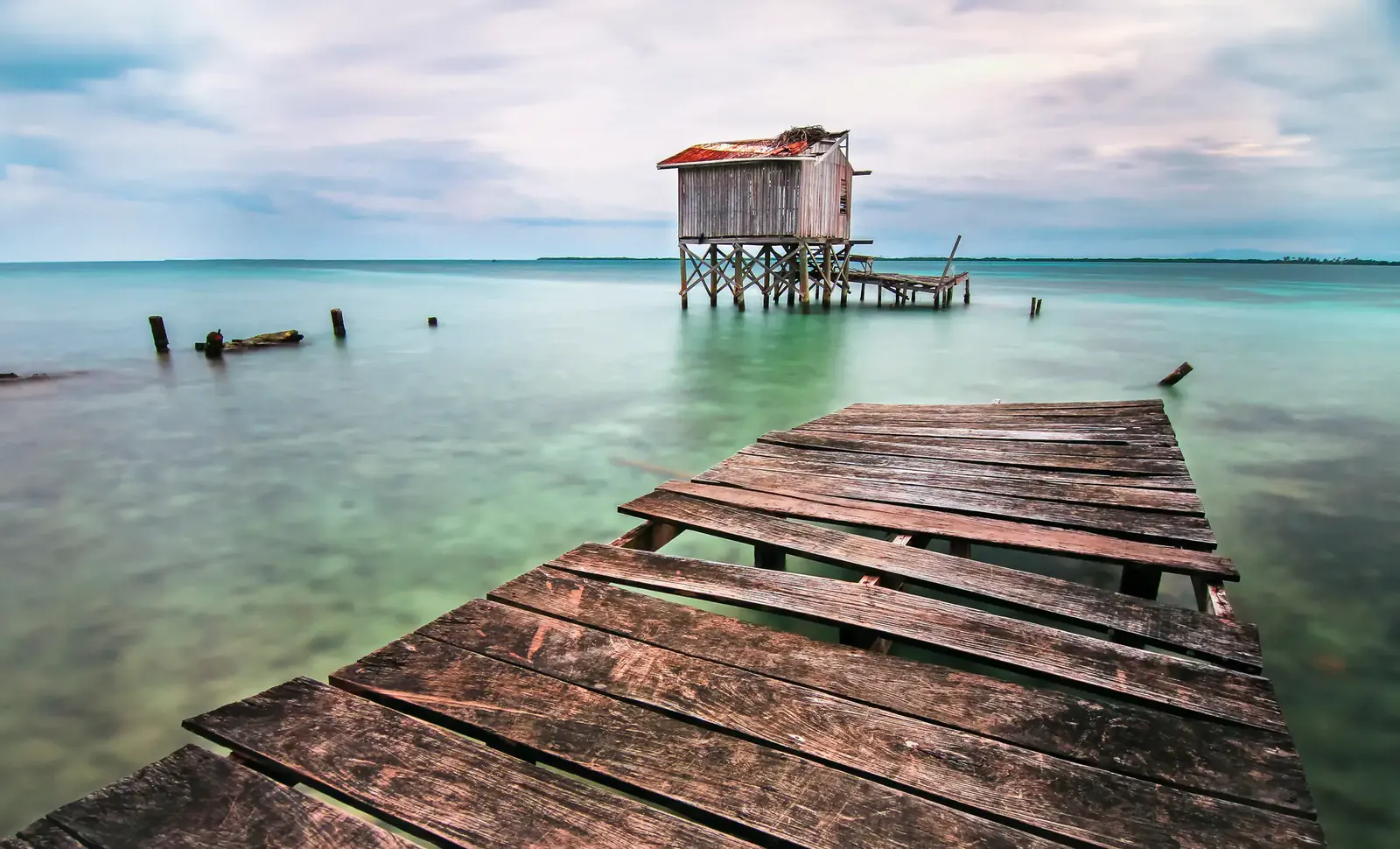
Belize has beautiful Caribbean water, but not every coastline looks like Cancun or the Maldives. Some beaches are narrow. Some have seagrass or mangroves. On San Pedro and Caye Caulker, swimming often happens from docks instead of broad stretches of white sand.
Caye Caulker is a relaxed island community, not a polished resort island. San Pedro has more hotels, restaurants, and nightlife, but it still does not feel like Cancun. Placencia has one of our best-known mainland beaches, and Hopkins offers a quieter village atmosphere with access to both the coast and inland adventures.
Choose Belize if you want the reef, the cayes, and water activities. Choose another Caribbean destination if your entire vacation depends on a wide, flawless beach outside an all-inclusive resort.
San Pedro has beach bars, restaurants, and nightlife. Caye Caulker, Hopkins, and Placencia also have places to drink, listen to music, and meet people. But Belize is not Cancun. We do not have the same number of large clubs, entertainment districts, or late-night events, and most places go quiet earlier, especially outside San Pedro.
If you want massive clubs and parties every night, Mexico will probably suit you better. If you want a few drinks beside the water followed by a quiet morning on the reef, Belize may be exactly right.
Skip Belize if basic transportation will ruin the vacation
Public transportation in Belize is practical, not luxurious. Local buses are affordable, but many are older buses without air conditioning. Water taxis can feel crowded, and the ride gets bumpy when the sea is rough. Domestic flights are fast and the views are excellent, but the planes are small. Private shuttles offer more comfort at a higher price.
I wish our public transportation were better. It needs serious improvement, and I would rather tell you that now than have you discover it on a three-hour bus ride.
Before visiting, decide what matters most: price, speed, or comfort. Belize rarely gives you all three in the same transfer.
Local food helps control the budget. Fry jacks, tacos, garnaches, and rice and beans cost a fraction of eating every meal inside a resort. Do not spend your entire budget on the hotel. The hotel is where you sleep. The reef, the caves, and the Maya sites are why you came.
Shoestring
US$60 to US$90
per person, per day
Hostel dorms at US$15 to US$30, local buses, market and street food, one or two major tours across the whole trip.
Mid-range
US$150 to US$250
per person, per day
Private rooms from US$50 to US$100, a mix of shuttles and water taxis, restaurant meals, and most of the tours you came for.
Upscale
US$350 and up
per person, per day
Beach resorts from US$150 to US$400 a night, private transfers, domestic flights, and guided days with a dedicated operator.
What specific things actually cost
Real prices from operators and official sources rather than the vague ranges most Belize articles publish. Last verified August 12, 2026. Flights and hotels move constantly, so treat those as a starting point and check live before you book.
Verified Belize travel costs with sources, checked August 12, 2026
Belize is worth visiting if you want three trips inside one week. You can walk through the rooms of an ancient Maya community, swim into a cave once associated with the underworld, and snorkel along the largest barrier reef in the Northern Hemisphere. English removes most of the language friction, and the country is small enough to keep those experiences inside a realistic two-base itinerary.
Belize is not worth it if the cheapest possible vacation, major nightlife, or a flawless resort beach matters more to you than caves, reef, and Maya history.
Choose San Ignacio plus one coastal base. Stay for at least seven days. Keep enough of your budget for the experiences. That is the trip Belize does better than its neighbors.
Belizean writer based in Cayo, a short drive from the Maya sites, caves, and rainforest most visitors come to see. Writes about Belize from the inside, including the parts the brochures leave out. This page was last reviewed on August 11, 2026, and we update the cost and sargassum sections whenever conditions change.
Is Belize Worth Visiting? FAQs
Is Belize worth visiting for one week?
Yes, if you choose two bases. Combine San Ignacio with San Pedro, Caye Caulker, Hopkins, or Placencia. San Ignacio covers Maya sites, ATM Cave, and rainforest, while the coastal base covers the reef and the cayes. Trying to visit all of them in seven days turns the vacation into a week of transfers, checkouts, and waiting for boats.
Is Belize expensive compared with Mexico?
Yes. Accommodation, transportation, imported goods, and guided tours generally cost more in Belize, and Mexico offers a far wider selection of budget options. A shoestring traveler in Belize should plan on US$60 to US$90 per day, and mid-range travelers closer to US$150 to US$250. The tours that make Belize distinctive are also the hardest costs to cut: an ATM Cave day with a licensed operator is about US$145 per person, and a Hol Chan day sail is around US$150. A 9% accommodation tax is added on top of room rates.
What is the biggest downside of visiting Belize?
Cost is the most consistent drawback. Belize is one of the more expensive countries in Central America, and the activities worth traveling for are the expensive part. Seasonal sargassum on east-facing beaches between June and October, basic public transportation, and unrealistic expectations about the beaches are the next most common sources of disappointment.
Is Belize worth visiting if I do not dive?
Yes. You can snorkel the barrier reef without any certification, explore Maya sites like Xunantunich, Caracol, Lamanai, and Cahal Pech, enter ATM Cave, hike wildlife reserves, swim below waterfalls, and experience Belizean cultures without ever scuba diving. Snorkeling trips from San Pedro and Caye Caulker reach Hol Chan Marine Reserve in a short boat ride.
Is Belize a good vacation spot for Americans?
Yes, especially for Americans who want history, nature, and adventure without a language barrier. Belize is the only country in Central America where English is the official language, US dollars are widely accepted at a fixed rate of BZ$2 to US$1, and several US cities have direct flights to Belize City. The main adjustment is cost, since Belize runs higher than Mexico for comparable travel.