Loading page content.
Loading Planning Guides
Preparing itineraries, logistics, and practical travel tools.
Compiling planning guides and trip resources tailored for Belize.
Loading page content.
Loading Planning Guides
Preparing itineraries, logistics, and practical travel tools.
Compiling planning guides and trip resources tailored for Belize.
Stay in the know
Belize
before
everyone else.
Events, hidden gems, seasonal highlights, and local stories, delivered straight to your inbox before they go viral.
Loading page content.
Loading Travel Tips
Compiling essential tips and advice for visiting Belize.
Preparing destination details and local recommendations.
Keep Planning
Belize health & safety, the practical side: tap water, mosquitoes and Zika, vaccines, marine and dive hazards, clinics, and travel insurance for 2026.
How much Belize costs by travel style, with sample budgets for San Ignacio, Caye Caulker, Placencia, San Pedro, transfers, tours, food, and cash planning.
Getting around Belize made simple: water taxi schedules to the cayes, Tropic Air domestic flights, NBC bus timetables, BZE airport transfers, shuttles, and rental cars.
A local, sourced answer on the current advisory, the areas that need more caution, and what it means for your trip
As of September 1, 2026, Belize is generally safe for tourists who use normal precautions and avoid Southside Belize City. The U.S. advisory is Level 2, while Southside is Level 3. Trips usually center on established visitor bases, but official advisories still note that violent incidents can happen in tourist areas, so secure valuables and plan nighttime transport.
Reviewed by RowanLast reviewed September 1, 2026
Verified September 1, 2026 against the U.S., UK, Canadian, and Australian advisories and the Belize Crime Observatory's July 2026 reports. The U.S. advisory remains Level 2, with Southside Belize City at Level 3. The localized May 2026 State of Emergency ended in June and did not extend to the cayes, beach villages, or Cayo.
Key takeaways
What the official advisory says
The U.S. State Department's current Belize travel advisory, reissued March 12, 2026, holds the country at Level 2: Exercise Increased Caution. That is the same tier assigned to France, Italy, the United Kingdom, and most of Western Europe. One area carries a stricter rating: the south side of Belize City, from the Haulover Creek Canal continuing south to Fabers Road, is rated Level 3 (Reconsider Travel) due to gang-related violent crime, with the advisory naming sexual assault, armed robbery, home invasions, and murder.
Here's the context the headline number misses: that Level 3 zone is a residential district of the old port city, not a tourist area. It is nowhere near the international airport, the water-taxi terminal you'd use for the cayes, or any of the places travelers actually stay. The UK, Canada, and Australia all publish the same split picture: caution nationally, with Southside Belize City singled out. Belize's tourism economy runs through San Pedro, Caye Caulker, Placencia, Hopkins, and San Ignacio, and none of those carry an elevated advisory.
Insider note
Read the advisory itself, not the headlines about it. Every major government (US, UK, Canada, Australia) names the same Southside Belize City zone specifically; the rest of the country sits at the same caution level as a European vacation.
The one consistent exception
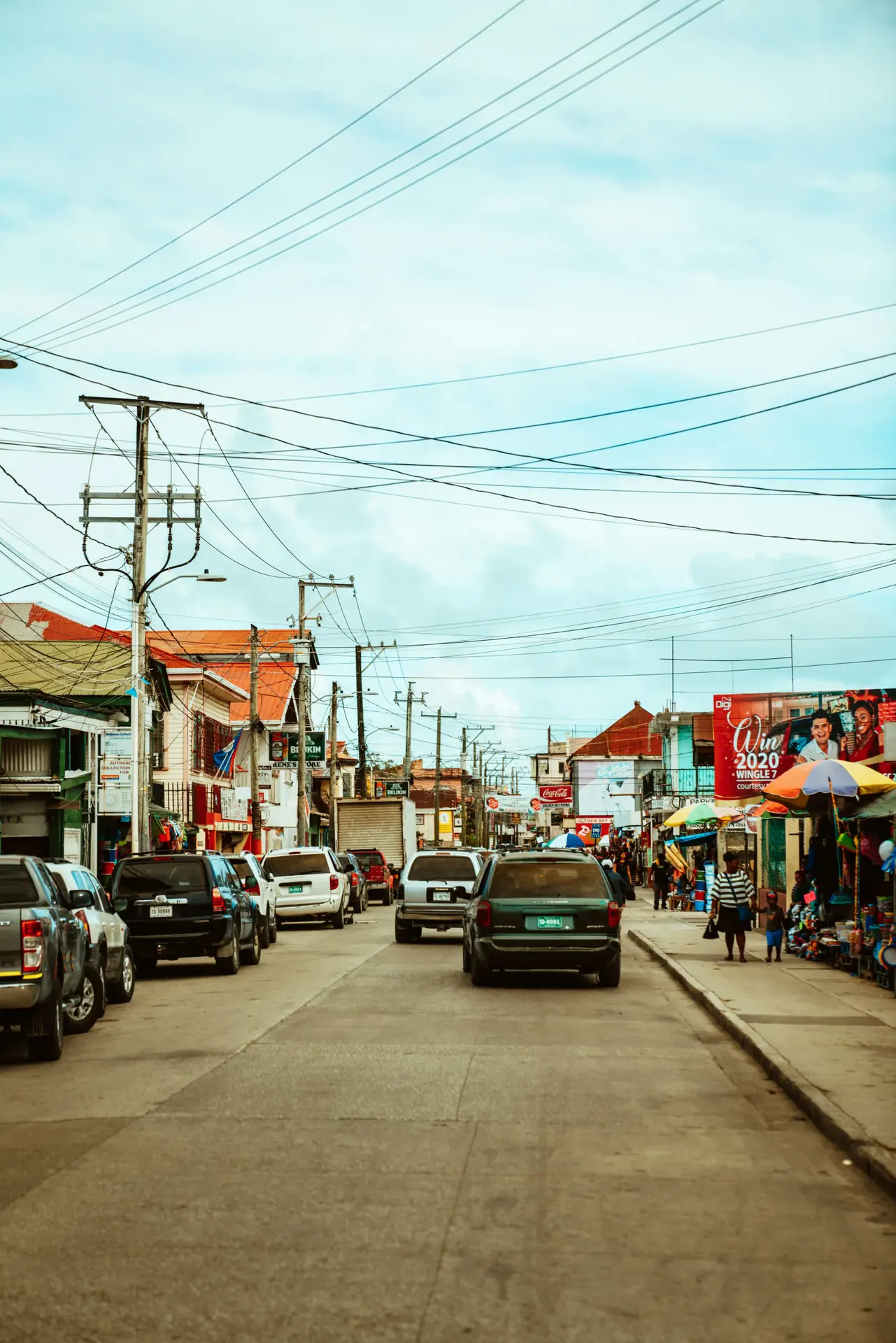
Nearly all of Belize's violent crime is concentrated in Belize City. The pattern is stark: the Belize District recorded 53% of the country's 91 murders in 2025, and about 79% of those were inside Belize City itself, a place the tourist map skips entirely. The government responds to spikes with short, geographically narrow states of emergency. The most recent (Statutory Instrument No. 49 of 2026, gazetted May 8, 2026) covered the Northside and Southside of Belize City and several Belize District villages; under section 18 of the Belize Constitution such orders run for no more than a month unless the National Assembly extends them, and GOV.UK removed its State of Emergency note on June 12, 2026 because the order had ended. These are domestic policing measures that give officers expanded powers in the named areas to curb gang crime; they are not travel restrictions, and they do not extend to the cayes, Placencia, Hopkins, San Ignacio, or the Cayo District where travelers actually stay.
When people ask me whether Belize is safe, they are usually asking about Belize City. They have seen an advisory, a Facebook comment, or a dramatic headline, and the question quietly changes from "which parts need more caution?" to "should I cancel Belize altogether?" I do not live in Belize City, but I have been there. My answer is not that it is perfectly safe, and it is not that visitors should be afraid of it. It is a real, working city, which means it deserves more awareness than Caye Caulker, Placencia, Hopkins, or San Ignacio. It also means it is not one uniform neighborhood, and a warning about one district does not describe the whole place.
For most visitors, Belize City is simply where the trip begins. You land, catch a domestic flight, take the water taxi, pick up a rental car, or stay one night before an early departure. There is no need to be paranoid about that. Just arrive with a plan. I would pre-book the airport transfer, stay north of Haulover Creek, take a taxi after dark, avoid the Southside, and keep my passport, money, and phone secure. I would also avoid driving between towns at night, when unlit roads, speed bumps, and livestock become a more realistic risk than the scary stories online.
Insider note
The advisory should help you make a smarter plan. It should not make the decision for you. If your flight lands by mid-afternoon you can be on Ambergris Caye or in San Ignacio before dinner, so there is rarely a reason to overnight in Belize City at all.
Where travelers actually go
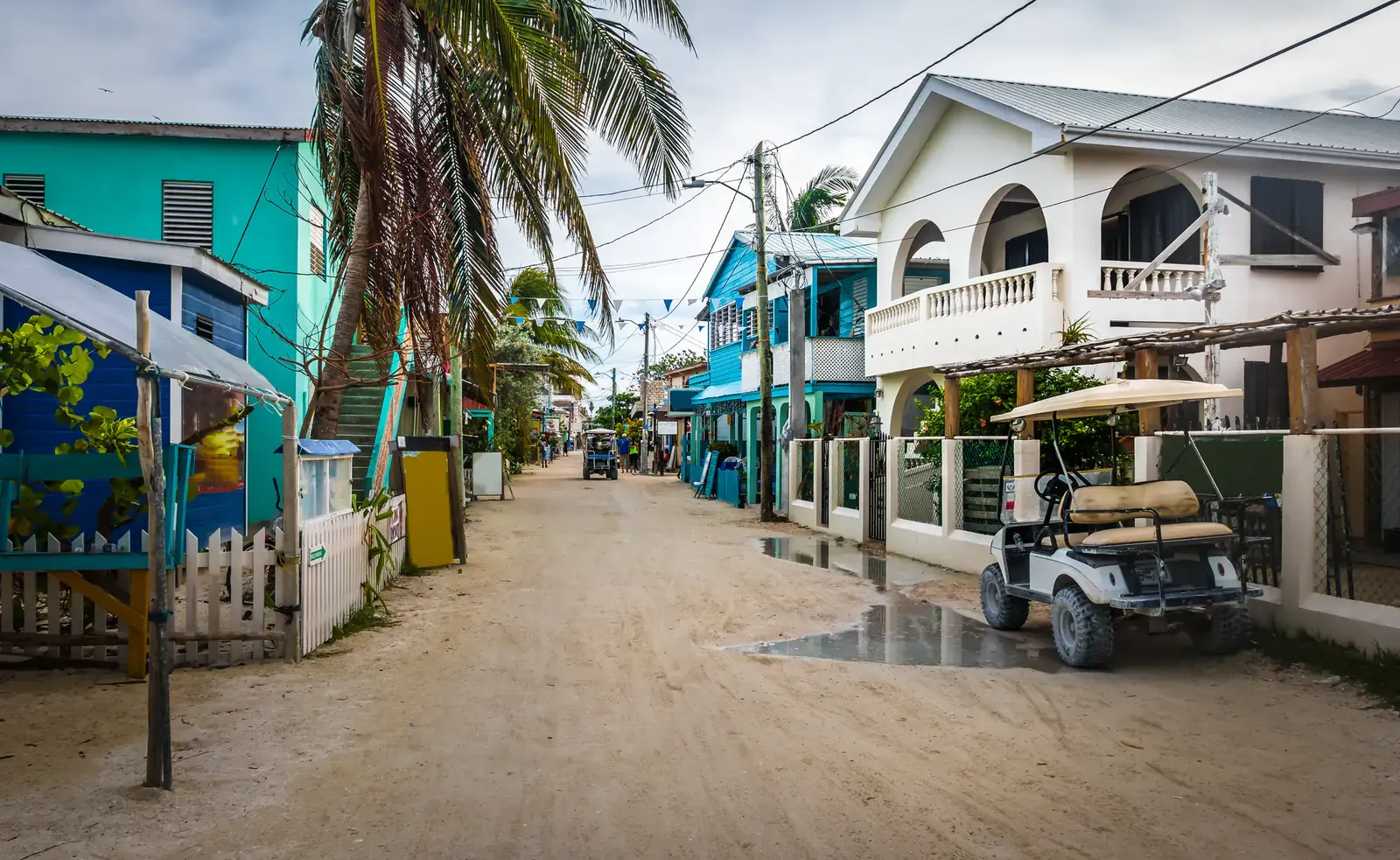
San Pedro and Caye Caulker are golf-cart islands where visitors spend their days between the beach, docks, and town. Placencia and Hopkins are small coastal communities, and San Ignacio is a market town built on two decades of adventure tourism. None carries Southside Belize City's Level 3 designation, but official advisories still note that violent incidents can happen in tourist areas. The more common visitor problems are opportunistic: phones left on beach towels, unlocked golf carts, and bikes left outside bars.
The day-to-day risk list for a Belize trip includes petty theft if you're careless with valuables, currents and boat traffic if you swim outside flagged areas, road conditions if you drive at night (unlit highways, speed bumps, the occasional wandering horse), and overexertion on tours. These are common and manageable, but they do not replace the normal crime precautions in the official advisories.
Insider note
Use hotel safes, don't leave anything visible in a parked golf cart, and skip night driving on the highways. Those three habits eliminate most of the incidents travelers actually report.
A first-hand account
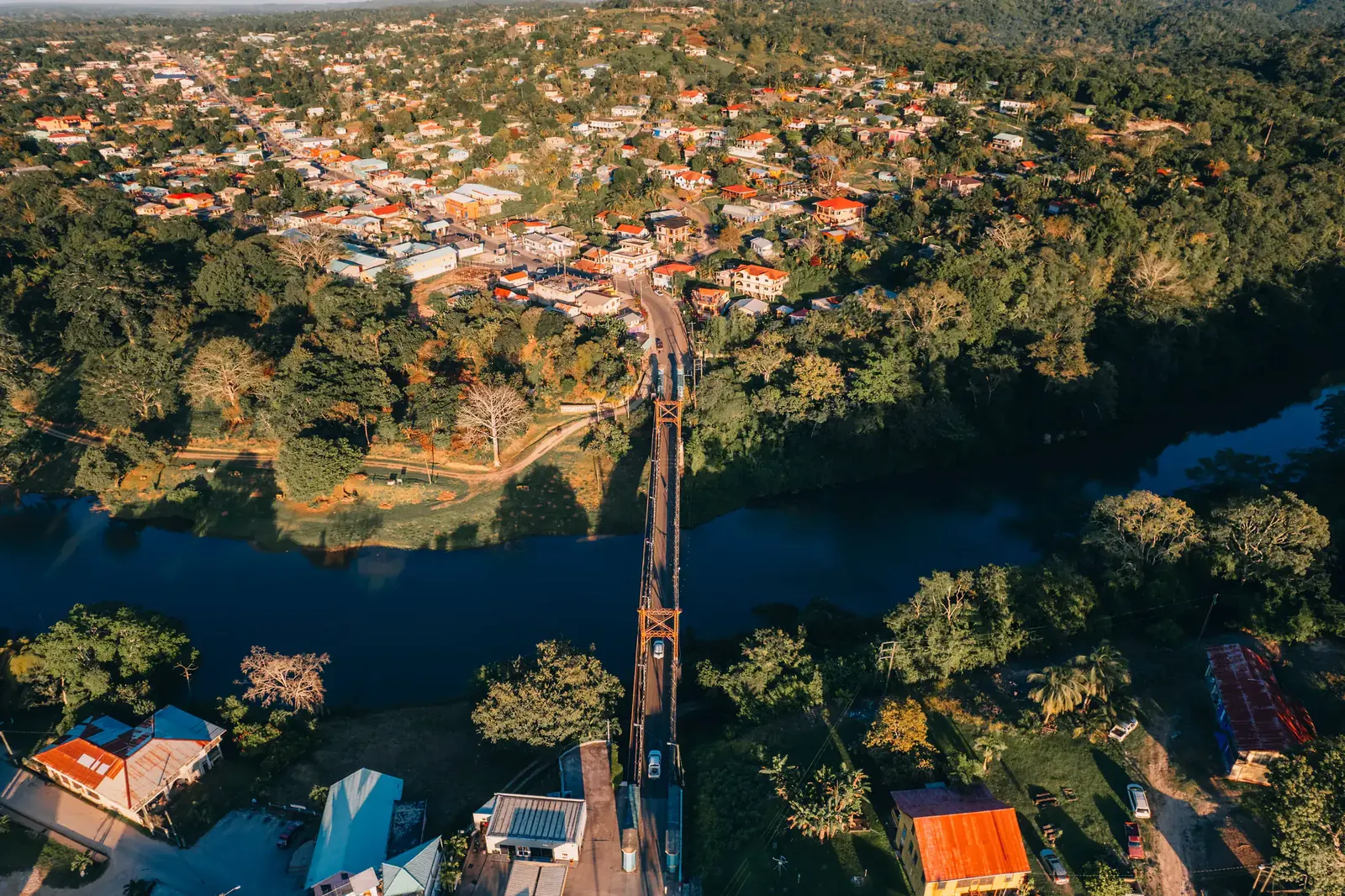
San Ignacio is the place I can speak about most personally. I live in Cayo and work in San Ignacio, and I have walked its streets every day: down the hill from the San Ignacio Hotel, through downtown, to the bank, to get food, and to catch a taxi home. I have been doing versions of that walk for most of my life, from primary school through university and now work. I have never felt threatened here.
That does not mean you should turn your brain off. It means the picture many nervous travelers carry in their heads is usually nothing like an ordinary day here. Walk through town after work and you will see people minding their business, picking up food, doing errands, waiting for a taxi. Burns Avenue is compact enough that you can walk from the bank to a coffee shop, then to a restaurant or a bar, without planning your whole evening around transport. That is why San Ignacio works so well as a tourist hub. It is not a resort bubble. It is a normal Belizean town where visitors and locals use the same streets.
I go out on weekends to bars and clubs and have never had a bad encounter. I walk Burns Avenue at night without feeling afraid. I would still give a first-time visitor the same advice I would give anywhere: know where you are going, keep an eye on your surroundings, and go out with somebody else after dark when you can. Situational awareness is not the same as judging people or places by how they look.
You may be approached by someone asking for money. That happens, and it is part of a bigger social problem Belize needs to address. A polite "no, sorry" and continuing on your way is normally enough. Poverty does not automatically mean danger, and a visitor should not confuse someone asking for help with a threat.
San Ignacio does get quiet after dark. This is a small town, not a city with endless nightlife, and if you are not at a pub, restaurant, or club there may not be much reason to wander around late. But quiet is not the same as unsafe. Enjoy downtown, use the ATM, walk Burns Avenue for dinner, and take the normal precautions you would in any place you do not know well.
Insider note
Travel with a friend after dark when you can, avoid isolated detours, and take a taxi if you are unsure of the route. That is the Belize I would prepare for: not a country to fear, but a country to travel through thoughtfully.
Solo travelers, families, and getting around
Belize is among the simplest Central American countries for solo and first-time travelers, largely because English is the official language and the tourist towns are small and social. Caye Caulker and San Ignacio have friendly hostel scenes; Placencia and Hopkins suit couples and families. Solo female travelers report Belize as comparatively easy, with the usual precautions: arrange airport transfers in advance, use licensed taxis (green license plates) after dark, and keep an eye on your drink in bar districts.
Getting around safely is mostly about choosing the right mode. Domestic flights and water taxis connect the cayes quickly. Licensed taxis carry green plates. Buses are cheap and used by everyone but slow, so daytime travel is best. If you rent a car, drive in daylight: highways are unlit, livestock wander, and speed bumps appear without warning. None of this is dramatic, it's the same common sense you'd use across the region.
Insider note
Book your first airport-to-island or airport-to-Cayo transfer before you land. Arriving with a plan removes the single most common moment travelers feel uncertain.
Sensible, not scared
Book licensed guides for backcountry tours. It's the law for the ATM Cave and good practice everywhere else, and licensed operators carry radios, first aid, and insurance. Buy travel insurance that covers adventure activities and medical evacuation; Belize's clinics are fine for minor issues, but serious cases get flown out, and that flight is what insurance is for. Carry a copy of your passport, keep some small cash separate, and register with your embassy's traveler program if you like belt-and-suspenders.
Health-wise, Belize is low-drama: drink bottled or filtered water outside the resorts, use reef-safe sunscreen and real insect repellent in the jungle, and respect the sun. The CDC currently flags New World screwworm in the region, so covering up against bug bites and cleaning any wounds is sensible. Heat exhaustion sends more travelers home early than anything on the crime pages does. Hurricane season runs June to November; if you're traveling then, favor refundable bookings and watch the forecasts in the week before you fly.
Insider note
The single highest-value safety purchase for Belize isn't gear. It's a policy with medical evacuation cover, which costs a few dollars a day and removes the one scenario that gets genuinely expensive.
Choose your base
This guide owns the national question: the current advisory, crime context, Belize City distinction, and precautions that apply across the country. Our separate base guide compares Ambergris Caye, Caye Caulker, Placencia, Hopkins, San Ignacio, Toledo, and Belize City without pretending any town is crime-free.
The numbers, in context
Belize's national homicide rate is high, and location changes the traveler's risk. The country recorded 91 murders in 2025, almost identical to 2024, with 53% in the Belize District. The first-quarter 2026 reports show a mixed picture: murder victims rose from 24 to 28, while major crime incidents fell from 248 to 218.
Level 2
U.S. State Department advisory
Exercise Increased Caution, the same tier as France, Italy, and the UK.
91
Murders nationwide in 2025
Almost flat year on year, down about 1% from 92 in 2024.
21.8
Homicides per 100,000 (2025)
The national rate, per the Belize Crime Observatory.
53%
Of 2025 murders in the Belize District
About 4 in 10 nationwide were in Belize City alone, which travelers skip.
2026 so far
The Belize Crime Observatory's first-quarter 2026 reports, published July 21, recorded 28 murder victims between January and March, four more than the same period in 2025. Thirteen victims, or 46%, were in the Belize District. Major crimes moved in the other direction: police recorded 218 nationwide, 30 fewer than in the first quarter of 2025. Full-year 2025 major crimes also fell slightly, from 1,098 cases in 2024 to 1,089.
Read the official Q1 2026 report (PDF)The 10-year pattern
This concentration isn't a one-year blip. Belize Police Department incident data for 2015 to 2024 shows Belize City alone recorded 466 murders over the decade, more than three times the combined total for San Pedro, Caye Caulker, Placencia, and San Ignacio, the four biggest stops on the tourist map, at 154. Belize District's share of the national total has run 44% to 66% every year since 2015, averaging 56%, so 2025's 53% is the norm, not an outlier. Belize Crime Observatory, Belize Police Department incident data.
Figures from the Belize Crime Observatory End of Year 2025 Report, published February 24, 2026, and the U.S. State Department. View the report (PDF)
Cross-checked against four governments
Skip the headlines and read the source documents: the United States, the UK, Canada, and Australia converge on the same verdict. Exercise normal caution, and no government tells its citizens to avoid Belize's tourist regions. Only one urban district, Southside Belize City, carries a stricter warning. Each row links to the live advisory.
Reissued March 12, 2026. Southside Belize City is rated Level 3 (Reconsider Travel); the rest of the country, including every tourist area, sits at Level 2, the same tier as France and the UK.
The FCDO updated its Belize page on June 12, 2026 to remove State of Emergency information because it had ended, and does not advise against travel to Belize's main tourist destinations.
Last updated July 29, 2026. Global Affairs Canada names Southside Belize City specifically over gang and drug-related violence, but does not advise against travel to the cayes, Placencia, or the Cayo District.
Smartraveller's second of four tiers nationally, the same level it assigns to popular destinations across the Caribbean and Central America. It raises the Southside of Belize City, south of the Haulover Creek Canal, to its third tier over gang-related violence. Last updated June 15, 2026.
Advisory levels are reviewed periodically; check the live advisory for your own country before you travel, or read our full breakdown of the 2026 Belize travel advisories. For health, see the CDC Travelers' Health page for Belize. Reflects guidance current as of September 1, 2026.
Save these before you go
Police, fire & ambulance
911
Works when dialed from a local Belizean number.
Tourism Police
Ambergris Caye, Caye Caulker, San Ignacio & Placencia
English-speaking officers dedicated to visitor assistance.
U.S. Embassy, Belmopan
+501 822-4011
After-hours emergency line for U.S. citizens.
Local police stations in the tourist towns
Call 911 for emergencies. For non-urgent reports (a lost phone, a stolen golf cart), these are the direct station lines in the areas travelers actually stay. Nationwide, the police line is +501 207-2222 and reports can be sent by WhatsApp to +501 612-9764.
Ambergris Caye (San Pedro)
+501 206-2022
San Pedro Police Station
San Ignacio & Cayo
+501 804-2022
San Ignacio Police Station
Placencia
+501 523-2022
Independence Police Station (nearest)
Hopkins
+501 522-2022
Dangriga Police Station (nearest)
Numbers from the Belize Police Department.
Before you go
What to look for in evacuation and adventure-activity cover
Open guideVetted, licensed operators for caves, reef, and jungle days
Open guideWhich island or town fits your trip, and how they compare
Open guideThe other thing travelers ask about: current beach conditions
Open guideSeasons, weather, and the hurricane months to plan around
Open guideHow we research this guide
Belize-based travel editor. Lives in Cayo, works in San Ignacio, and has walked that town's streets since primary school. Tracks the country's official advisories and on-the-ground conditions year-round. We review this page against the official U.S., UK, Canadian, and Australian advisories and the latest Belize Police crime figures whenever they change, and we date every review so you can see how current it is. It was last reviewed on September 1, 2026.
Questions travelers ask
Yes, for the places travelers actually go. The U.S. State Department holds Belize at Level 2 (Exercise Increased Caution), the same tier as France and the UK. The exception is Southside Belize City, a non-tourist residential area rated Level 3. San Pedro, Caye Caulker, Placencia, Hopkins, and San Ignacio have no elevated advisory and remain the safe, well-trodden tourism corridors.
As a country, Belize sits at the same caution level as much of Western Europe, and its crime is heavily concentrated in one city rather than spread across the destinations tourists visit. Of the 91 murders recorded nationwide in 2025, 53% were in the Belize District alone. For the cayes, beach villages, and Cayo, the practical safety experience is closer to a quiet small town than a high-risk destination.
Yes. Belize is one of the more straightforward Central American countries to travel to: English-speaking, small-scale, and rated Level 2 (Exercise Increased Caution) by the U.S. State Department, the same tier as France and Italy. The one place to route around is Southside Belize City; everywhere on the tourist map, the cayes, beach villages, and San Ignacio, carries no elevated advisory.
Generally, yes, as of this September 1, 2026 review. No government currently advises against travel to Belize's main tourist destinations, and the May 2026 State of Emergency in Belize City has ended. Southside Belize City carries the stricter area warning. Official advisories also note that violent incidents can occur in tourist areas, so use normal precautions, secure valuables, and plan transport after dark.
Belize recorded 91 murders in 2025 (about 21.8 per 100,000), and the Belize Crime Observatory's first-quarter 2026 report counted 28 murder victims from January to March, four more than the same period in 2025. The pattern behind the numbers is what matters for travelers: over half of the country's violent crime happens in the Belize District, most of it inside Belize City, while the islands, beach villages, and Cayo record a small fraction of it.
The U.S. State Department reissued its Belize advisory on March 12, 2026 at Level 2: Exercise Increased Caution. One zone is stricter: Southside Belize City, from Haulover Creek to Fabers Road, is Level 3 (Reconsider Travel) for gang-related crime. The UK, Canada, and Australia publish the same pattern of national caution with that single zone singled out.
No. On May 8, 2026 the Government of Belize declared a 30-day State of Emergency for Belize City and parts of the Belize District in response to a rise in gang crime; GOV.UK removed State of Emergency information on June 12, 2026 because the order had ended. It was a domestic policing measure that gave officers expanded powers in those specific communities, not a travel ban or an advisory against visiting Belize. The cayes (San Pedro and Caye Caulker), Placencia, Hopkins, San Ignacio, and the Cayo District all lay outside the affected zone, and tourism in those areas continued normally.
Yes. Americans are the largest group of visitors to Belize, helped by the fact that English is the official language and the U.S. dollar is accepted almost everywhere. The U.S. State Department rates Belize Level 2 (Exercise Increased Caution), the same tier as much of Western Europe, with the single exception of Southside Belize City. Stick to the islands, beach villages, and San Ignacio and the trip is straightforward and welcoming.
Only one: the Southside neighborhoods of Belize City, south of Haulover Creek, which carry the country's single elevated advisory because of gang activity. Travelers have no practical reason to enter them. Everywhere on the tourist map, San Pedro, Caye Caulker, Placencia, Hopkins, and San Ignacio, sits at the standard caution level and is considered safe for visitors.
Daytime travel is straightforward. Domestic flights and water taxis link the cayes quickly, and licensed taxis carry green plates. If you drive, stick to daylight: highways are unlit, livestock wander onto roads, and speed bumps are common. Avoid night driving on rural highways, which is the single biggest road-safety variable for visitors.
Food hygiene at restaurants and street grills in tourist towns is generally good; eat where locals queue. Drink bottled or filtered water outside major resorts, which nearly all hotels provide. The most common traveler ailments are sunburn and dehydration, not foodborne illness.
Strongly recommended. Choose a policy covering adventure activities (caving, diving, zip-lining) and medical evacuation, since serious medical cases are flown to Mexico, Guatemala, or the U.S., and evacuation cover is the part that protects you from a five-figure bill. If you travel during hurricane season (June to November), add trip-interruption cover.
Yes, during the day. Daytime highway driving, airport to Belmopan on the George Price Highway, then onward on routes like the Hummingbird, is how most independent travelers who rent a car actually get around, and it's a routine, well-marked drive, not a risk area on any government advisory. One alarming comment or story shouldn't outweigh that: Belize's real safety concentration is Southside Belize City, a specific neighborhood, not the highway network. The standard cautions are about timing, not the road itself: avoid driving after dark, since rural highways are unlit, speed bumps through villages appear with little warning, and livestock sometimes wanders onto the road at night. Plan arrivals and transfers for daylight hours and the drive is as ordinary as it looks on the map.
Pick your bases, book licensed guides, carry real insurance, then go enjoy one of the friendliest countries in the Caribbean.