c. 1200
Kalinago reach the Lesser Antilles by canoe
Loading page content.
Loading Experiences
Curating adventure, culture, and coastal experiences.
Gathering activities, highlights, and practical planning details.
From St. Vincent and the exile of 1797 to the drums of Dangriga and Hopkins, the story of the Garinagu and where to meet their culture today
The Garinagu were born on St. Vincent from two peoples, West African and Kalinago, survived war and exile, and made the southern coast of Belize home. Their language, drumming, food and faith are still lived every day in the coastal towns, and you can hear the drums from a beach in Hopkins.
Reviewed by RowanBorn in Belize, lives near San IgnacioLast reviewed October 26, 2026
The history on this page draws on I. Myrtle Palacio's The Primer on the People Called Garifuna (2024) and the colonial records it reproduces.
The short answer
The Garifuna are an Afro-Indigenous people, descended from West Africans and the Indigenous Kalinago of St. Vincent in the eastern Caribbean. The British exiled them in 1797, and they settled along the coast of Central America. In Belize they have lived on the southern coast since at least 1799, in Dangriga, Hopkins, Seine Bight, Punta Gorda and Barranco.
Garinagu is the people. Garifuna is one person, and the adjective: Garifuna drums, Garifuna food. Their language, dance and music are recognised by UNESCO, and every 19 November the country marks Garifuna Settlement Day.
Garifuna history timeline
c. 1200
Kalinago reach the Lesser Antilles by canoe
1646
Africans recorded living among the Kalinago of St. Vincent
1795
War with the British; Chief Joseph Chatoyer killed
1796
Surrender; more than 4,000 held on Balliceaux
1797
2,026 survivors land on Roatán, 12 April
1799
Garinagu working in the Belize settlement
1832
Largest arrival, at Stann Creek and Punta Gorda
1920s
The black, white and yellow Garifuna flag takes shape
1941
Resolution for a day of recognition, 16 November
1943
19 November becomes a Stann Creek holiday
1954
Garinagu win seats in the first universal-suffrage election
1975
Stann Creek Town becomes Dangriga
2001
UNESCO recognises Garifuna language, dance and music
St. Vincent
The story starts in the eastern Caribbean. The Kalinago, who called themselves Kalinago or Kalipuna rather than the Spanish label "Carib", had held St. Vincent for centuries, farming cassava, fishing and building canoes. Through the 1600s, West Africans joined them. Some escaped slavery on nearby islands, Barbados above all, crossing to a mountainous island the colonisers struggled to reach. Others were taken in Kalinago raids and absorbed into Kalinago families. By 1646 a French observer recorded Africans living among them, and by 1700 the two had become one people.
That people carried both inheritances. Cassava farming, canoe building and an Arawakan language came from the Kalinago side. The celebration of ancestors came from West Africa. Children learned their mothers' language and boys later took up their fathers', which is why Garifuna still has words that differ by the speaker's sex: a man says au for "I", a woman says nuguya.
Insider note
Garinagu never called themselves "Black Caribs". That was the colonisers' name, and it gave way to Garifuna and Garinagu as the accepted names in the 1970s.
1795 to 1797
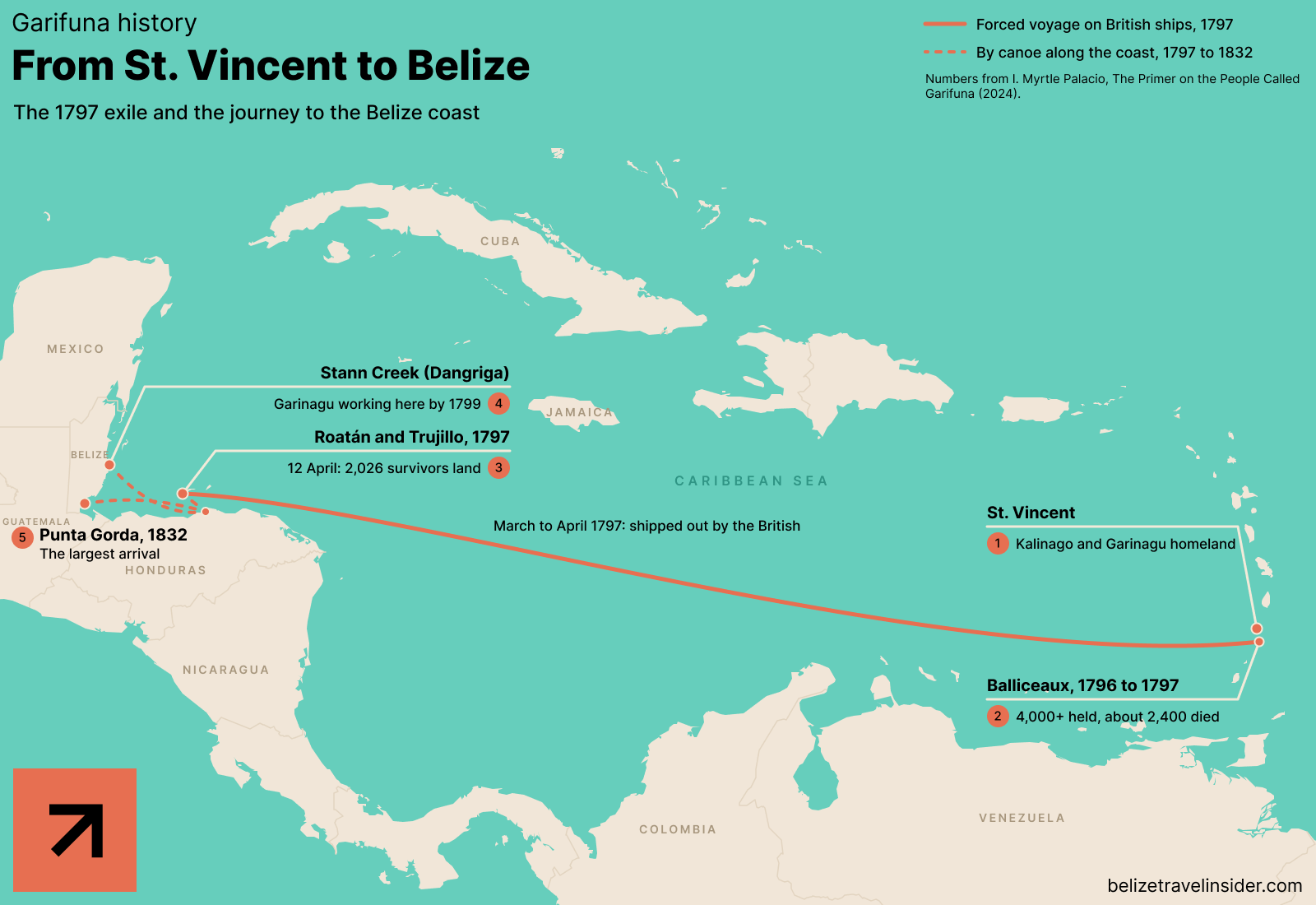
After 1763 Britain claimed St. Vincent and began carving up Kalinago land for sugar estates. The Kalinago held their ground through decades of fighting, and in 1795, allied with the French revolutionary Victor Hugues, they went to war one final time. Their paramount chief, Joseph Chatoyer, was killed in March 1795, and they surrendered on 10 June 1796.
The British then rounded up more than 4,000 people and held them on Balliceaux, a small, bare island in the Grenadines. Around 2,400 died there of hunger and disease. On 11 March 1797 the 2,248 survivors were put aboard a convoy of eight ships, and 2,026 reached Roatán, off Honduras, on 12 April. Within months three in four had moved to Trujillo on the mainland, and from there Garinagu spread along the Caribbean coast of Central America.
Insider note
Over the next forty years Garinagu founded about twenty communities around the Bay of Honduras, from Stann Creek in Belize to Black River in Honduras.
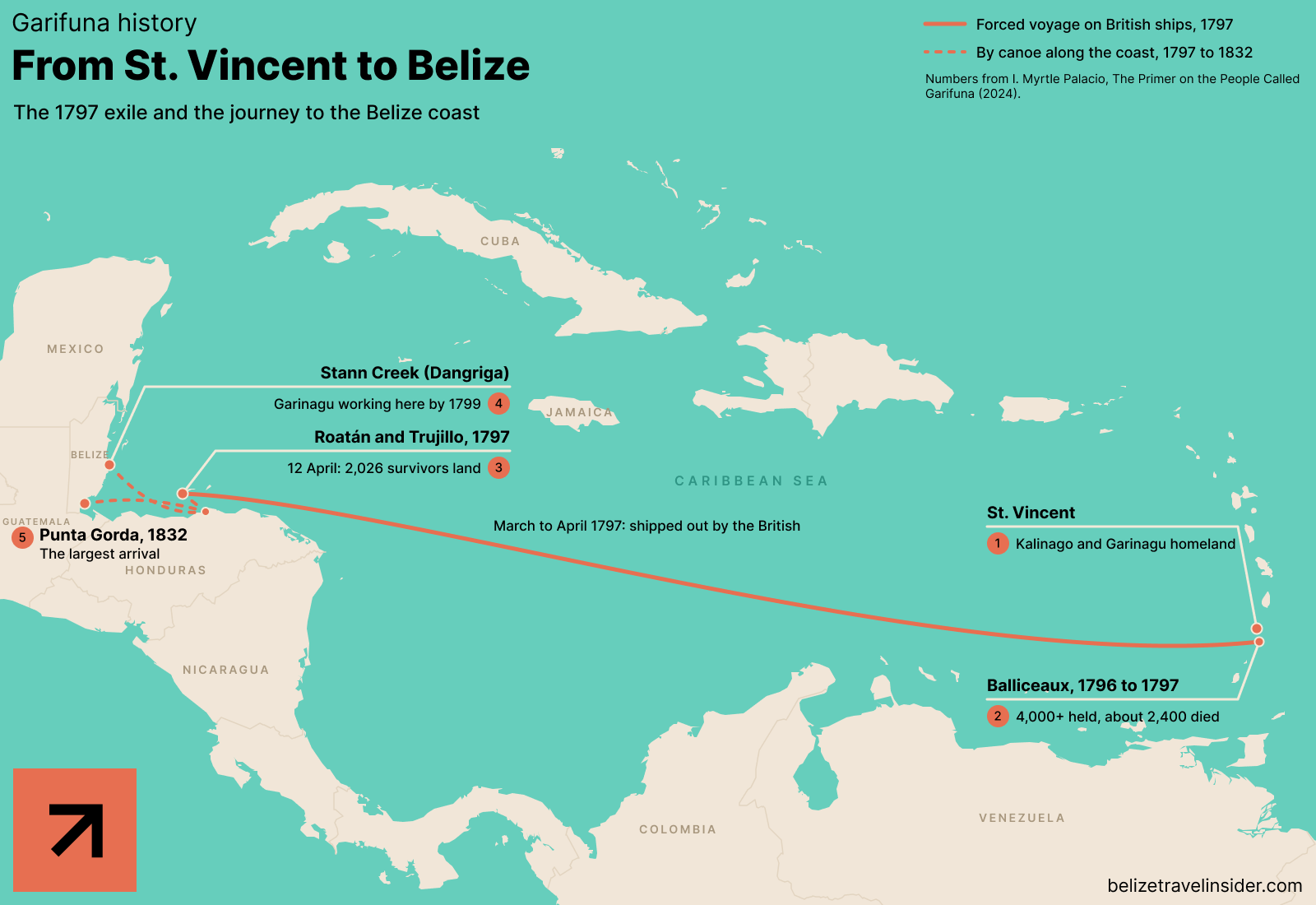
Arriving in Belize
Garinagu were in the British settlement of Belize by 1799, cutting wood and moving goods by boat, and about 150 were working there by 1802. They were not welcome. An 1811 law punished any "Carib" found in the settlement after dark without permission, and an 1812 law fined anyone who hired one fifty pounds. Labour was scarce, though, so they were hired anyway and kept to the south, which was still disputed with Spain.
The largest arrival came in 1832. Garinagu at Trujillo had fought on the losing side of a civil war in Central America, and fearing for their lives they fled to Stann Creek and Punta Gorda. Most accounts tie 19 November to that landing. By 1850 about 1,000 Garinagu lived in Stann Creek and 400 in Punta Gorda, with more at Sibun, Seven Hills and other villages.
Insider note
From 1825 to 1870, dugout canoes built by Garinagu were the main small-boat transport along this coast, until the banana trade brought larger boats.
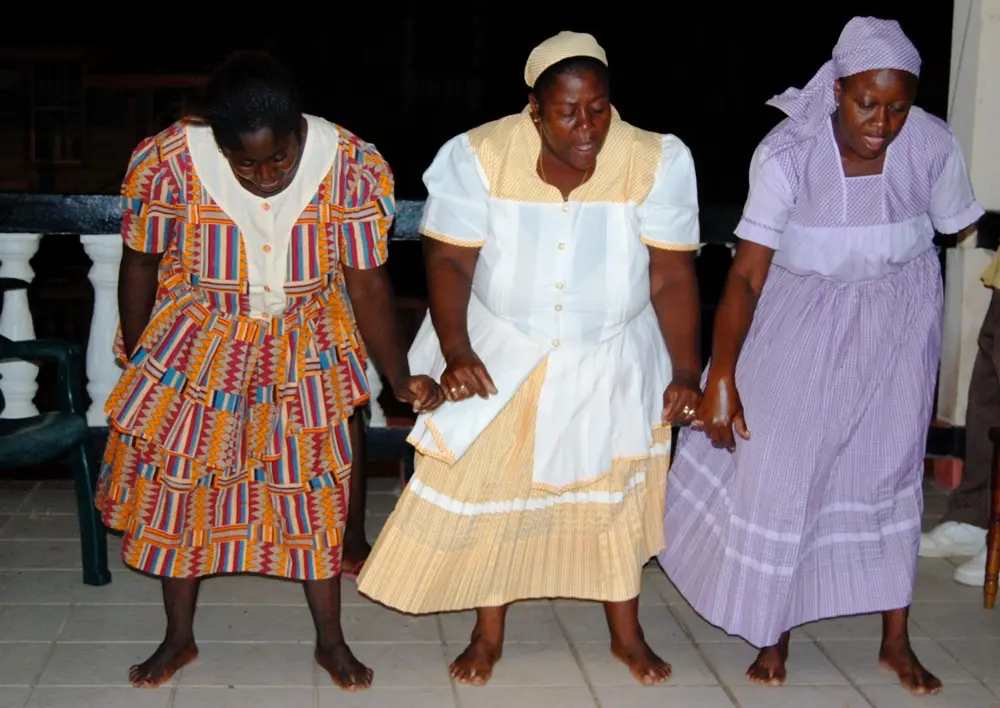
Teachers and voters
From the late 1800s, the Catholic and Methodist churches trained Garinagu as teachers and sent them into the country's most remote villages. The first two Garifuna teachers were Cirilo Guiterrez of Punta Gorda and Mr. Arzu of Barranco, in 1892. In 1907 a young teacher named Andres Enriquez walked two days through swamp to reach the Maya village of San Antonio in Toledo, where he taught and lived in a thatch hut for eight dollars a month.
Garinagu were also at the front of the push for democracy: G.A. Nunez led the local chapter of Marcus Garvey's UNIA, and Garinagu marched in the labour movement of the 1930s and the fight for universal adult suffrage. In the first elections it allowed, Nathaniel Cacho won Stann Creek in 1954, and David McKoy and Faustino Zuniga won Stann Creek and Toledo in 1957.
Insider note
When the 1931 hurricane flattened Belize City, Garinagu in Stann Creek took in the people left homeless.
19 November
On 16 November 1941, Thomas Vincent Ramos, Mateo Avaloy and C.J. Benguche signed a resolution in Stann Creek asking for a day to recognise the Garinagu. Two years later the colonial Gazette declared Friday 19 November 1943 a public and bank holiday in the Stann Creek District, as Stann Creek Settlement Day. It became a national holiday in the 1970s, the same decade Stann Creek Town took the name Dangriga.
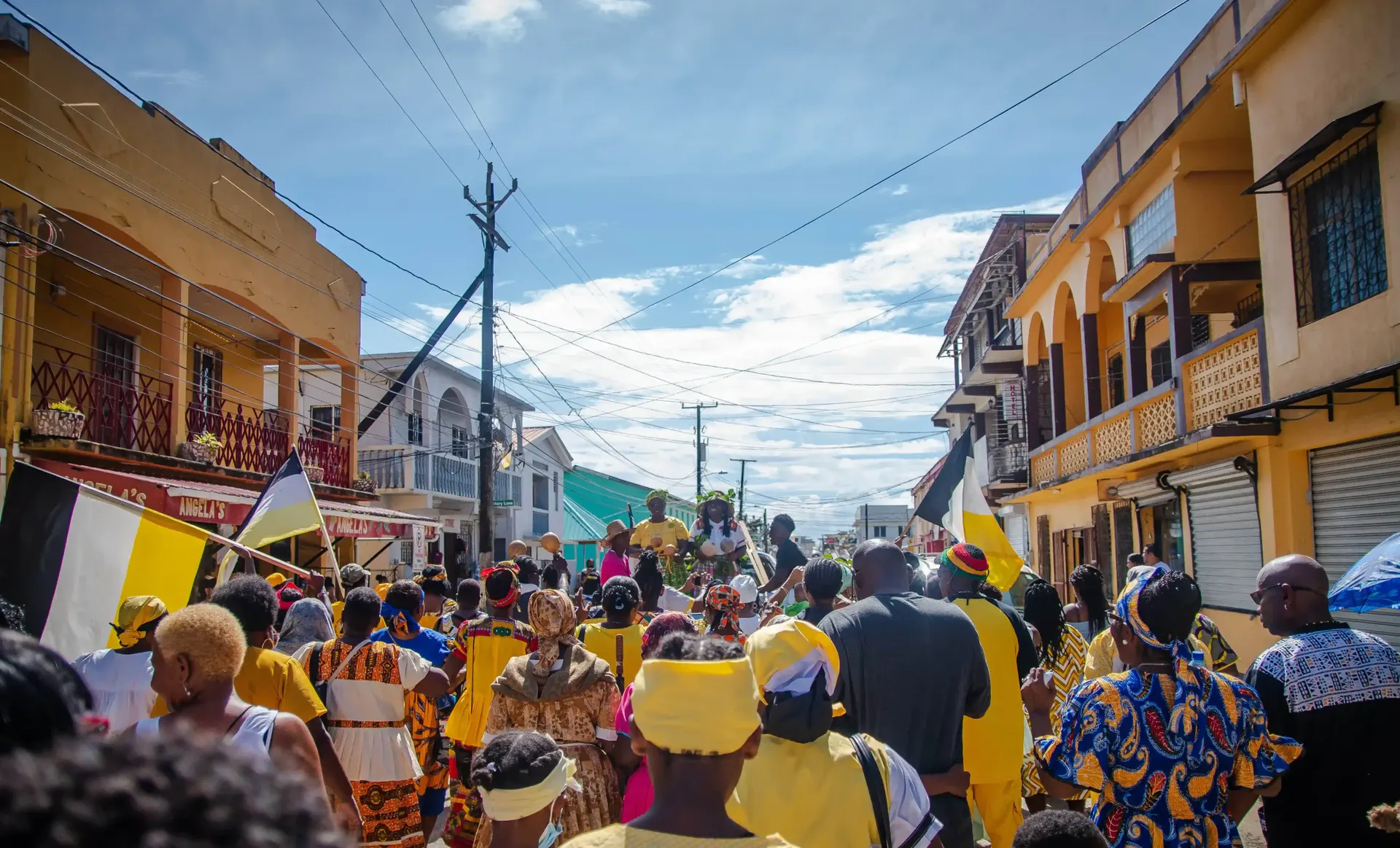
Today the celebration starts the night before with drumming that runs until dawn, when canoes come ashore carrying cassava, plantain and drummers in a re-enactment of the arrival. Dangriga has the biggest celebration, and Hopkins, Seine Bight, Georgetown, Punta Gorda and Barranco hold their own.
For dates, the dawn re-enactment and where to stay, see our Garifuna Settlement Day guide.
Insider note
Settlement Day is often credited to T.V. Ramos alone. Myrtle Palacio's research shows three men, Catarino Benguche, Ramos and Mateo Avaloy, led the campaign together.
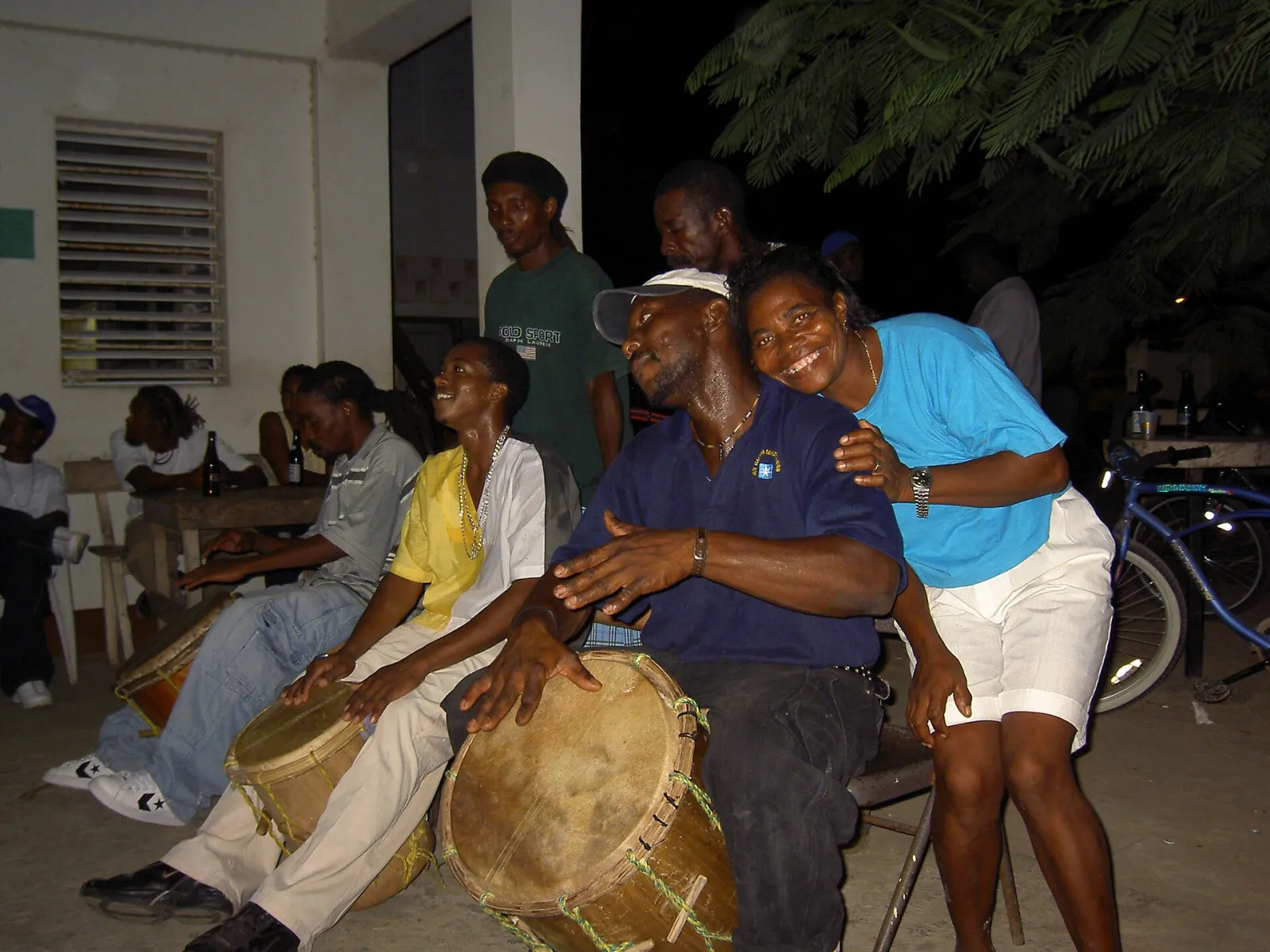
Language, drums, dance
Garifuna is an Arawakan language with French and West African words folded in. The counting numbers come from French, and words such as hudu, to crush, come from West Africa. Garifuna teachers wrote the first dictionary in the 1950s, and the National Garifuna Council published The People's Garifuna Dictionary in 1993. On 18 May 2001, UNESCO proclaimed Garifuna language, dance and music a Masterpiece of the Oral and Intangible Heritage of Humanity.
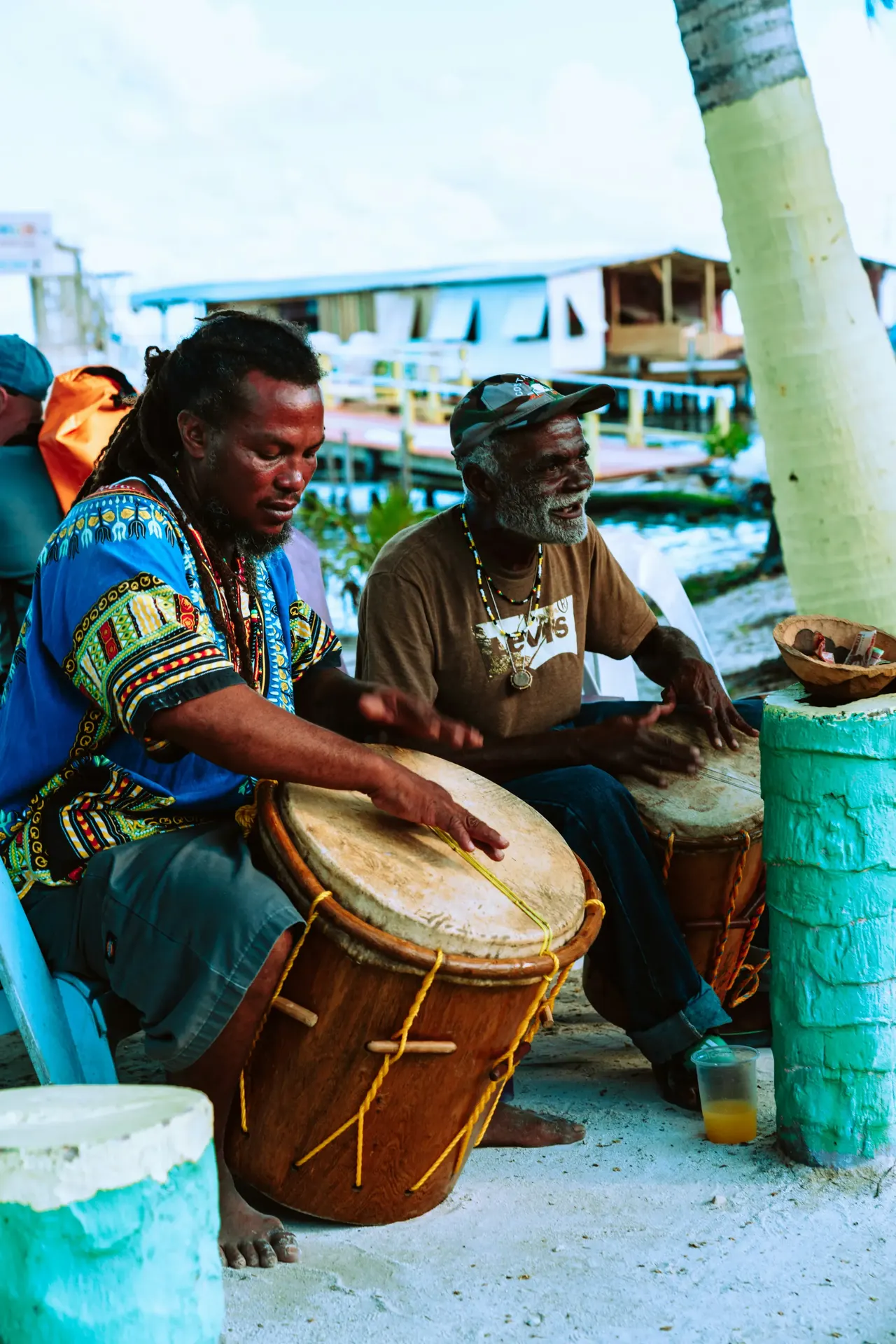
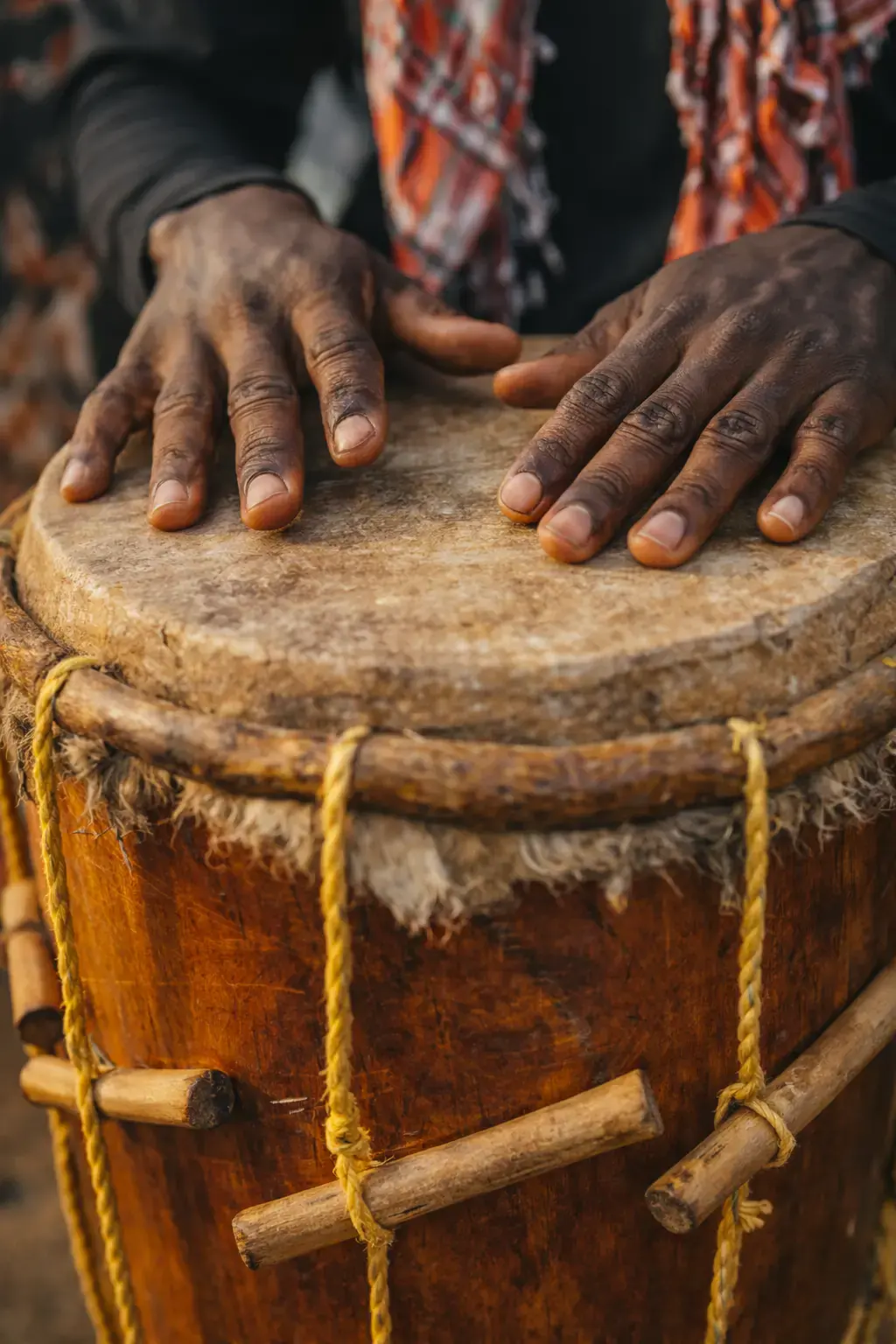
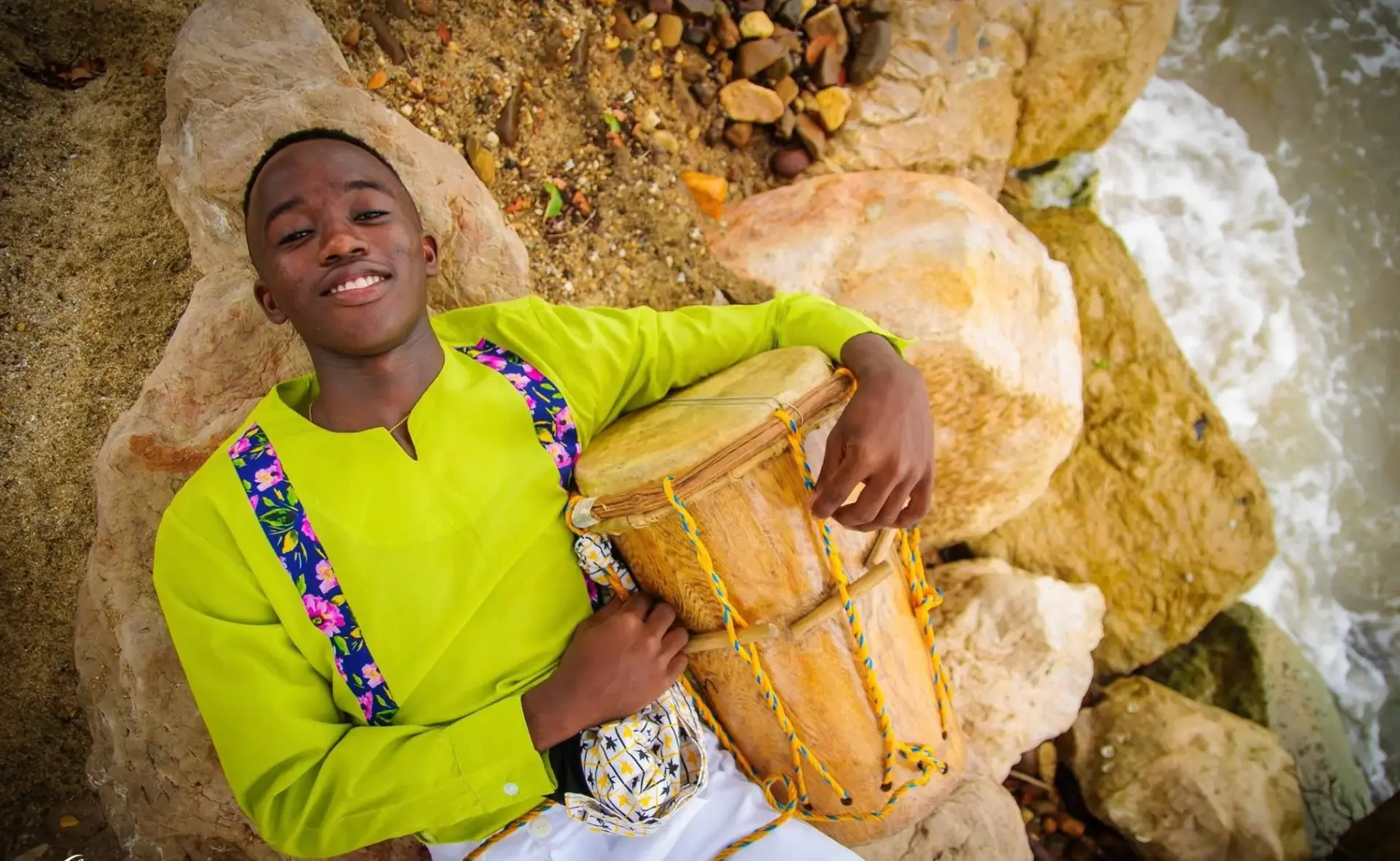
The music is drums first. A bass drum, the segunda, and a tenor drum, the primero, play together under a lead singer and a call-and-response chorus. Each rhythm has its dance: punta, hüngühüngü, sambai, charikanari, chumba, and wanaragua, the masked dance known elsewhere in the Caribbean as Jankunu. Paranda grew from berusu, an older guitar genre, and now adds drums and shakers.
Wanaragua belongs to the Christmas season, so it pairs well with a December trip to Belize.
Insider note
Wanaragua belongs to the Christmas season, around Christmas and on 6 January, Dia del Rey, though masked dancers often join the Settlement Day parade in Dangriga too.
Food
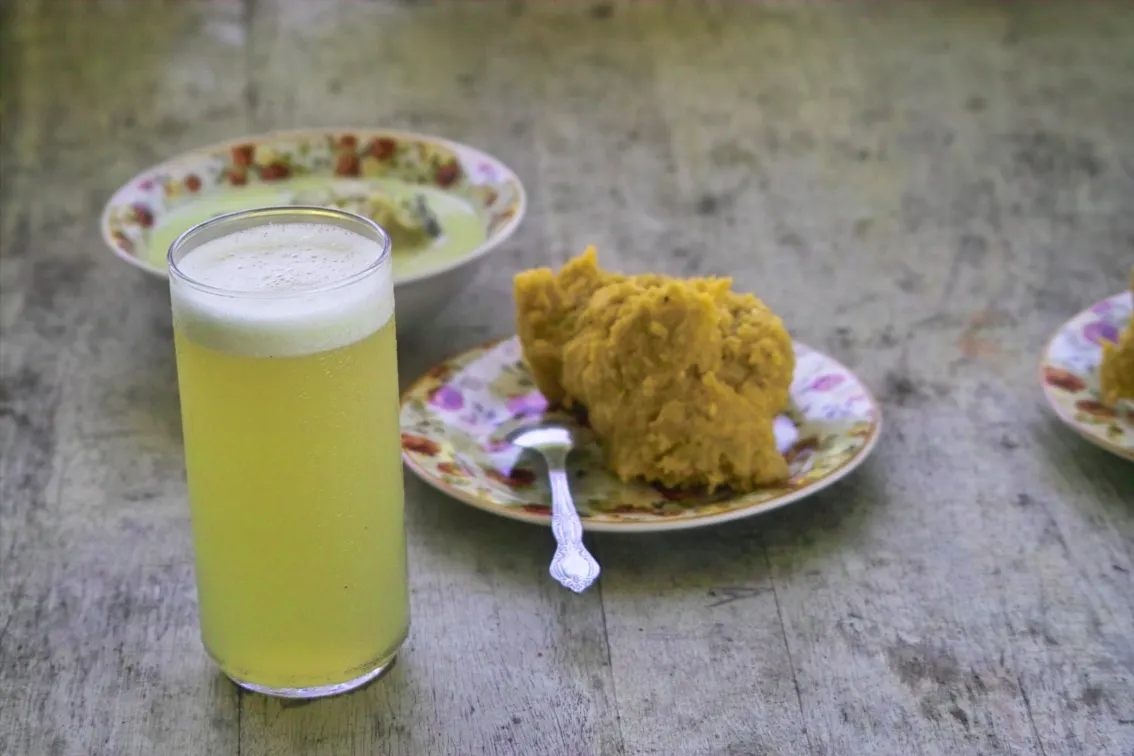
Garifuna cooking grew out of a life by the sea and a garden of cassava, plantain, banana and yams. Ereba, the flat cassava bread, is made from bitter cassava that is grated, strained, sifted and baked. Hudut is green plantain boiled and pounded smooth, eaten with lasusu falumou, fish cooked in coconut milk. Darasa, tapou and bundiga are made from green banana or plantain, and sweet cassava becomes cassava pudding.
Drinks come from the same garden. Hiu is made from bitter cassava and gungude from dried green banana. Look for hudut at family-run places in Hopkins and Dangriga rather than resort menus, and for ereba from home bakers.
For the rest of the country's kitchens, see Belizean food and cuisine.
Insider note
Hudut is the pounded plantain itself. What it comes with is lasusu, a dish in its own right rather than a gravy, made with coconut milk (falumou) or without it (tikini).
Spirituality
Garifuna spirituality centres on the áharigu, the spirits of the people you descend from. They are honoured, fed and remembered, not worshipped, in a bond that runs from parent to child and back again after death. Ancestors speak through dreams, and a buyei, a spirit medium, helps families understand what they ask. Food offerings, memorial Masses and libations keep the obligation alive.
The most important ceremony is the dügü, a family's offering to its ancestors, held over several days in a dabuyaba, an ancestral house rather than a temple. It is led by the buyei, with three large segunda drums and úgulendu songs. Garinagu also embraced Christianity, so you may see a cross or a statue of the Virgin Mary on a dabuyaba altar. The tradition survived because people defended it: in Dangriga, Balvina Velasquez Cacho fought the Catholic Church for years to keep the town's dabuyaba, then the only one in the country, and took her children out of the Catholic school to do it.
Insider note
A dügü is a sacred family obligation, not a show. If you are ever near one, follow your host and leave the camera away.
Where to go
Hopkins is the easiest place to start. It is a beach village with Garifuna drumming lessons, family-run kitchens and a long stretch of resorts to the south. Dangriga is the cultural capital and the home of Settlement Day, with the T.V. Ramos monument in town. Seine Bight on the Placencia peninsula, Georgetown, Punta Gorda and Barranco in Toledo are all Garifuna communities too.
Garinagu were about 7 percent of Belize's population in 1980 and about 4 percent in the 2022 census, as families moved to Belize City and the United States. That makes the coastal villages, where the language and drumming are still lived every day, all the more worth the trip.
Choosing a base? Compare Hopkins and Dangriga side by side.
Insider note
For a Garifuna-owned stay, Palmento Grove is a cultural lodge on an island in the lagoon just north of Hopkins.
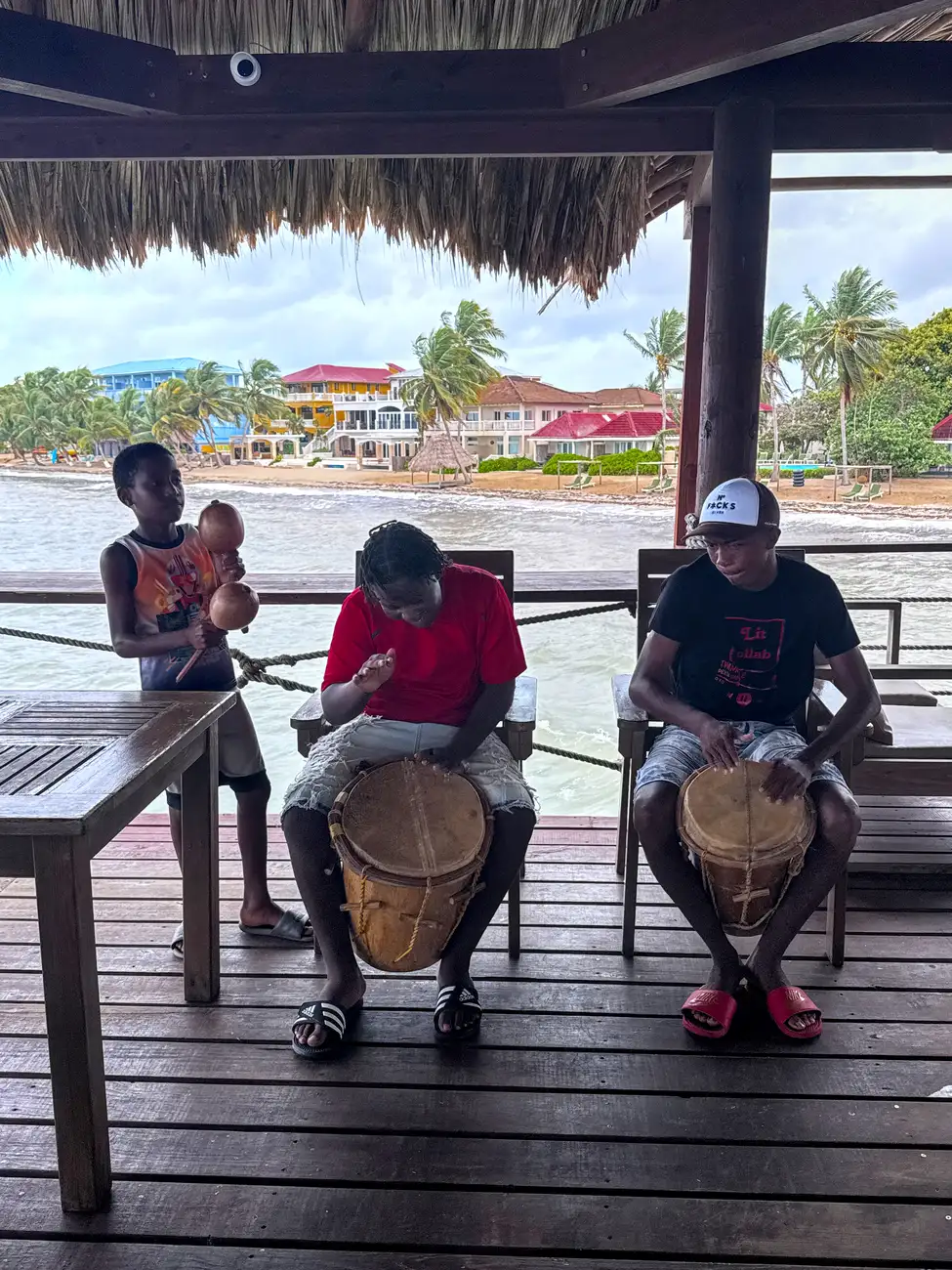
Drumming and dance classes, hudut cooking, and full-day cultural immersions with Garifuna hosts in Hopkins and Dangriga. These are the best-reviewed Garifuna experiences on Viator.

5h · From $139
4.9(25)
Dive into the most interactive, fun and educational Garifuna Cultural & Culinary Experience in Belize. Visit Kalipuna Cultural Heritage Island a unique destination designated for the preservation of Garifuna Culture and share and learn from passionate and knowledgeable afro-indigenous advocates by participating in hands on cooking classes learning authentic & traditional Garifuna recipes and cooking methods. Chit chat about Garifuna History with knowledgable elders. Explore the lush herbal garden and learning about herbs used for both recreation and medicinal purposes. Savor the fruits of your labor as you enjoy a mouthwatering Garifuna meal. Every bite tells a story, connecting you to the flavors of this vibrant culture. Cultural dishes can be customize so that guests with special dietary restrictions can also enjoy. Conclude your day with a mesmerizing Garifuna drumming session led by our master drumming instructor.

2h · From $119
4.9(16)
Authentic Garifuna Gastronomic Experience in Hopkins Village, Belize offers the most interactive hands-on opportunity to cook with a Garifuna Ambassador in an enchanting Garifuna village replica located on Kalipuna Heritage Island. Learn about the indigenous flavors and cooking techniques that makes Garifuna meal tasty. The cooking experience is punctuated by informative conversations about the culture, history & people and spiced with laughter. Guests explore the herbal garden on the island and harvest organic ingredients to be used in meal preparation. The art of Coconut processing is always a highlight and includes husking, cracking, grating & making coconut milk. Learning how to cook over a traditional stove and prepare the most delicious traditional afro-indigenous lunch is sure to be fun. Guests with special dietary needs are equally catered for however advance notification is appreciated.

1h 30m · From $25
5.0(13)
**Why This Garifuna Drumming Class Is Truly Unique in San Pedro** Only at The Mayan can you learn authentic Garifuna drumming hands-on with a nationally celebrated master drummer. Real Garifuna culture lives on the mainland and southern cayes, so genuine Primero, Segunda drums and hand-crafted Dangriga maracas almost never reach Ambergris Caye — making this the rarest cultural experience on the island. Set beneath the largest Sacred Ceiba tree on Ambergris Caye (sacred to both Maya and Garifuna), in our overwater palapa at sunset, you play the actual ancestral instruments while the Caribbean breeze carries every beat. No other place in San Pedro brings together: - A true Garifuna champion drummer from the community - Real hand-made drums & maracas - This breathtaking seaside Ceiba setting Most visitors leave San Pedro without ever touching Belize’s true heartbeat. Here, you don’t just hear Garifuna music — you become it, in a sacred space that exists nowhere else on the caye.

1h 30m · From $65
5.0(4)
The perfect way to dive into local culture! Come and experience this Garifuna drumming, dancing and dinner extravaganza. Under a beautiful traditional Thatch Palapa on the edge of Punta Gorda town, you will be given a brief overview of the fascinating Garifuna people and culture of southern Belize. You will then be treated to a 45 minute professional group performance of a number of traditional rhythms and songs. If your feet start to tap along, then don't despair, as you'll be given the opportunity to join the traditional dancing lesson at the end. Once you have worked up a slight sweat and earned your dinner, it's time to sit down, relax and enjoy a traditional Garifuna meal of "hudut" - fillet fish sauteed in lightly seasoned coconut milk, served with mashed plantain.

8h · From $169
5.0(6)
Benefit from expert local indigenous guides who provide in-depth knowledge about Garifuna culture, history, traditions, pulsating music and unique cuisine throughout the entire experience. Engage in fun-filled, educational and interactive cultural activities where you get hands with Traditional Fishing, Cooking and Drumming thought by passionate and knowledgeable hosts. You'll learn traditional techniques and knowledge that can be used for life. Guest gets the opportunity to catch their own fish, harvest fresh organic herbs for the herbal garden on site, process coconuts to make coconut milk, cook a traditional meal over a traditional stove and enjoy the delicious food of their labor. The experience is topped off by learning how to play the Garifuna drums. We are glad to host guests with special dietary requirements. Just let us know in advance.

1h 30m · From $129
5.0(1)
Travelers are amazed by the authentic energy and heartfelt connection they feel during this Garifuna Drumming & Dancing Experience. It’s more than just a class — it’s a cultural awakening led by passionate Garifuna cultural practitioners who live and breathe their heritage. Each rhythm tells a story of strength, joy, and unity, inviting you to be part of something truly meaningful. Whether you’re moving to the beat, learning an ancient rhythm, or simply soaking in the village atmosphere, you’ll leave inspired, grounded, and deeply connected to Belize’s living culture. Authenticity: Hosted by true Garifuna cultural ambassadors in their own community. Cultural Depth: Learn not just how to drum and dance, but why — uncovering the meanings, stories, and spirit behind every rhythm. Transformative Energy: A soulful blend of music, mindfulness, and movement that uplifts. Community Impact: Every booking directly supports cultural preservation and empowers local artisans and performers.
Clicking a tour opens our tour details page. Booking takes place on Viator.com. We may earn a commission at no extra cost to you. Read our affiliate disclosure
The Garifuna flag
The Garifuna flag is three horizontal stripes, black at the top, white in the middle and yellow at the bottom. It grew out of a red, yellow and black flag flown by a Garifuna burial and sick-aid society in the 1920s. T.V. Ramos, who later led the push for Settlement Day, replaced the red with white.
Black: African ancestry, and the hardship and injustice the Garinagu have lived through.
White: Peace, which eluded the Garinagu through most of their history.
Yellow: Hope and plenty, and the Kalinago and Arawak side of Garifuna ancestry.
This is the order the National Garifuna Council uses. You will also see flags flown with yellow on top.

Keep exploring
The dawn re-enactment on 19 November, where to watch, and where to stay.
Open guideThe Garifuna beach village, its drumming, food, and places to stay.
Open guideBeach village or cultural capital: which base suits your trip.
Open guideThe wider story, from the Maya to independence in 1981.
Open guideQuestions travelers ask
The Garifuna are an Afro-Indigenous people descended from West Africans and the Indigenous Kalinago of St. Vincent. Exiled by the British in 1797, they settled along the Caribbean coast of Central America, and in Belize they live mainly in Dangriga, Hopkins, Seine Bight, Punta Gorda and Barranco.
Garifuna grew out of Kalipuna, the name the Kalinago of St. Vincent used for themselves, and shifted in sound on the Central American coast. Garinagu is the plural, the people as a whole. Garifuna is one person and also the adjective, as in Garifuna food or Garifuna drums.
Garinagu are Afro-Indigenous, descended from West Africans and the Indigenous Kalinago, and they are a people in their own right rather than Hispanic. Many families in Honduras and Guatemala carry Spanish surnames and speak Spanish, which came later, after earlier French names.
Britain wanted their land for sugar estates. After the Garinagu and Kalinago fought the British in the war of 1795 to 1797 and lost, the British held more than 4,000 of them on Balliceaux and in 1797 shipped the survivors to Roatán, off Honduras.
Along the Caribbean coast of Belize, Honduras, Guatemala and Nicaragua, where they have lived since the late 1700s, and in large communities in the United States. In Belize the main towns are Dangriga, Hopkins, Seine Bight, Georgetown, Punta Gorda and Barranco.
Garinagu were working in Belize by 1799, and about 150 were there by 1802. The largest arrival came in 1832, when Garinagu fled Honduras for Stann Creek and Punta Gorda, and most accounts tie Garifuna Settlement Day on 19 November to that landing.
Garifuna, an Arawakan language with French and West African words folded in. Most Garinagu in Belize also speak English.
Drum-led music played on two hand drums, the bass segunda and the tenor primero, with a lead singer and a call-and-response chorus. Punta is the best known rhythm, alongside hüngühüngü, paranda and wanaragua.
The flag has three horizontal stripes, black at the top, then white, then yellow. Black stands for African ancestry and the hardship the Garinagu endured, white for peace, and yellow for hope and the Kalinago and Arawak side of their heritage.
Hudut, green plantain boiled and pounded smooth and eaten with lasusu falumou, fish cooked in coconut milk. Ereba, a flat bread made from bitter cassava, is the other staple to try.
Hopkins is the easiest, with drumming lessons and family-run kitchens by the beach. Dangriga is the cultural capital and has the biggest Garifuna Settlement Day celebration.
Every 19 November. In 2026 it falls on a Thursday, and the celebration starts on the night of Wednesday 18 November. See our Garifuna Settlement Day guide for the dawn re-enactment and where to stay.
Hopkins puts you on the beach in a Garifuna village. Dangriga puts you at the heart of Settlement Day. Pick your base and plan the trip.