c. 1500 BC
Maya trade networks take shape
Loading page content.
Loading Planning Guides
Preparing itineraries, logistics, and practical travel tools.
Compiling planning guides and trip resources tailored for Belize.
Stay in the know
Belize
before
everyone else.
Events, hidden gems, seasonal highlights, and local stories, delivered straight to your inbox before they go viral.
Loading page content.
Loading Travel Tips
Compiling essential tips and advice for visiting Belize.
Preparing destination details and local recommendations.
Keep Planning
Belize health & safety, the practical side: tap water, mosquitoes and Zika, vaccines, marine and dive hazards, clinics, and travel insurance for 2026.
How much Belize costs by travel style, with sample budgets for San Ignacio, Caye Caulker, Placencia, San Pedro, transfers, tours, food, and cash planning.
Getting around Belize made simple: water taxi schedules to the cayes, Tropic Air domestic flights, NBC bus timetables, BZE airport transfers, shuttles, and rental cars.
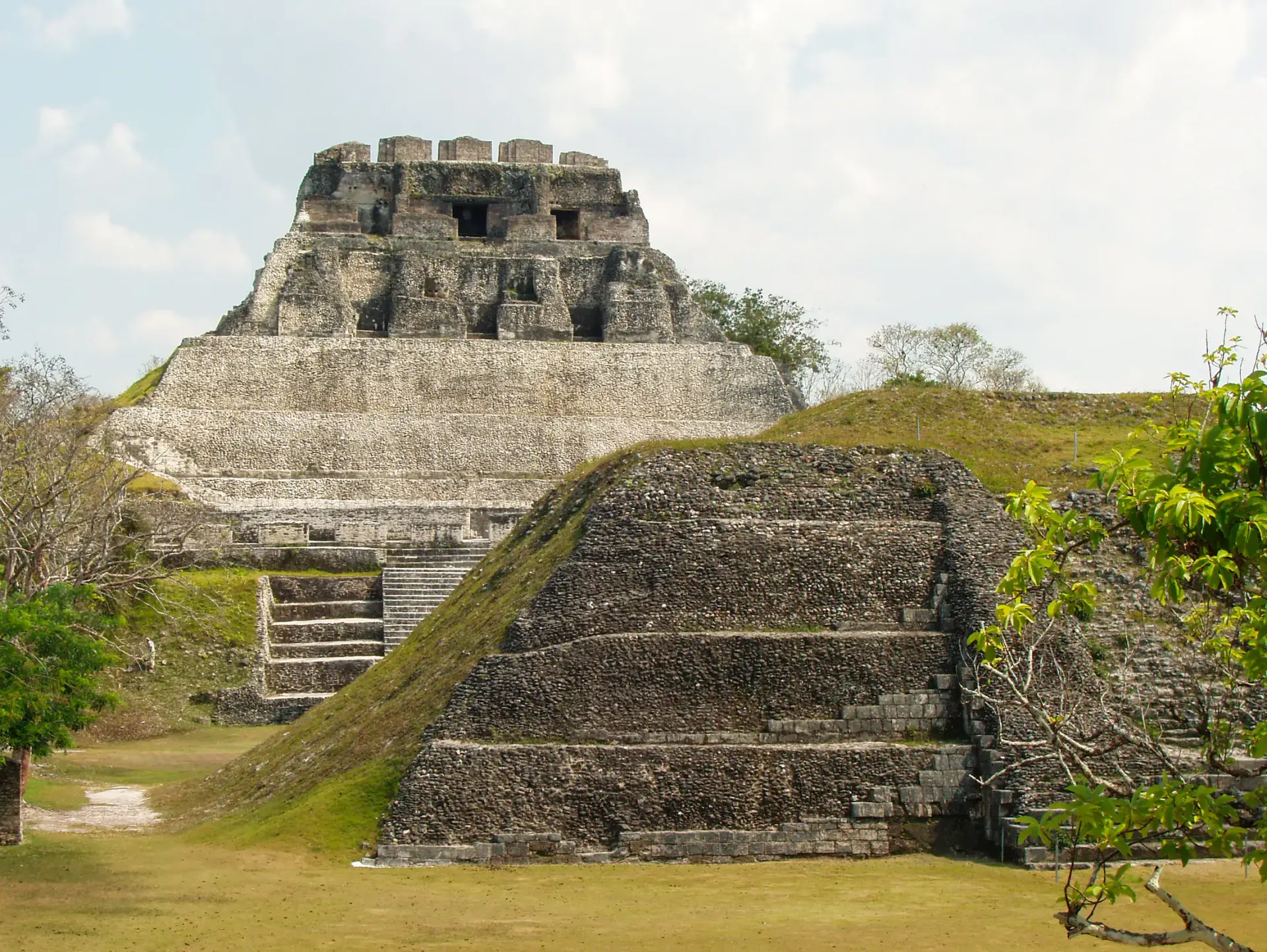
From a thriving Maya civilization to British Honduras to an independent nation in 1981, now 45 years old, here is how Belize came to be
Belize became independent on September 21, 1981, and marks 45 years as a nation in 2026, one of the youngest countries in the Americas. But people have lived on this land for more than 15,000 years, from the earliest hunter-gatherers to one of the great Maya civilizations, through Spanish contact, British settlement, slavery, and a hard-won road to nationhood.
Reviewed by RowanLast reviewed September 1, 2026
A plain-language history of Belize, from the ancient Maya through colonial British Honduras to independence, with a timeline and sources.
The short answer
Belize gained independence from the United Kingdom on September 21, 1981. It was the last British colony on the American mainland, formerly known as British Honduras until it was renamed Belize in 1973. September 21 is now Belize's National Independence Day, marked each year as a public holiday with parades across the country.
On September 21, 2026, Belize marks 45 years of independence. The September Celebrations run all month, and our Independence Day guide has the parade times.
En español: Belice se independizó del Reino Unido el 21 de septiembre de 1981. Antes de 1973 se llamaba Honduras Británica.
Belize history timeline
c. 1500 BC
Maya trade networks take shape
250 to 900 AD
Classic Maya civilization at its peak
1502
Columbus reaches the Gulf of Honduras
1638
British Baymen begin settling the coast
1798
Battle of St. George's Caye
1832
Garifuna arrival, now Settlement Day
1838
Slavery fully abolished
1862
Colony of British Honduras declared
1934
Soberanis and the labour movement
1950
People's United Party founded
1954
Universal adult suffrage won
1961
Hurricane Hattie devastates Belize City
1964
Internal self-government granted
1970
Belmopan becomes the capital
1973
Renamed from British Honduras to Belize
1981
Independence, September 21
1991
Guatemala recognizes Belize
1994
British garrison withdraws
2019
Guatemala's claim referred to the ICJ
2026
Belize marks 45 years of independence
Then and now
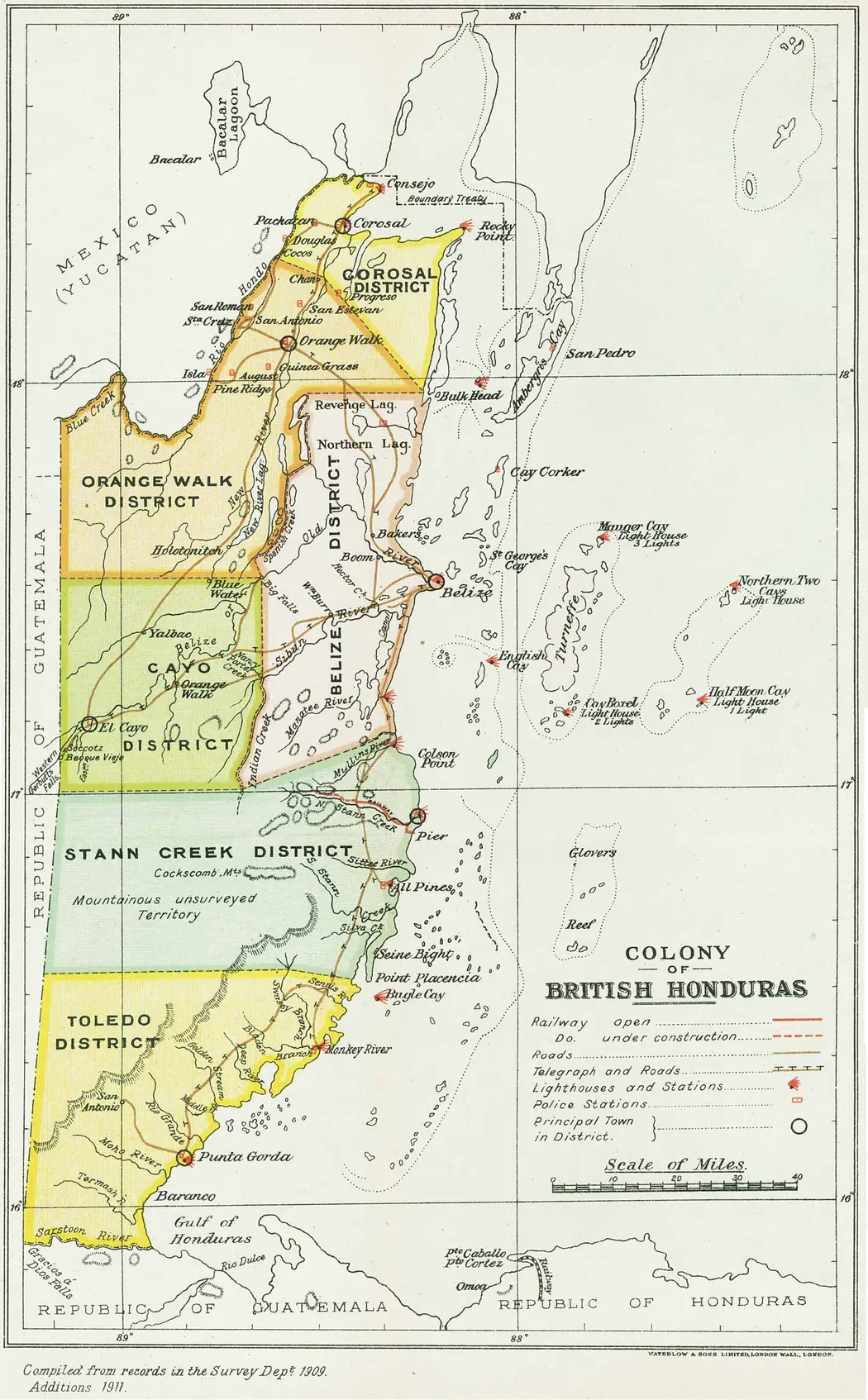
The interactive map above shows Belize's six districts as they are today. This 1909 survey map shows the very same districts, from Corozal in the north to Toledo in the south, under the country's colonial name: the Colony of British Honduras.
The borders have barely moved in over a hundred years. What changed was the name and the flag, when British Honduras became independent Belize in 1981.
Explore the full history of BelizeBefore Columbus
Long before Europeans arrived, the land we call Belize was home to people for more than 15,000 years. The first inhabitants, the Paleoindians, were hunter-gatherers who moved into the Americas and adapted to a tropical world of rivers, forests, and coastline.
During the Archaic period, roughly 8000 to 2500 BC, these communities adjusted to a changing climate and slowly began to domesticate crops. The idea that the land was empty when Europeans came does not survive contact with the archaeological record.
Insider note
The colonial notion of terra nullius, or nobody's land, was a legal fiction. Belize was settled, farmed, and traded across for thousands of years.
The Classic Maya
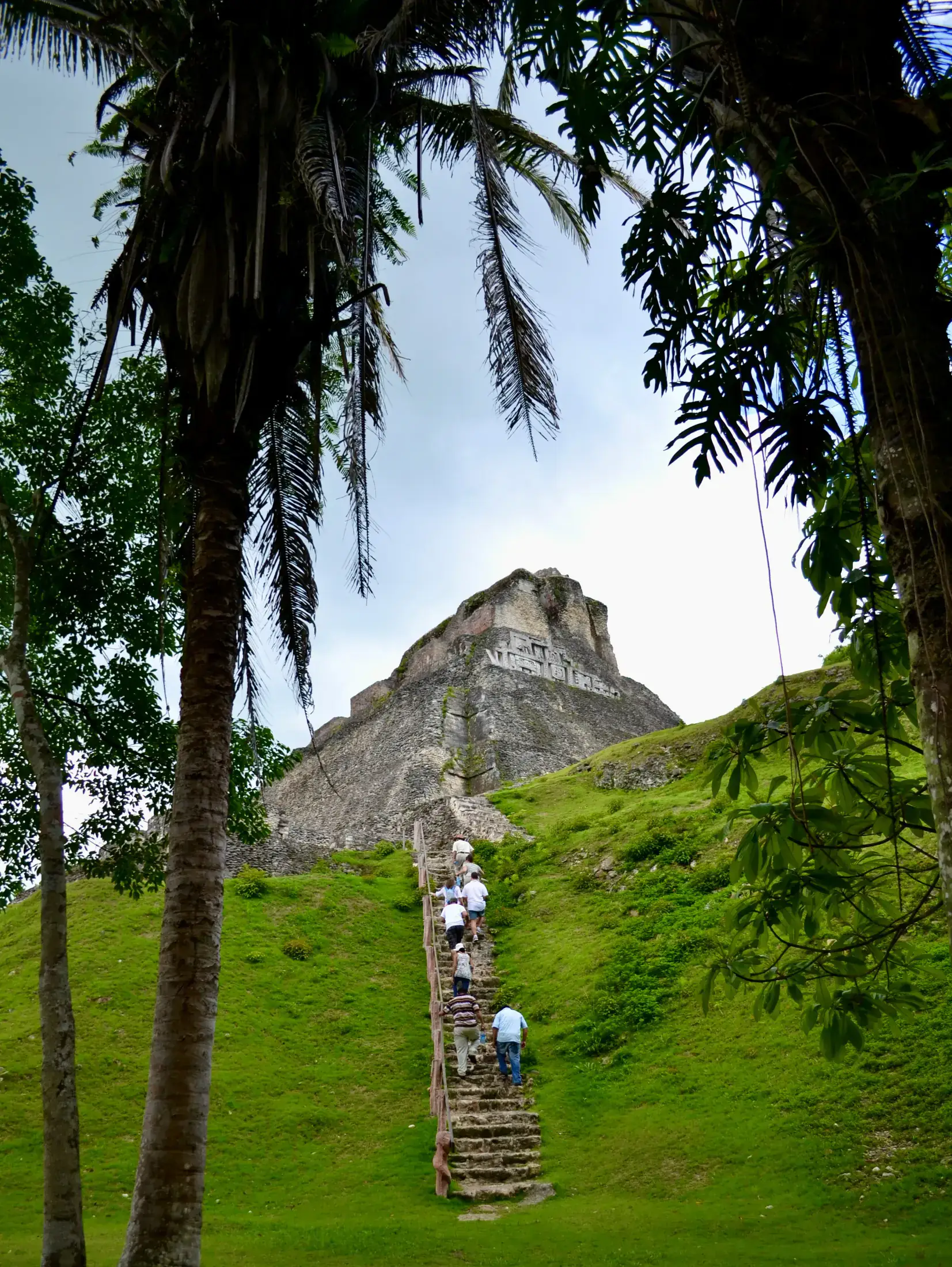
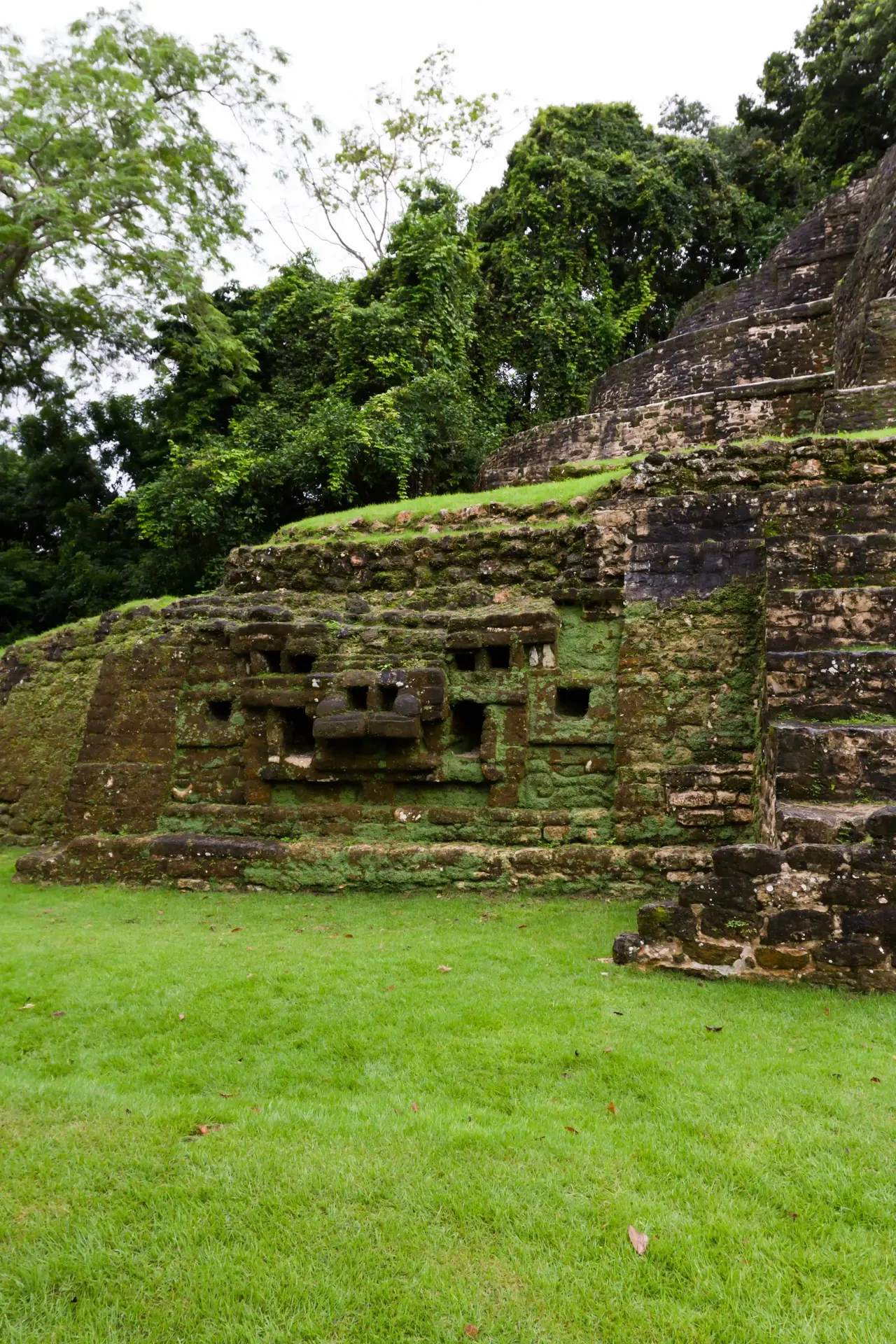
From about 250 to 900 AD, Maya civilization reached its height, and Belize sat at the center of it rather than the edge. These were no ordinary farmers: while Europe struggled through the Dark Ages, the Maya tracked the heavens with a calendar “as precise as today's” and used “an advanced system of mathematics based on the zero concept, long before this was known in Europe.” At Cuello, archaeologists found some of Mesoamerica's oldest pottery, with trade networks reaching back around 1,500 BC.
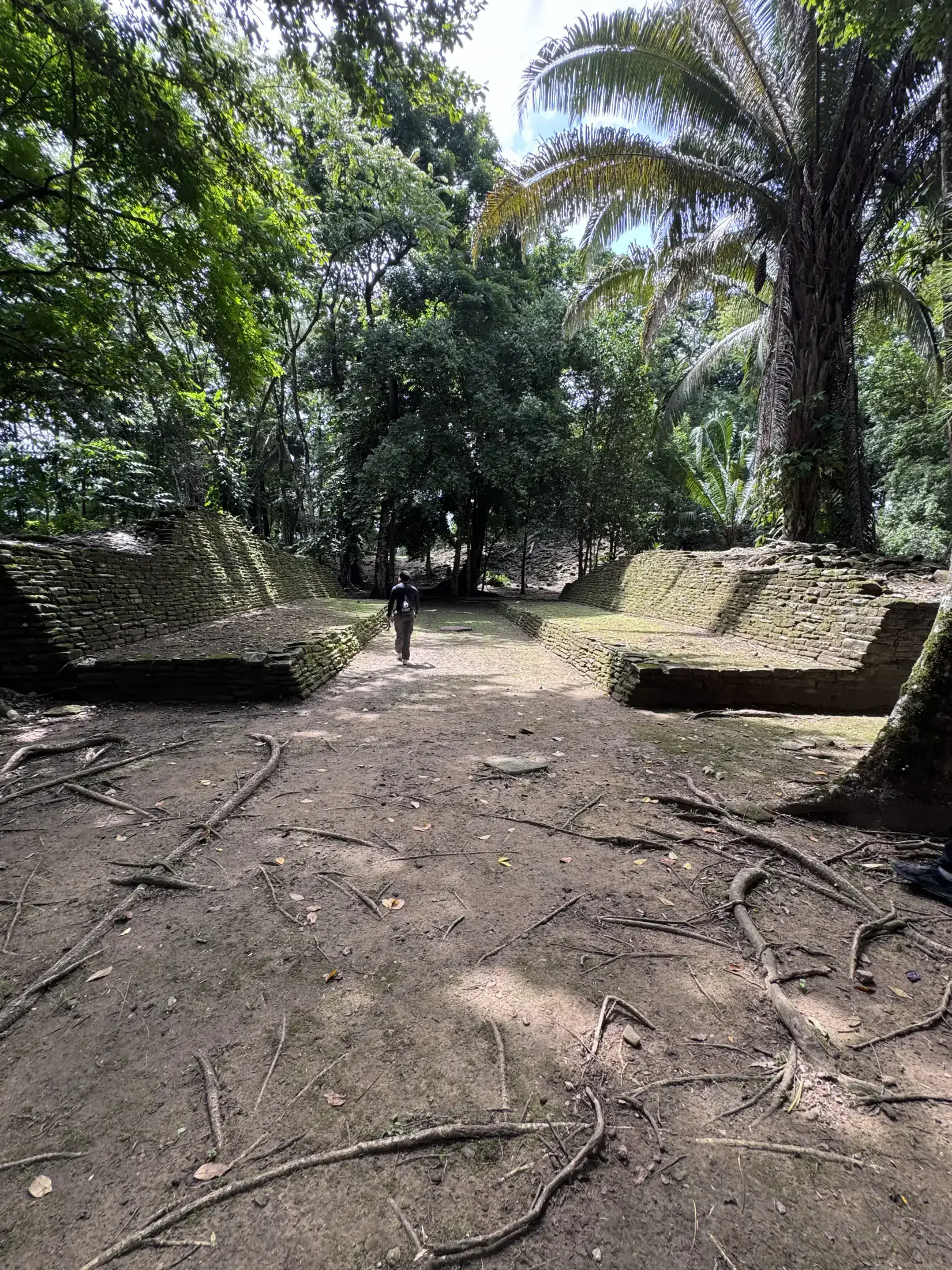
Belize's great cities still stand. Caracol's Caana pyramid remains the tallest structure in the country. Xunantunich rises above the Mopan River, Altun Ha gave up the famous Kinich Ahau jade head, and Lamanai shows a Maya presence so continuous it lasted into Spanish contact.
Insider note
The popular story of a total Maya collapse is misleading. Some cities fragmented, but Maya communities and territories endured for centuries more.
Spanish contact
When Columbus reached the Americas in 1492, roughly 200,000 Maya were living in the land we now call Belize. He sailed into the Gulf of Honduras in 1502, and Spain soon turned its attention to the Yucatan, but conquest proved far harder than declaration. When a Spanish expedition demanded that the Chetumal Maya submit in 1531, their chief Nachankan replied that the only tribute he would pay would be “turkeys in the shape of spears and corn in the shape of arrows.” Spain announced victory in 1542, only to be driven out by a major Maya uprising in 1546.
The cost was still catastrophic. After a Spanish campaign in the 1540s, the Maya population around Belize fell from more than 50,000 to about 5,000 within a few years as European diseases tore through Indigenous communities. Yet Spain never established lasting control over the territory that became Belize, leaving a frontier where Maya communities, and later other newcomers, could operate beyond any single European authority.
Insider note
Because no European power fully governed it, Belize spent the 1600s and 1700s as a contested space rather than a settled colony.
The Baymen
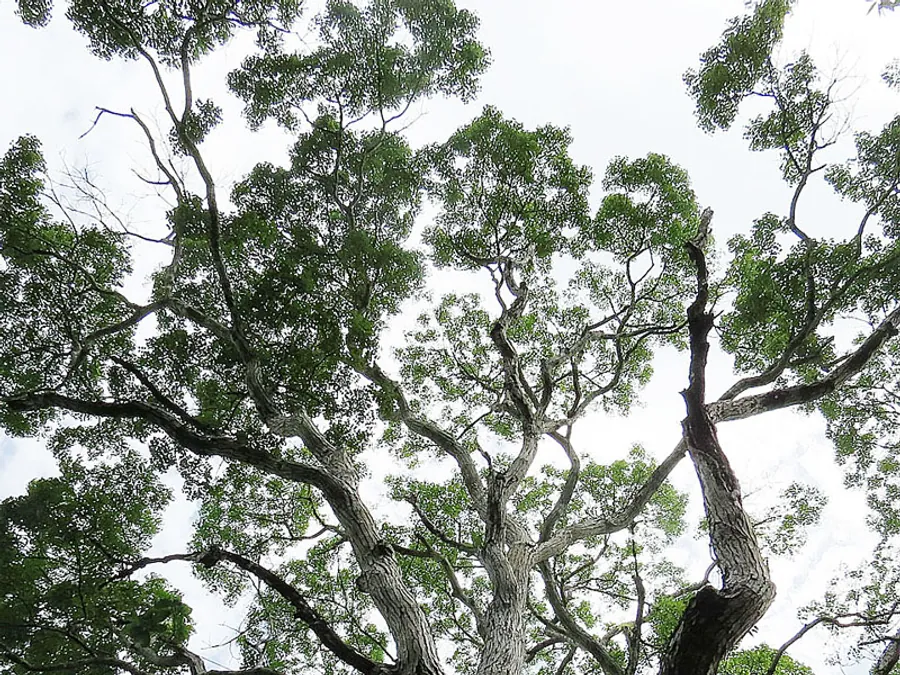
From around 1638, British and Scottish buccaneers known as the Baymen used the coast as a base to raid Spanish ships. After piracy was curbed, they turned to cutting logwood, a tree prized for the dye it produced in Europe.
Spain attacked the settlements again and again, forcing the Baymen out in 1717, 1730, 1754, and 1779, but they kept returning. The decisive Battle of St. George's Caye in 1798 ended Spain's final attempt to dislodge them.
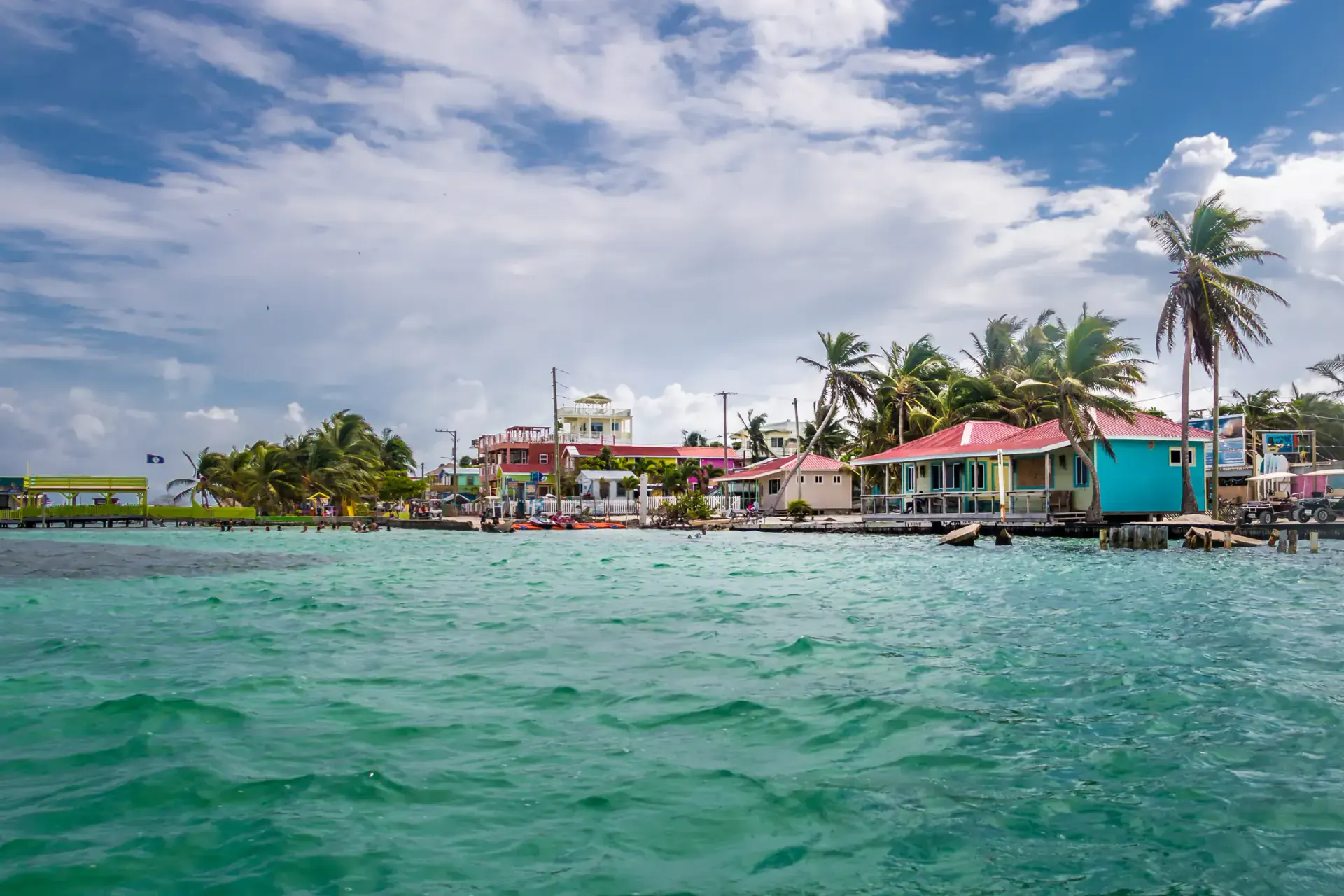
That stretch of coast, tucked between Mexico and Guatemala on the Caribbean Sea, is still where most visitors first set foot in Belize.
Insider note
The settlers governed themselves long before any colony existed, electing magistrates and writing their own rulebook, Burnaby's Code, in 1765.
Logwood to mahogany
Logwood gave way to mahogany in the late 1700s, a far more profitable trade that demanded bigger crews, more land, and enslaved labor. A small group of settlers came to control most of the land and commerce, and by the 19th century a single firm, the Belize Estate and Produce Company, owned over a million acres, close to half of all the privately held land in the colony.
Britain did not formally declare Belize a colony until 1862, and a Crown colony in 1871. Colonial law turned forest into private property, locking out Maya communities and taxing their traditional milpa farms.
Insider note
British firms monopolized land while Maya farmers were pushed to the margins, a pattern of dispossession that shaped the economy for generations.
Slavery in the forests
Unlike the sugar islands, Belize enslaved people for logging rather than plantation work. By 1745 enslaved Africans already made up 71 percent of the settlement's population, rising to 86 percent by 1800, and over 87 percent of enslaved men worked in the forest. Mahogany gangs of around fifty people felled and hauled timber, with specialized roles for finding, cutting, moving, and trimming the wood, often isolated in forest camps for months.
The work was no less brutal for being different. Enslaved people resisted by escape and revolt so persistently that one owner, after a wave of escapes in 1825, wrote simply that “instant ruin stares us in the face.” A five-month uprising broke out in 1773, and in 1820 two enslaved men, Will and Sharper, led the settlement's last major revolt. Slavery was finally abolished in 1838, though a forced apprenticeship delayed real freedom.
Insider note
Britain compensated former slave owners, not the people they had enslaved, and Belizean owners received some of the highest payments anywhere.
A nation of many peoples
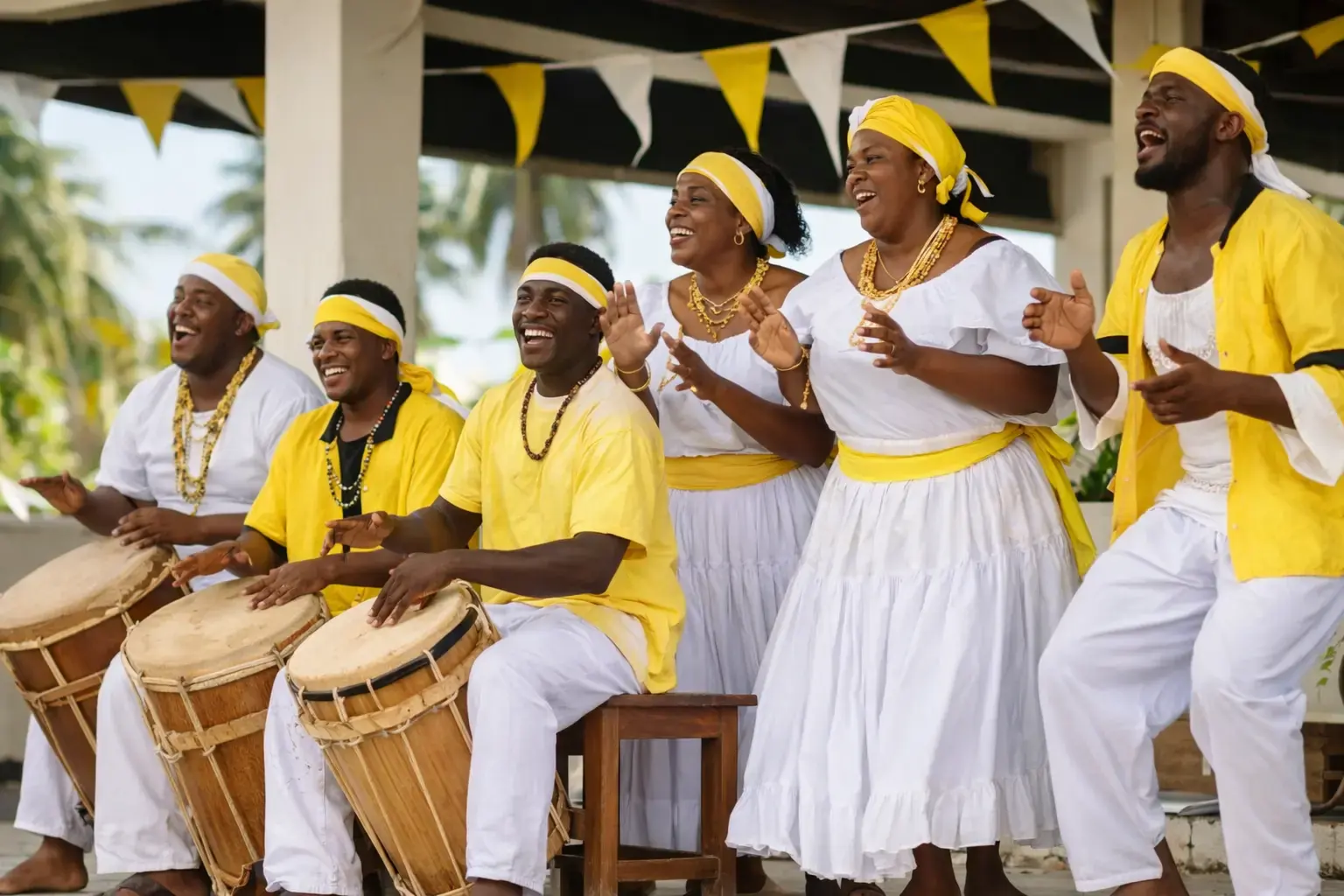
By the mid-1700s, enslaved Africans made up around three-quarters of the population, and Creole culture grew from the blending of African and European life. The Garifuna, an Afro-Indigenous people whose culture UNESCO now recognizes, arrived in large numbers in 1832; their landing on the nineteenth of November is still marked each year as Garifuna Settlement Day, and by 1858 more than 2,200 had made southern Belize home.
More change came from the north. When the Caste War swept Yucatan after 1847, Maya and Mestizo refugees poured in, and the settlement's recorded population leapt from around 3,000 in 1840 to over 25,000 by 1861. Later waves brought Chinese, East Indian, and Mennonite communities, many arriving as laborers after emancipation. Today that mix, sharing one small country under English as the common language, is the heart of Belizean identity.
Insider note
Belize's diversity was forged under a harsh racial hierarchy, yet its people built shared traditions that outlasted the system meant to divide them.
The road to independence
The seeds were sown in 1934, when labour leader Antonio Soberanis rallied the unemployed of Belize City, declaring he would rather be “a dead hero than a living coward.” The modern movement then gathered force after the 1949 devaluation of the dollar sparked mass protest. George Price and others formed the People's United Party in 1950, won universal adult suffrage in 1954, and led Belize to internal self-government in 1964.
Guatemala's claim to the territory slowed the final step, so Price took the case to the United Nations. The first UN vote in 1975 backed Belize 110 to 9 with 16 abstentions, and by 1980 even the United States, which had abstained for years, voted in favour. Belize became fully independent on September 21, 1981. British troops stayed until 1994, and Guatemala formally recognized Belize in 1991.
Insider note
Belize turned an economic grievance into a national movement, and a foreign territorial claim into international support for its independence.
Belize since 1981
Independence did not cut the British thread entirely. Belize kept a Westminster-style parliament and remains a Commonwealth realm, so the British monarch is head of state, represented in Belmopan by a Belizean Governor-General. George Price became the first Prime Minister in 1981, and power has passed peacefully between the People's United Party and the United Democratic Party at every election since.
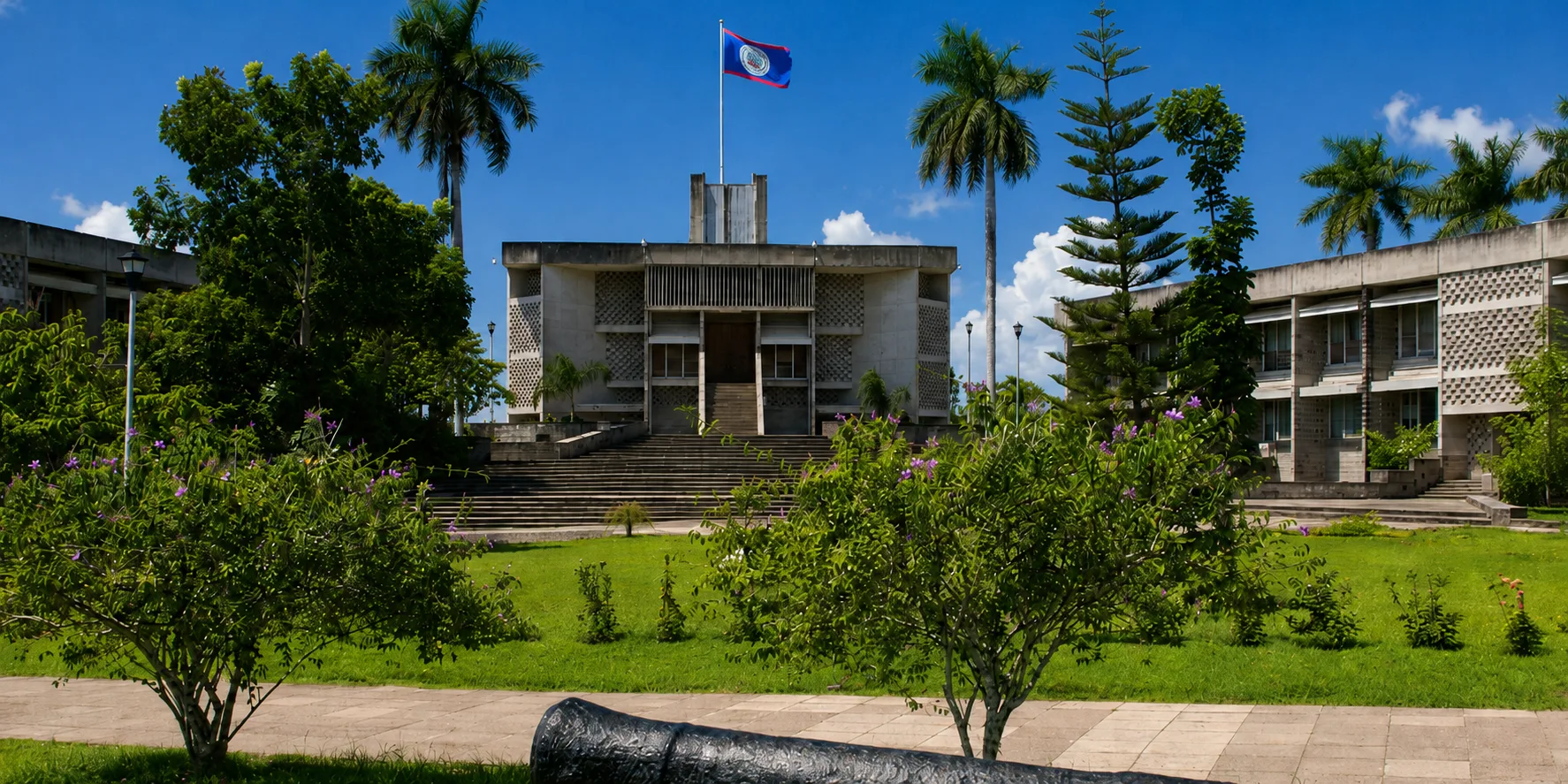
The capital itself belongs to this era. After Hurricane Hattie flattened much of Belize City on October 31, 1961, the government built a planned inland capital, Belmopan, and moved there in 1970. Guatemala's claim, meanwhile, moved from diplomacy to the courtroom: after referendums in both countries it was submitted to the International Court of Justice in 2019, where it remains pending. On September 21, 2026, Belize celebrates 45 years of independence under the theme “Look at Me. I Am Belize at 45.”
If you are in the country in September, our Independence Day guide covers the parade times and where to stand.
Insider note
The September Celebrations run the whole month, from St. George's Caye Day on September 10 to Independence Day on September 21, with carnival, flag raisings, and parades in every district.
Keep exploring
Parade times and where to celebrate Belize at 45 this September.
Open guideCaracol, Xunantunich, Lamanai, and Altun Ha, the cities in this story.
Open guideMaps, borders, and the geography that shaped this history.
Open guideWalk the Maya cities and colonial towns that tell this story.
Open guideQuestions travelers ask
Before independence, Belize was the British colony of British Honduras. It was renamed Belize in 1973 and became fully independent on September 21, 1981.
People have lived in present-day Belize for more than 15,000 years, beginning with Paleoindian hunter-gatherers and leading to one of the major centers of ancient Maya civilization.
Yes. Belize was a heartland of the ancient Maya world, with major cities including Caracol, Xunantunich, Altun Ha, Lamanai, and Cuello, some occupied for thousands of years.
Belize gained full independence from the United Kingdom on September 21, 1981, under the Belize Act 1981, after achieving internal self-government in 1964. Until 1973 the country was called British Honduras.
Yes. Belize has been a fully independent, sovereign nation since September 21, 1981. It is a member of the United Nations, the Commonwealth, and CARICOM, and in 2026 it marks 45 years of independence.
No. Belize is not part of the UK, but it is a Commonwealth realm: the British monarch remains head of state, represented locally by a Governor-General, while an elected Belizean government runs the country.
George Cadle Price, who led the independence movement from 1950, became Belize's first Prime Minister at independence in 1981. He is honored as the Father of the Nation, and his birthday, January 15, is a public holiday.
Belize City was the colonial capital until Hurricane Hattie destroyed much of it in 1961. The government built Belmopan, a planned inland capital about 50 miles west, and moved there in 1970. Belize City remains the largest city.
The origin is debated. The most common explanation traces it to the Maya word belix, meaning muddy water, describing the Belize River. Another links it to Peter Wallace, a Scottish buccaneer said to have settled at the river mouth in the 1600s.
As an independent nation, Belize turns 45 on September 21, 2026. As a settled place it is far older: Maya sites such as Cuello were occupied more than 3,000 years ago.
Guatemala long claimed Belize based on disputed 19th-century treaties, which delayed independence. Guatemala recognized Belize as an independent country in 1991, though the territorial claim itself was referred to the International Court of Justice in 2019 and remains pending.
Slavery in Belize was abolished in 1838, following Britain's Emancipation Act, after a transitional apprenticeship period that delayed full freedom.
Fought in 1798, the Battle of St. George's Caye was the decisive clash in which British settlers repelled Spain's final attempt to take the territory.
The Garifuna, an Afro-Indigenous people, arrived in large numbers in 1832. Their landing on November 19 is celebrated each year as Garifuna Settlement Day, a national public holiday.
England, later Britain, colonized the territory that became Belize. British and Scottish buccaneers known as the Baymen began cutting logwood along the coast from the 1630s, and Britain formally declared it the colony of British Honduras in 1862.
See where the Maya cities, colonial ports, and modern districts sit, then plan a trip that walks through the story.