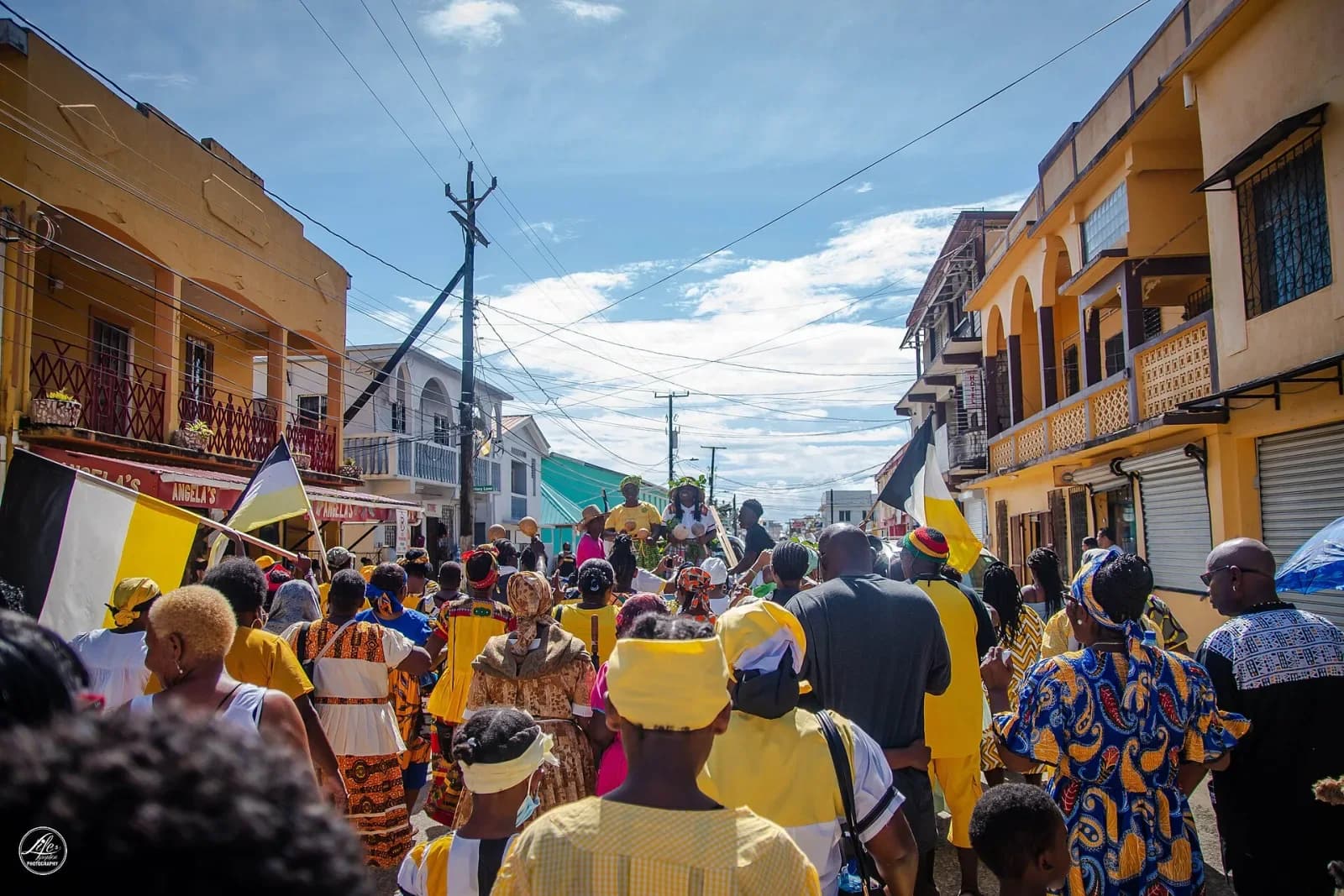
For me, November 19 is a day to appreciate the Garifuna people: their history, and everything their culture gives Belize. Behind the drums and the flags is a story of displacement, survival, and building new communities without giving up who you are. Knowing that story is what makes the day mean something to me.
Garifuna Settlement Day falls on Thursday 19 November 2026. It is a national public and bank holiday, and Dangriga holds the biggest celebration in the country. The real start is the night before, and the moment everyone waits for is at dawn, when the boats come in.
Where the story starts
The Garinagu trace their roots to West African and Indigenous Kalinago peoples on St. Vincent, in the eastern Caribbean. In 1797 the British forced them off the island and shipped the survivors to Roatán, off Honduras. From there, communities spread along the Caribbean coast of Central America, including Belize. Garinagu were already working here by 1799, but the largest group arrived in 1832, and that is the landing most people connect with 19 November. It is often told as the arrival led by Alejo Beni.
I also appreciate the work that made this recognition possible. In 1941, Thomas Vincent Ramos, Mateo Avaloy and Catarino Benguche signed a petition in Stann Creek asking for a day to honour the Garinagu. Ramos often gets the credit alone, but it took all three. Stann Creek made 19 November a holiday in 1943, and it became a national holiday in the 1970s. Their work gave Garifuna history a permanent place in Belize's calendar.
The full story, from St. Vincent and the exile of 1797 to the flag, is in our guide to the Garifuna people of Belize, which draws on I. Myrtle Palacio's The Primer on the People Called Garifuna (2024).


The night before, in Dangriga
When I think about November 19, I picture Dangriga full of people, flags and music. Yellow, black and white show up everywhere: on clothes, headwraps, buildings and floats. People line the streets and watch from verandas and balconies as the whole town comes out. The celebrations build for days, and on the night of November 18, the drumming, dancing and street parties can run straight through until morning.
Yurumein at dawn
The part that means the most to me is Yurumein, the reenactment of the arrival at dawn. Boats come in carrying people with Garifuna flags, cassava sticks, and banana or plantain plants. Hand drums and rattles carry the voices singing together in Garifuna. The plants stand for the crops and the knowledge the ancestors brought to feed themselves in a new home. That detail always makes me think about how much starting over demanded: finding somewhere to settle, growing food, and holding a community together.
Mass, then the parade
After the landing, the procession heads to the church for a Mass of Thanksgiving. Flags and green branches rise above the crowd, and the singing and drumming become part of the worship. That mix of remembrance, faith and culture is what moves me most. Nobody is reading this history out of a book. People are passing it on by taking part.
Later, the streets fill for a bigger parade. School groups, uniformed marchers, dancers and marching bands move through town alongside cultural and business floats. Hand drums share the street with steel pans, marching percussion and big speakers. I love that the parade puts every generation, and every part of the community, in the same place at the same time.
Through the afternoon, crowds follow trucks carrying huge sound systems. Punta and punta rock keep everyone dancing, the performers call out and the crowd answers back, and the flags keep waving as the party rolls on toward evening. What I notice every time is how much people put into it. Nobody holds back from singing, dancing and showing who they are.
Food, craft and the tools behind the traditions
Food and craft have their place too. Vendors sell meals, clothing and handmade pieces, and cultural displays lay out the tools used for fishing, farming, cooking and turning cassava into bread. Seeing those everyday objects helps me understand the practical skill behind traditions people still value today.


My Settlement Day in Dangriga
Arriving on the 18th
I got to Dangriga on the afternoon of November 18, the day before Settlement Day. Crossing the bridge into town, I could already see people gathering in the streets and black, white and yellow flags hanging along the road. Dangriga is called the cultural capital of Belize, and that weekend it felt like the whole country had come to prove it.
We started with lunch at a small blue wooden shop: rice, stewed red beans, coleslaw, and a whole fried snapper under a spicy onion and pepper sauce. While we ate, people told us the music would not stop until the next day, and they were right. Down the street, stalls and tents were already busy with shirts, dresses and crafts in yellow, black and white.
The Drums of Our Fathers
Next I walked to the roundabout to see the Drums of Our Fathers monument, two huge sculpted hands holding up Garifuna drums, surrounded by flags and signs in the Garifuna language. Under a pavilion nearby, a local teacher was telling the story behind the day: St. Vincent, the exile of 1797, and the boats that set out before dawn for the Yurumein and come up the river at daybreak.
Right beside the roundabout, the curator of the Gulisi Garifuna Museum had laid out a long table of tools carved from wood and woven from vines and reeds. He walked us through how ereba is made. Grated cassava is packed into a long woven tube called a ruguma to squeeze out the juice, sifted through a flat woven hibisa, and baked on a griddle. He showed us a clay jug that keeps water cool without a fridge, and the heavy wooden mortar and pestle used to pound plantain for hudut. Seeing the tools in someone's hands made the food make sense.
Before I left, he explained the dances. In punta, men and women answer each other with fast hip movement. Chumba is a women's dance that acts out daily work like farming and cooking. In wanaragua, the dancer wears shells tied below the knees and leads the drummer, not the other way round.
Through the night
Around sunset a group came past the roundabout in bright blue shirts and straw hats, the women in yellow and plaid skirts, beating hand drums, shaking gourd maracas and singing. They carried three flags: Belize's, the Garifuna flag, and the blue, yellow and green flag of St. Vincent and the Grenadines, where the whole story began.
At one in the morning, downtown was wider awake than it had been all day. Crowds packed the roads around the main bridge, buying drinks at street booths and dancing to live bands and speaker trucks. Later I ended up at a packed outdoor concert ground, where singers in long yellow-and-black and blue-and-white skirts spun across the stage with maracas while guitars and Garifuna drums drove paranda and punta rock. It kept going until daybreak, when the Yurumein boats came up the river full of people waving flags and green banana leaves.
The parade on the 19th
The next afternoon we stopped for lunch under black, white and yellow banners: barbecue chicken, barbecue lamb, rice and beans, and hudut with fish soup. Inside, players from towns all over were crowded around tables for the annual November 19 dominoes and billiards tournaments.
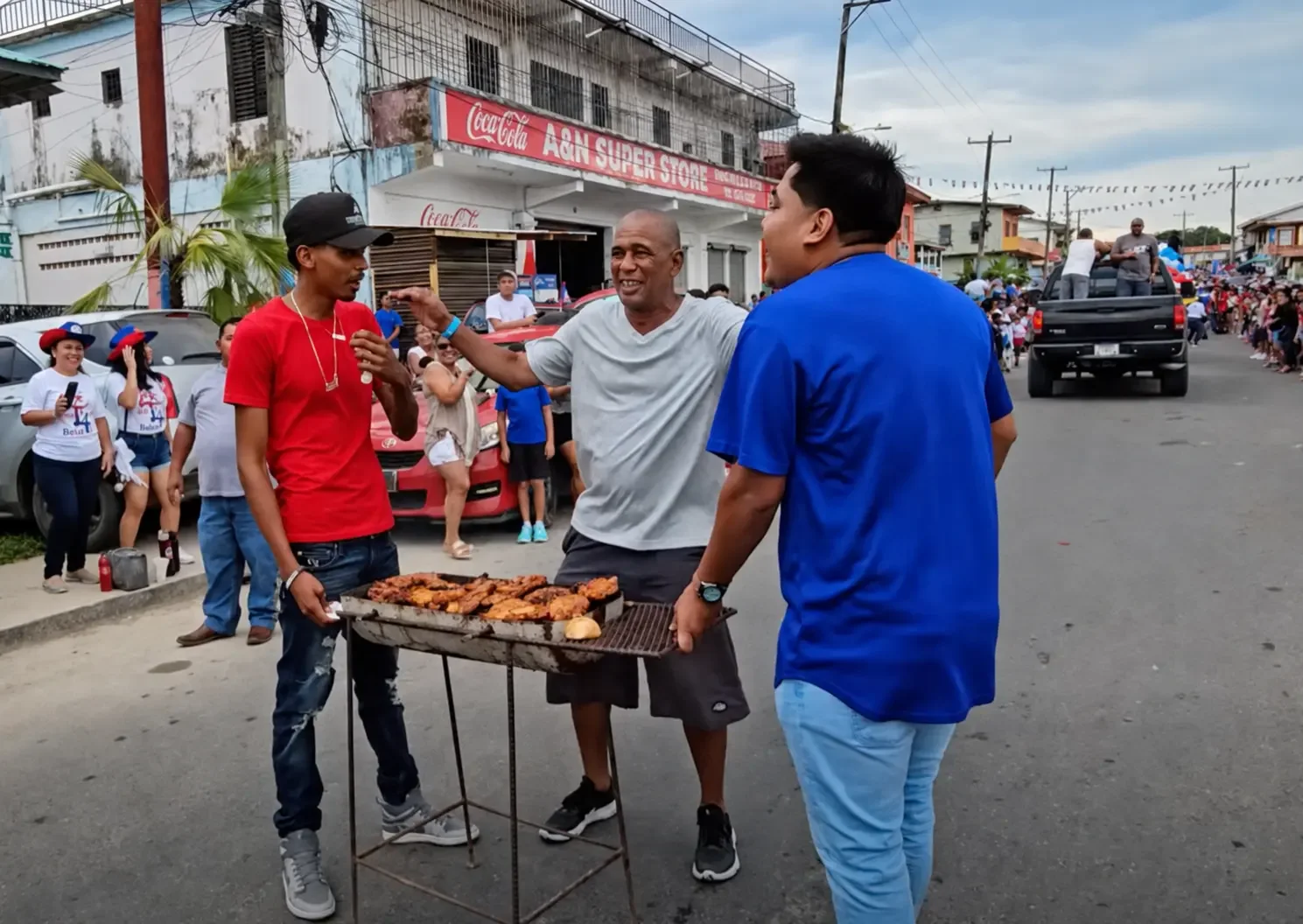
Then it was back out to the main road for the parade. Sidewalks, balconies and rooftops were packed. Young tumblers ran down the street doing backflips on the pavement, ahead of school drum corps and dancers in white dresses trimmed with green, yellow and black ribbons. Behind them, men drumming in the back of a pickup played for masked wanaragua dancers: painted wire-screen faces and knee shells, one in a horned cow mask, another as a hunched old man leaning on a walking stick. A shaded school float went by with a live steel pan band, then a float built like a giant dugout canoe with women dancing on board, and finally the music trucks, with hundreds of people dancing down the road behind them.


Planning your visit: Garifuna Settlement Day 2026
The 2026 programme
Everything below comes from the National Garifuna Council's 2026 calendar of national activities, published under this year's theme, Úaraguni, Anichigu, Awanseruni, Wani Amuñegü: Unity, Culture, Progress: The Future Is Ours.
In Dangriga the season has already started. The council's Dangriga branch held a Memorial Mass in honour of the ancestors on Friday 23 October and an Ancestral Offering, with abeimahani, arumahani and mali, on Saturday 24 October, both at Ms. Martha's Dabuyaba in the Backatown area.
Sunday 1 November
- 6:00pm: Traditional drumming session. Online, on the DYFA and NGC Facebook pages.
Monday 2 November
- 7:00pm: Garifuna Spirituality Talk Show, Remembering Our Ancestors. Online, on the DYFA and NGC Facebook pages.
Saturday 7 November
- 10:00am: Annual Solidarity Mass. Russell Chiste Garcia Auditorium, Dangriga.
- 6:00pm: Miss Garifuna Belize Pageant. Russell Chiste Garcia Auditorium, Dangriga.
Thursday 12 November
- Annual Garifuna Awareness Day.
- 6:30pm: Community Culture Night. All NGC branches.
Friday 13 November
- 6:00pm: Annual Tribute to T.V. Ramos and His Team. All NGC branches.
Sunday 15 November
- 6:00pm: Traditional drumming session. Online, on the DYFA and NGC Facebook page.
Thursday 19 November: Garifuna Settlement Day (public holiday)
- 6:30am: Yurumein, the annual re-enactment of the Garifuna arrival. North Riverside, Dangriga.
- 8:00am: Official Thanksgiving Mass. Sacred Heart Church, Dangriga.
- 10:00am: Official ceremony. Alejo Beni Park, Dangriga.
- 1:00pm: Garifuna Settlement Day Parade. Dangriga.
Two things worth noticing. The council calls the 13 November tribute one to "T.V. Ramos and His Team", which fits the history: Ramos never did it alone. And the 19th runs straight from the dawn landing to Mass, the ceremony and the parade, so if you only have one day, stay in Dangriga from first light to the afternoon.
Times are published, but venues and routes can shift. Check the National Garifuna Council's Facebook page before you set out.
Where to watch the re-enactment
Dangriga has the biggest celebration, and it is the one to choose if you only see one. The Yurumein re-enactment starts at first light, 6:30am in 2026. Canoes come ashore carrying cassava, plantain suckers and sugar cane, with drummers and singers on board. A parade through town, a church service and drumming follow through the day.
Hopkins is smaller, a village-scale celebration that is easy to pair with a beach stay. Seine Bight, Georgetown, Punta Gorda and Barranco also hold their own.
In 2026 the boats land at North Riverside in Dangriga at 6:30am, and the Thanksgiving Mass follows at Sacred Heart Church at 8:00am.
Get to the shore before 6:00am. Spots along the water go first.
Celebrating in San Pedro, Ambergris Caye
You don't have to go south to see it. The San Pedro branch of the National Garifuna Council runs its own calendar on Ambergris Caye, so if you are staying on the island you can still catch the drums, the landing and the parade.
Before the day:
- Cultural Sundays at Boca del Rio Park, 2:00pm to 11:00pm, on 1, 8 and 15 November.
- Drumming at Agave Bar and Grill, 8:00pm to 10:00pm on Saturday 14 November.
- The Solidarity Mass on 7 November (in Dangriga), dominoes on 13 November, and a fish competition on 15 November.
- Garifuna Awareness Day on Monday 16 November.
Settlement Day:
- Wednesday 18 November, 7:00pm to 4:30am: drumming around town and the official ceremony at Crazy House.
- 4:30am: the procession leaves Central Park for the Yurumein. The flyer lists this in a "Nov 18" row, but it follows the all-night drumming, so it means the early morning of the 19th.
- 6:00am: Yurumein at Boca del Rio.
- Thursday 19 November, 7:00am: the arrival at Central Park, followed by a church service and a parade around town.
- 11:00am: food sale at Central Park, with activities until 11:00pm at Crazy House.
"Come out, support, learn, participate," the branch's Gene Lopez told the San Pedro Sun. See Ambergris Caye hotels if you are basing yourself on the island.
Where to stay
Book the night of Wednesday 18 November first. That is the night rooms in Dangriga and Hopkins run out.
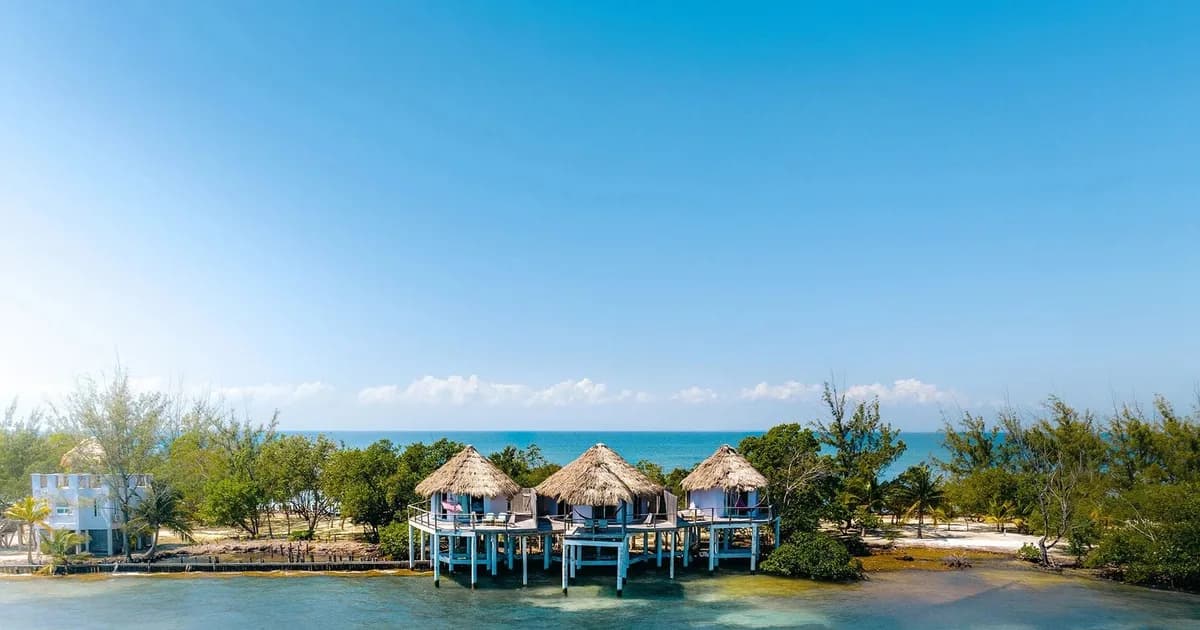
- Hopkins is the most comfortable base, with beachfront resorts and guesthouses about 30 minutes by road from Dangriga. See Hopkins hotels. For a Garifuna-owned stay, Palmento Grove is a cultural lodge on an island in the lagoon north of Hopkins. You reach it by boat, so sort out your pre-dawn ride to Dangriga with them before you book.
- Dangriga puts you within walking distance of the dawn landing, but there are few rooms in town. See Dangriga hotels, and Hopkins vs Dangriga if you are choosing between the two.
- Placencia works if you are happy to leave about an hour and a half before dawn. See Placencia hotels, or weigh up the two bases with Placencia vs Hopkins.
Getting there
Dangriga sits where the Hummingbird Highway meets the Southern Highway. Buses on the southern route stop there, see bus schedules, and there are domestic flights from Belize City. From Hopkins, a taxi or rental car makes the dawn start realistic. Transport is busy on the 18th and 19th, so book a pre-dawn driver in advance. Don't count on finding one that morning.
What to eat
Hudut is green plantain, boiled and pounded smooth, and eaten with fish cooked in coconut milk. Ereba is a flat cassava bread made from bitter cassava that is grated, strained, sifted and baked. Also look out for darasa and bundiga, made from green banana or plantain, and cassava pudding. Vendors set up around the celebrations, and most only take cash.
What closes
It is a national holiday, so banks and government offices close on Thursday 19 November. Shops, restaurants, buses and tour operators set their own hours. Confirm anything you are relying on that day. Bring small bills for food and crafts. See Belize currency.
Weather in mid-November
This is the tail end of the rainy season: warm days with a chance of showers, and the early morning on the beach can be cooler than you expect. Atlantic hurricane season officially runs until 30 November, see hurricane season. Bring a cover for your phone or camera. If you are still choosing dates, see the best time to visit Belize.
Respect and photography
This is a living commemoration, not a show put on for visitors. At ancestral events such as the Memorial Mass and the Ancestral Offering, the council asks attendees to wear Garifuna attire and not to wear anything black. If you go as a visitor, wear something bright, yellow and white if you have it, and leave the black at home. Ask before you photograph people up close, especially during the church service and the ceremonies. Buying food and crafts from local vendors puts money straight into the community.
Questions people ask
What is Garifuna Settlement Day in Belize? A national holiday on 19 November that marks the settlement of the Garinagu, the Garifuna people, in Belize. It is celebrated with all-night drumming, a dawn re-enactment of the canoes landing, and a parade, biggest in Dangriga.
When is Garifuna Settlement Day 2026? Thursday 19 November 2026. The celebration starts on the night of Wednesday 18 November.
What time is the re-enactment in Dangriga? At 6:30am on 19 November 2026, at North Riverside in Dangriga, according to the National Garifuna Council's calendar. Get there before 6:00am for a spot by the water. The parade follows at 1:00pm.
What time is the Garifuna Settlement Day parade in Dangriga? 1:00pm on Thursday 19 November 2026. It follows the 6:30am Yurumein at North Riverside, the 8:00am Thanksgiving Mass at Sacred Heart Church and the 10:00am official ceremony at Alejo Beni Park.
Where is the best place to celebrate Garifuna Settlement Day? Dangriga has the biggest celebration. Hopkins is smaller and more relaxed, and easy to combine with a beach stay.
Is Garifuna Settlement Day a public holiday in Belize? Yes. It is a national public and bank holiday, and banks and government offices close. It began as a Stann Creek District holiday in 1943.
What does Garifuna Settlement Day celebrate? The settlement of the Garinagu in Belize after the British exiled them from St. Vincent in 1797. Garinagu were working in Belize from 1799, and the largest arrival, in 1832, is the one most accounts tie to 19 November.
Can I celebrate Garifuna Settlement Day in San Pedro? Yes. The National Garifuna Council's San Pedro branch holds drumming from 7:00pm on 18 November, a 6:00am Yurumein at Boca del Rio on the 19th, a 7:00am arrival at Central Park, then a church service, a parade and a food sale from 11:00am.
Where should I stay for Garifuna Settlement Day? Hopkins, about 30 minutes from Dangriga, has the most rooms. Staying in Dangriga lets you walk to the dawn landing, but rooms are limited. Either way, book the night of 18 November early.
As a Belizean, I see November 19 as a day to celebrate and a day to pay attention. The music and the excitement pull people together, and the ceremonies give us the chance to understand what sits behind them. What stays with me most is the pride of people who keep speaking their language, sharing what they know, and teaching the next generation what they inherited.
Photo credits: Garinagu Melivn (CC BY 4.0), Mike Murga (CC BY 2.0) and Jimelovski Platano Macho (CC BY-SA 2.0), via Wikimedia Commons, and Aristedes Carrera on Unsplash.