Loading page content.
Loading Destinations
Preparing maps, wildlife highlights, and top places to explore.
Building destination context so you can compare locations quickly.
Stay in the know
Belize
before
everyone else.
Events, hidden gems, seasonal highlights, and local stories, delivered straight to your inbox before they go viral.
Classic Maya syllabary
Sound out your name using real Classic Maya syllable signs, folded into a traditional glyph block you can print or save.
Classic Maya scribes wrote with two kinds of signs: word signs (logograms) and sound signs (syllabograms). Every syllable sign stands for a plain vowel (a, e, i, o, u) or a consonant paired with a vowel (ba, ka, lo, ma, na). Modern names were not Classic Maya words, so epigraphers spell them by sound using this syllabary.
Classic Maya did not have every English or Spanish sound. Letters like d, f, g, r, and v swap to their closest Maya neighbours (t, p, k, l, and b), so Rowan is spelled lo-wa-n(a). When a consonant lands at the end of a name or before another consonant, scribes wrote a syllable whose vowel echoes the one before it and left that last vowel unspoken, shown here in brackets like n(a).
Instead of running across a line like Roman letters, Maya syllables tuck tightly together into one rounded glyph block following the classic arrangements in Inga Calvin's FAMSI guide and Jon Spenard's worksheet. You read each block from left to right and top to bottom (reading left columns before the stacked signs beside them), the exact path shown when you turn on the reading numbers above.
English spelling rarely matches how a name actually sounds, and Classic scribes often drew more than one sign for the same syllable. Tap any syllable chip above to adjust your spelling by ear, or tap a glyph inside your block to cycle through alternate drawings.
Every syllable sign in this writer was checked individually against Alexandre Tokovinine's visual catalog (2017) and Inga Calvin's FAMSI study guide (2012). Where the Commons sets lacked a clear match (such as be, ha, hu, pe, po, or so), the speller automatically picks the closest checked sound and flags the swap.
See real Maya writing in Belize
Spelling your own name is the fastest way to see how Classic Maya script works. When you visit Belize's Maya sites, those same stacked glyph blocks appear on limestone stelae, altars, and temple facades.
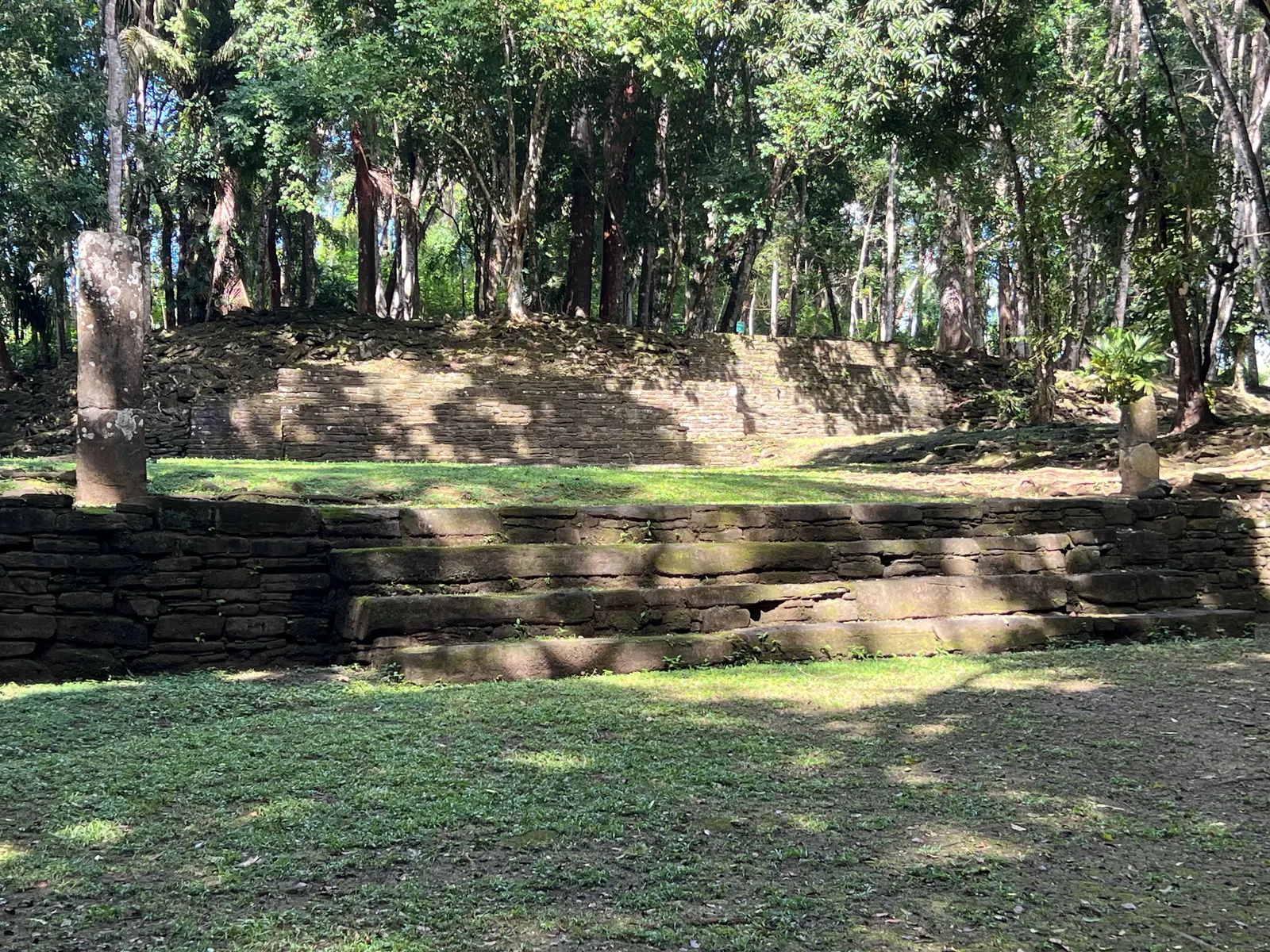
Toledo District
Known for its carved stelae preserving hieroglyphic inscriptions tied to rulers, ritual, and politics. Stela 14 stands about 9.5 metres tall and gave the site its Kekchi name, meaning large headdress. Rowan first had his own name written in Maya glyphs here on International Archaeology Day.
Read the Nim Li Punit guide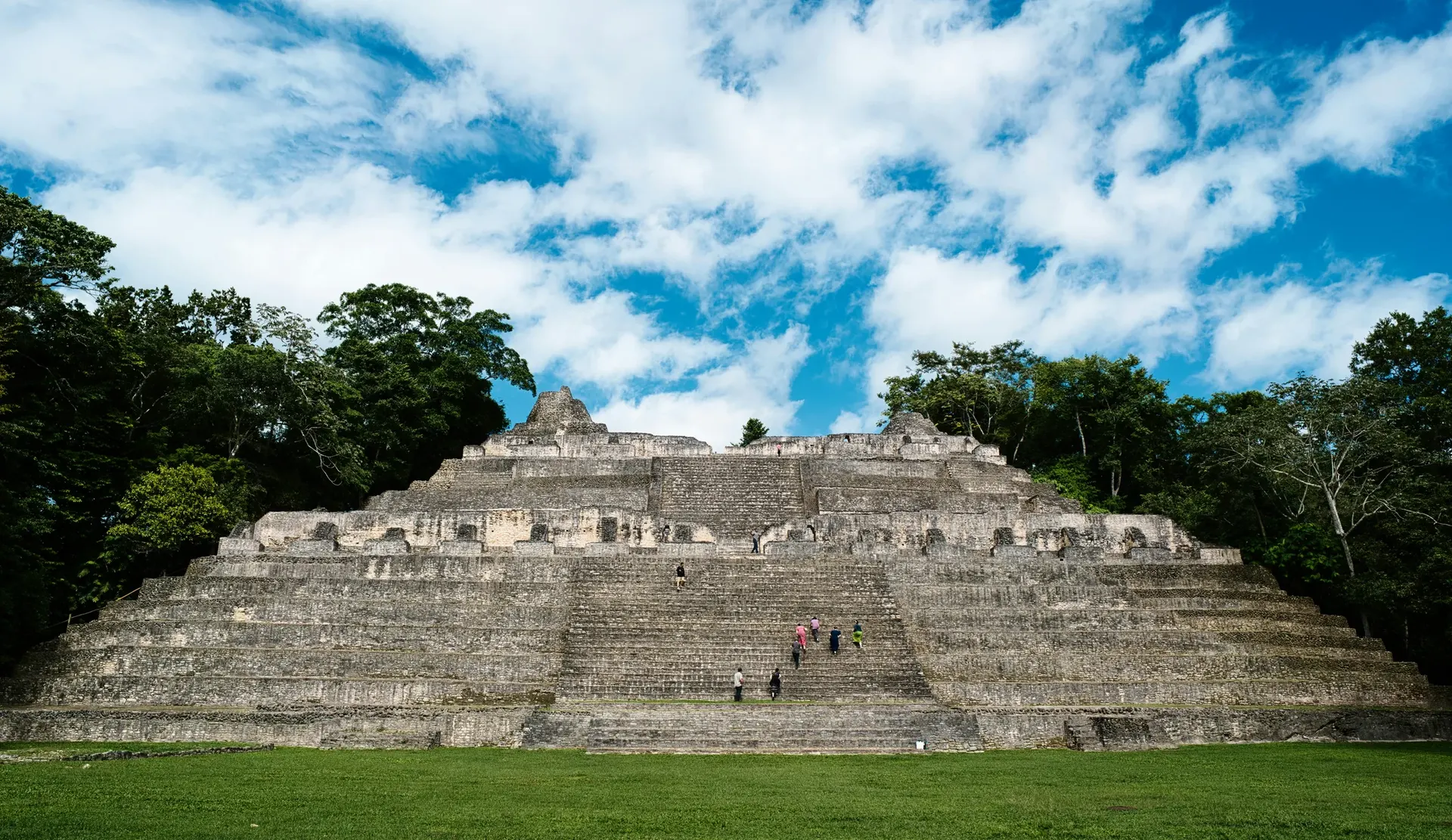
Chiquibul Forest, Cayo
Belize's largest Maya city, home to more than 100,000 people across roughly 200 square kilometres at its peak around AD 600 to 700. Centered on the towering Caana complex, Caracol defeated Tikal in AD 562 and later Naranjo during the Late Classic period.
Read the Caracol guide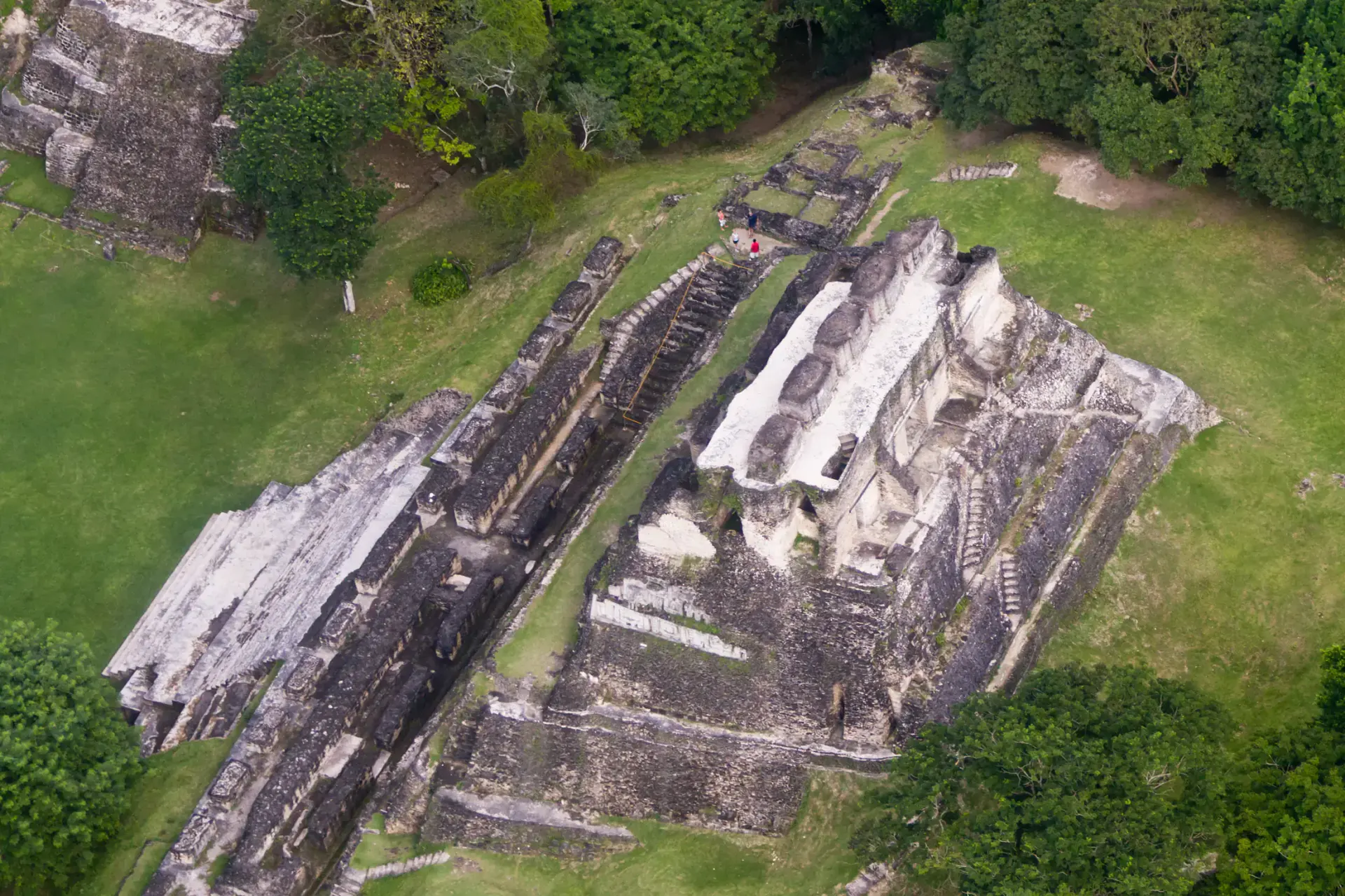
San Ignacio, Cayo
Reached by a hand-cranked ferry across the Mopan River, this Late Classic regional power peaked between roughly AD 670 and 780. High on the 130-foot El Castillo pyramid, sculpted stucco friezes carry iconography and royal imagery overlooking the Belize River Valley.
Read the Xunantunich guideQuestions travelers ask
Yes, as a phonetic spelling in Classic Maya syllables. Modern names are not ancient Maya vocabulary words, so epigraphers sound them out syllable by syllable using the same Classic Maya syllabary found on carved stone monuments and painted pottery.
Classic Maya did not use every consonant found in English or Spanish. Following standard workshop practice, sounds Maya lacked swap to their closest neighbours: r becomes l, d becomes t, f becomes p, g becomes k, and v becomes b. Each swap is noted beneath your glyph block.
Classic Maya syllable signs always end in a vowel. To spell a consonant at the end of a name or inside a cluster, scribes added a syllable whose vowel echoed the vowel before it and left that extra vowel silent. Writing n(a) reminds you to pronounce the n and drop the a.
Maya glyph blocks follow left-to-right, top-to-bottom reading order: prefixes on the left come before stacked signs on the right, superfixes sit on top, main signs fill the centre, and subfixes sit underneath. Switch on Show reading order above to number every sign inside your own name block.
English spelling often hides how a name is actually spoken, so the automatic speller starts from Spanish-style vowel values and lets you tap any chip to tune the sounds by ear. Many syllables also had more than one valid Classic Maya sign, and tapping a glyph cycles between its verified drawings.
Nim Li Punit in southern Belize is the standout stop for carved inscriptions, with stelae recording rulers and ceremonies including the 9.5-metre Stela 14. Caracol in the Chiquibul Forest and Xunantunich near San Ignacio are also major Late Classic centres to explore.
Glyph drawings: Mabarlabin and Hervé Gallet, Wikimedia Commons, CC BY-SA 4.0. Traced syllable paths and composed name cards remain available under Creative Commons Attribution-ShareAlike 4.0 International.